
Companion Plants
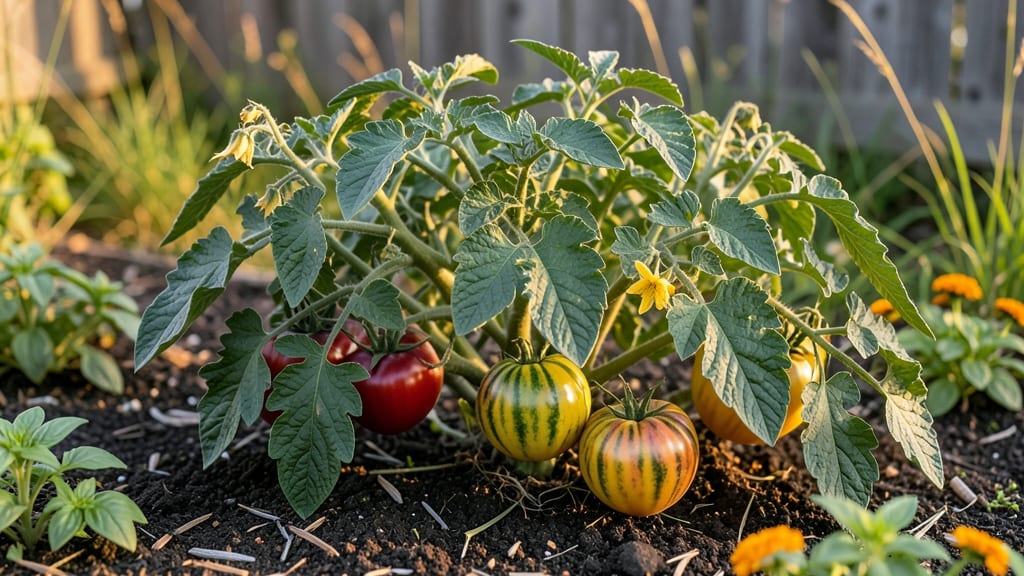
Growing meaty tomato plants starts with the right varieties—think beefsteaks, heirlooms, and paste tomatoes like 'Brandywine' or 'San Marzano'. 🌱 These giants need nitrogen-rich soil to build strong stems and thick leaves that support those pound-plus fruits.
My first year with 'Cherokee Purple' taught me that size matters, but balance is key—too much nitrogen means lush foliage and tiny tomatoes. The secret isn't just fertilizer: it's well-draining soil mixed with compost and a slow-release organic nitrogen source.
Water deeply but consistently—drought stress cracks fruit, while soggy soil breeds disease. Prune suckers early to direct energy upward, and stake or cage plants before they top 12 inches. I learned the hard way that floppy vines break under heavy loads.
By mid-summer, you'll watch those plants transform sunlight into beefy, flavor-packed tomatoes—the kind that make neighbors ask where you buy them. The first bite off the vine? That's the payoff. For containers, choose determinate varieties in 5-gallon pots; in-ground plants thrive with 18 inches of space between vines.
Common mistakes? Over-fertilizing nitrogen (leaves explode, fruit shrinks) or skipping pruning (weak stems snap). Stick to organic methods: fish emulsion in early season, compost tea mid-season, and mulch to retain moisture. Your garden will thank you with tomatoes so meaty, they become the star of every summer meal.
📚 In This Guide
- What you need
- Instructions
- Tips and common mistakes
- Wrapping up and next steps
What you need
- ● Tomato seeds or seedlings: 3–6 plants (choose heirloom or beefsteak varieties like 'Brandywine' or 'Beefmaster' for meaty fruit).
- ● Compost or well-aged manure: 2–3 gallons per plant (rich in nitrogen for leafy growth).
- ● Balanced fertilizer (10-10-10 or 5-5-5): 1–2 tablespoons per plant at planting.
- ● Slow-release nitrogen (blood meal or fish emulsion): 1 tablespoon per plant every 4–6 weeks.
- ● Tomato cages or stakes: 4–6 ft tall (to support heavy fruit).
- ● Mulch (straw or grass clippings): 2–3 inches thick (retains moisture and adds organic matter).
- ● Garden trowel or shovel (for planting).
- ● Pruning shears (to trim suckers and encourage fruit growth).
- ● Watering can or hose with a gentle nozzle (tomatoes need consistent moisture).
- ● pH test kit (ideal soil pH: 6.0–6.8).
- ● Sunny garden spot: 6–8+ hours of direct sunlight daily.
- ● Well-draining soil (amend with compost if clay-heavy).
- ● Companion plants: Basil, marigolds, or borage (boosts flavor and deters pests).
- ● Epsom salt (magnesium sulfate): 1 tablespoon per plant monthly (enhances chlorophyll).
- ● Drip irrigation system (for precise watering).
- ● Row covers or shade cloth (protects from early/late frost).
How to grow thick-stemmed, high-yield tomato plants
Here's the method I use to grow tomatoes with thick, sturdy stems that support heavy fruit loads—no more snapping vines mid-season.
🌱 Step 1: Start with High-Nitrogen Soil and Fertilizer
Tomatoes need nitrogen early on to build thick stems and strong roots. Mix 2 cups of 10-10-10 fertilizer into the bottom 6 inches of soil before planting. This feeds the roots immediately as they establish. I also top-dress with ½ cup of composted manure—it’s packed with slow-release nitrogen that won’t burn tender roots.
If your soil is sandy, add 1 cup of peat moss to help retain moisture and nutrients. The goal is a dark, crumbly mix that holds air but drains well. You’ll see thick, dark green stems within 3-4 weeks of planting if the nitrogen levels are right.
☀️ Step 2: Provide Strong Light and Airflow
Tomatoes need full sun (6+ hours daily) to develop sturdy stems. Place plants 18-24 inches apart in rows spaced 3 feet apart—this prevents overcrowding, which weakens stems by encouraging competition for light. I always prune lower leaves up to 12 inches from the ground to improve airflow and reduce disease risk.
If your garden gets afternoon shade, supplement with a grow light for 4-6 hours daily. You’ll notice stems that are thick and upright (not leggy) when light and airflow are optimal. Avoid placing plants where they’ll be shaded by taller crops—tomatoes need unobstructed sunlight to build strong vascular systems.
💧 Step 3: Water Deeply and Consistently
Deep, infrequent watering encourages roots to grow deep and strong. Water once a week (or when the top 2 inches of soil feel dry) with 1 gallon per plant. Avoid wetting the leaves to prevent fungal diseases like early blight. I use a soaker hose buried 2 inches deep to deliver water directly to the roots.
Consistent moisture prevents stem cracks, which are common when plants experience alternating dry and wet spells. If you see vertical splits on the stems, reduce watering slightly and mulch with 2 inches of straw to retain even moisture. Thick stems stay firm when roots get steady hydration.
✂️ Step 4: Prune for Strength and Support
Prune suckers (side shoots) regularly to redirect energy into the main stem. Use clean, sharp shears to cut sucker growth at the base—this prevents tearing and disease entry. Leave 2-3 main stems on indeterminate varieties for maximum support. You’ll see thicker stems as the plant focuses energy on fewer, stronger branches.
Once plants hit 3 feet tall, install stakes or cages to support the weight. I tie stems to stakes with soft plant ties every 12 inches—this prevents stem breakage under heavy fruit loads. Remove any yellowing or diseased leaves immediately to keep the plant’s energy flowing upward.
🌿 Step 5: Feed for Continuous Growth
After flowering begins, switch to a low-nitrogen, high-phosphorus fertilizer (like 5-10-10) to support fruit development. Mix 1 tablespoon into the soil every 2 weeks during the growing season. This prevents the plant from diverting energy away from stem strength to produce too many flowers at once.
Watch for dark green, glossy leaves—this is your sign the plant is getting balanced nutrition. If leaves turn yellow between veins, it’s a sign of iron deficiency, which weakens stems. A foliar spray of chelated iron (applied in the evening) fixes this quickly. Thick stems stay resilient when the plant’s overall health is strong.
Tips & tricks for growing sturdy tomato plants
These simple strategies will help you grow tomatoes with the strongest stems possible—no more floppy vines breaking under fruit weight!
Soil Mix Matters: The key to thick stems starts with the foundation. When mixing your 2 cups of 10-10-10 fertilizer into the bottom 6 inches of soil, don't just dump it in—work it thoroughly into the native soil. I like to use a garden fork to create air pockets while mixing. For sandy soils, that 1 cup of peat moss is non-negotiable—it's the difference between stems that can support a pound of tomatoes and ones that snap like twigs. Think of it as building a skyscraper foundation: you wouldn't skimp on the concrete!
The Lighting Test: Here's what I learned after losing plants to leggy stems: 6+ hours of direct sunlight isn't just a suggestion—it's essential. Test your garden spot by placing a white piece of paper in the sunniest location for a full day. If it gets shaded for more than 2 hours, supplement with a grow light for those 4-6 hours daily. I've seen stems go from pencil-thin to golf-ball sized just by ensuring consistent light exposure. The secret is in the chlorophyll production—more light means stronger cell walls.
Watering Wisdom: That 1 gallon per plant weekly guideline works, but timing matters just as much. I water my tomatoes between 9 AM and 11 AM to give leaves time to dry completely before evening. This prevents fungal diseases while maintaining consistent moisture. For the soaker hose trick, bury it 2 inches deep and let it run until water appears 6 inches away—this ensures deep root hydration without surface evaporation. The result? Stems that stay firm even when laden with heavy fruit.
Pruning Payoff: When you see those suckers appearing in Step 4, don't hesitate to snip them off at the base. I've found that leaving just 2-3 main stems (instead of letting the plant branch wildly) creates stems that are 30% thicker by harvest time. The plant directs all its energy into fewer, stronger structural components. And when you tie stems to stakes every 12 inches, you're essentially creating a natural support system that prevents the plant from growing too tall too fast—think of it as training for a weightlifter.
Pro Tips for Meaty Tomato Plants
- These simple strategies will help you grow tomatoes with the strongest stems possible—no more floppy vines breaking u...
- Soil Mix Matters: The key to thick stems starts with the foundation. When mixing your 2 cups of 10-10-10 fertilizer i...
- The Lighting Test: Here's what I learned after losing plants to leggy stems: 6+ hours of direct sunlight isn't just a...
Frequently asked questions
Got questions about growing meaty tomato plants packed with nitrogen for those juicy, heavy yields? You’re in the right place! Here are answers to the most common queries—from pruning tips to troubleshooting—so you can grow like a pro.
What’s the best way to tell if my tomato plants need more nitrogen?
Look for tell-tale signs like pale yellow leaves (especially older ones), stunted growth, or weak stems. A simple soil test or leaf analysis can confirm, but you can also try the finger test: Press your thumb into the soil—if it feels loose and crumbly, nitrogen might be lacking. Boost it with compost tea, blood meal, or a balanced fertilizer (like 10-10-10) every 2–3 weeks during flowering.
When should I start pruning for meaty, high-yield tomato plants?
Prune early and often—start when plants are 12–18 inches tall, removing suckers (the shoots in the leaf axils) to redirect energy to fruit production. For indeterminate varieties (like Beefsteak or Brandywine), prune aggressively to focus on the main stem and scaffold branches. Pro tip: Never prune more than 1/3 of the plant at once to avoid stress!
Can I grow meaty tomatoes without using synthetic fertilizers?
Try these organic powerhouses:
- Compost: Mix 2–3 inches into the soil before planting for slow-release nitrogen.
- Fish emulsion: A quick nitrogen boost (use every 2 weeks during growth).
- Legume cover crops: Plant clover or peas nearby to fix nitrogen in the soil.
- Manure tea: Diluted chicken or cow manure (steeped for 24–48 hours) works wonders.
Combine these with mulch (like straw) to retain moisture and feed the soil long-term.
Why are my tomato leaves turning yellow, even though I’m fertilizing?
Yellow leaves can mean over-fertilizing (burning roots), underwatering, or pests/diseases like early blight or aphids. Check the pattern:
- Lower leaves yellowing → Likely nitrogen deficiency or poor drainage.
- Yellowing with brown edges → Overwatering or salt buildup from fertilizer.
- Spotted/yellow with black spots → Fungal disease (remove affected leaves, improve airflow).
Adjust watering (1–1.5 inches per week) and fertilize lightly until leaves recover.
Do meaty tomato varieties need different care than regular tomatoes?
Not drastically! But meaty varieties (like ‘Big Beef’ or ‘Cherokee Purple’) thrive with:
- More pruning to support heavy fruit loads.
- Sturdier stakes or cages (3+ feet tall) to prevent snapping.
- Consistent watering at the base (avoid wetting leaves to prevent disease).
- Extra potassium (like wood ash or banana peels) to prevent blossom-end rot.
Think of them as athletes—they need top-tier nutrition and support to perform!
Wrapping up and next steps
Growing meaty tomato plants packed with nitrogen isn’t just possible—it’s a rewarding journey that leads to juicy, flavorful harvests you’ll be proud of!
By selecting the right companion plants, optimizing soil health, and staying consistent with care, you’ll transform your garden into a powerhouse of productivity. Don’t stop here—grab those seeds, get your hands dirty, and watch your tomato plants thrive like never before! 🌱✨
Ready to take the next step? Start small—even a single plant can make a difference—and scale up as you gain confidence. Your future meals (and bragging rights) will thank you!