Companion Plants
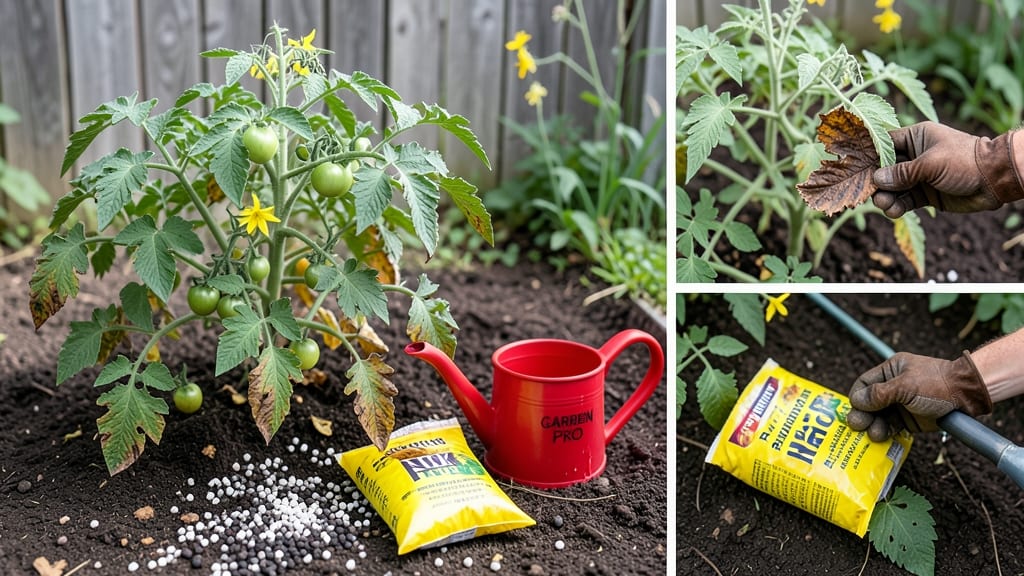
When your tomato plants look like they're suffering from a chemical burn, you're probably overfeeding them. 🌱 The symptoms—yellowing leaves, stunted growth, and that dreaded blossom-end rot—aren’t just bad luck; they’re your plants screaming for help.
I’ve seen this happen more times than I’d like to admit, usually after a well-meaning gardener goes overboard with fertilizer. The problem starts when too much nitrogen or salts build up in the soil, overwhelming the roots and blocking water uptake.
Your plants can’t absorb nutrients properly, leading to those classic signs of distress. The good news? It’s fixable with a few simple steps—flushing the soil, adjusting your feeding schedule, and sometimes even repotting to fresh soil.
By the end of this, your tomatoes will be back to their vigorous selves, producing those juicy, flavorful fruits you planted them for. You’ll also learn how to keep this from happening again, so next season’s harvest stays healthy and productive from start to finish.
First, stop feeding immediately and water thoroughly to help leach out excess salts. Then, mix in a handful of compost or aged manure to restore balance to the soil. If the roots look damaged, consider repotting into fresh, well-draining soil to give your plants a clean start.
Prevent future overfeeding by testing your soil before planting and sticking to a balanced fertilizer schedule. A little goes a long way—your tomatoes will thank you with bigger, tastier fruit and fewer headaches. Trust me, your future self will appreciate the patience now.
Root Causes of Overfeeding Tomatoes
Overfeeding tomato plants isn’t just about dumping too much fertilizer—it’s a sneaky imbalance that disrupts their delicate chemistry. When nutrients become excessive, they throw off the plant’s natural processes, leading to stunted growth, leaf burn, or even death. Let’s break down the real culprits behind this common gardening mistake.
Tomatoes thrive on a balanced diet, but too much of a good thing—especially nitrogen, phosphorus, or potassium—can overwhelm them. Fertilizers, whether synthetic or organic, contain concentrated nutrients that, when applied too frequently or in high doses, disrupt soil chemistry.
- Nitrogen overload: While nitrogen fuels leafy growth, excess amounts cause luxuriant foliage at the expense of fruit production. The plant prioritizes leaves over flowers and tomatoes, leading to blindness (no fruit set).
- Salt buildup: Synthetic fertilizers (like 10-10-10) leave behind residual salts that alter soil pH and osmolality. This makes it harder for roots to absorb water, causing physiological drought—even when the soil is moist.
- Burned roots: High concentrations of soluble salts or acids (from fertilizers like urea) can damage root cell membranes, leading to necrosis (dead tissue). Think of it like chemical sunburn for roots.
Pro tip: 💡 Always follow label instructions and dilute liquid fertilizers to half-strength for tomatoes. A soil test can reveal if your garden is already nutrient-rich.
Not all soil is created equal—and neither are soil amendments. Adding too much compost, manure, or peat moss without balancing it with organic matter like perlite or sand can create a nutrient-dense but anaerobic (low-oxygen) environment. This traps excess nutrients, preventing roots from accessing them efficiently.
- Compacted soil: Heavy clay or over-amended soil restricts root growth, forcing roots to compete aggressively for nutrients. The result? Root-bound stress and nutrient uptake failure.
- Unbalanced organic matter: Fresh manure (especially chicken or cow) is a hotspot for ammonia and salts. If not composted properly, it can burn roots and disrupt microbial activity, which tomatoes rely on for nutrient breakdown.
- pH imbalances: Tomatoes prefer a pH of 6.0–6.8. Soil that’s too acidic or alkaline locks up essential nutrients like phosphorus and calcium, making them unavailable even if they’re present.
Pro tip: 🌡️ Test your soil’s pH and nutrient levels before planting. If amending, use a 50/50 mix of compost and native soil to avoid overwhelming roots.
Water is the delivery system for nutrients—but too much of it leaches fertilizers out of reach before roots can absorb them. However, the real damage happens when excess water dilutes soil nutrients, creating a nutrient soup that roots can’t process efficiently.
- Leaching effect: Frequent deep watering (especially with soluble fertilizers) washes away nutrients below the root zone. This leaves the topsoil oversaturated with salts while deeper roots starve.
- Oxygen deprivation: Waterlogged soil displaces oxygen, suffocating roots and reducing their ability to uptake nutrients. This creates a feedback loop: stressed roots can’t absorb what’s already there, so the plant signals for more fertilizer—compounding the problem.
- Fungal growth: Excess moisture + high salt levels create the perfect storm for root-rotting fungi (like Pythium), which compete with tomato roots for nutrients and space.
Pro tip: ✨ Use drip irrigation or soaker hoses to deliver water and fertilizer slowly and directly to the root zone. Avoid overhead watering, which evaporates nutrients.
Tomatoes communicate when they’re overfed—you just have to listen. Many gardeners keep feeding based on schedule rather than plant health, missing critical warning signs.
- Leaf discoloration:
- Yellowing leaves (chlorosis): Often a sign of iron or magnesium deficiency caused by high pH or salt buildup from over-fertilizing.
- Brown or crispy edges: Salt burn from excess fertilizers, which draws water out of leaf cells.
- Stunted growth: If your tomato plant is all leaves, no flowers, it’s likely overfed with nitrogen. The plant is prioritizing foliage over reproduction.
- Blossom end rot: While often linked to calcium, excessive salts can also block calcium uptake, leading to this classic tomato problem.
Pro tip: 🎯 Pause fertilizing if you see these signs and flush the soil with water to leach out excess salts. A balanced liquid feed (like 5-5-5) applied lightly is better than heavy doses.
Quick Fixes for Fertilizer Overload
Overfeeding your tomato plants can turn your garden into a chemical cocktail—leaving roots burned, leaves crispy, and fruit stunted. But don’t panic! With the right adjustments, you can nurse your plants back to health and prevent future mishaps.
Below, we’ll map out cause-specific fixes, from flushing out excess salts to adjusting your feeding schedule. Let’s get your tomatoes thriving again—without the overkill.
---
Symptoms: Yellowing leaves, wilting despite moist soil, or a white crust on the soil surface. Cause: Too much synthetic fertilizer (especially high in nitrogen or salts) has disrupted root function.
#### Step 1: Water Deeply to Dilute Buildup 💦 - How: Give your plants 1–2 inches of water over 2–3 days. This flushes excess salts and nutrients from the root zone. - Pro Tip: Use rainwater or distilled water if your tap water is hard (high in minerals).
Avoid chlorinated water, which can stress roots further.
#### Step 2: Amend the Soil 🌱 - For Containers: Mix in 2–3 inches of fresh potting soil or compost to dilute concentrated salts. - For Garden Beds: Work in 2–3 inches of compost or well-rotted manure around the base of the plant (avoid direct contact with stems). - Bonus Fix: Sprinkle a thin layer of wood ash (if your soil is acidic) or sulfur (if alkaline) to balance pH naturally.
#### Step 3: Pause Fertilizing & Feed Lightly 🛑 - Wait 2–4 weeks before resuming fertilizer. When you do, cut the dose in half and use a balanced, organic fertilizer (like 5-5-5 or compost tea). - Avoid: Synthetic fertilizers with high phosphorus (e.g., bloom boosters) until roots recover.
--- Symptoms: Lush green leaves but no flowers/fruit, or small, misshapen tomatoes. Cause: Too much nitrogen (common with overuse of blood meal, fish emulsion, or synthetic "green" fertilizers) promotes foliage at the expense of fruiting.
#### Step 1: Shift to a Bloom-Boosting Formula 🌸 - Switch to a low-nitrogen, high-phosphorus fertilizer (e.g., 10-20-10 or tomato-specific blends). - DIY Option: Brew compost tea (steep compost in water for 24–48 hours, strain, and dilute 1:1 with water). It’s gentle and packed with micronutrients.
#### Step 2: Prune for Better Airflow & Fruit Set ✂️ - Trim suckers (the small shoots between the main stem and branches) to redirect energy to existing fruit. - Remove lower leaves touching the soil to prevent disease and improve airflow.
#### Step 3: Encourage Fruiting with Natural Tricks 🌞 - Prune back the top of the plant (if it’s over 4 feet tall) to signal it’s time to focus on fruit. - Hand-pollinate flowers by gently shaking plants or using a small brush to transfer pollen. - Pro Tip: If nights are warm (above 75°F), reduce watering slightly—this can trigger flowering in some varieties.
--- Symptoms: Brown, curled leaf edges; soil looks like it’s been sprinkled with salt. Cause: Accumulated salts from fertilizers (especially synthetic ones) or improper soil pH.
#### Step 1: Test & Correct Soil pH 📊 - Ideal pH for tomatoes: 6.0–6.8 (slightly acidic). - Test: Use a soil pH kit or send a sample to your local extension office. - Fix: - If pH is too high (alkaline): Add elemental sulfur or peat moss. - If pH is too low (acidic): Mix in wood ash or crushed eggshells.
#### Step 2: Leach Out Salts with Vinegar Rinse 🍶 - For Containers: Water plants with a 1:10 vinegar-to-water solution (1 part white vinegar to 10 parts water).
This helps dissolve salt buildup. - For Garden Beds: Avoid vinegar (it can acidify soil too much). Instead, water heavily with plain water for 3 days.
#### Step 3: Switch to Organic & Slow-Release Fertilizers 🌿 - Avoid: Quick-release synthetics (like Miracle-Gro). Opt for: - Slow-release granules (like Osmocote). - Organic amendments (worm castings, bone meal, or fish bones). - Foliar sprays (seaweed extract or liquid kelp) for micronutrients without soil buildup.
--- Once your tomatoes are back on track, prevent overfeeding with these habits:
#### 💡 Fertilize Like a Pro - Follow the "Less is More" Rule: More fertilizer ≠ more tomatoes.
Stick to label instructions or split doses. - Feed in Stages: - Early Growth (transplanting): Use a balanced fertilizer (10-10-10). - Flowering Stage: Switch to low-nitrogen, high-phosphorus (5-10-10). - Fruiting Stage: Use a potassium-rich fertilizer (e.g., 0-10-10) or wood ash.
#### 🌡️ Monitor Soil & Plant Health - Check soil moisture before fertilizing—never feed dry soil (it burns roots). - Watch for color cues: - Dark green leaves? You’re overdoing nitrogen. - Purple stems? Phosphorus is lacking (but don’t overcorrect—too much can harm roots).
#### 🎯 Rotate & Companion Plant - Avoid fertilizing the same spot yearly—rotate crops to prevent nutrient buildup. - Plant companions like basil, marigolds, or borage to improve soil health and deter pests naturally.
#### ✨ DIY Soil Tests for Peace of Mind - The Penny Test: Dig a hole, place a penny in the soil, and cover it.
If it’s hard to see after 24 hours, your soil is too compacted or salty—flush it! - The Squeeze Test: Grab a handful of moist soil. If it crumbles easily, it’s well-aerated; if it sticks, amend with compost.
--- - Don’t use Epsom salt as a quick fix—it can worsen magnesium imbalances if overused. - Avoid "flush and forget"—after leaching, resume feeding lightly to avoid nutrient deficiencies. - Don’t top-dress with fertilizer—always water first to move nutrients into the root zone.
--- By tackling the root cause (literally!) of your overfeeding issue, your tomato plants will bounce back stronger—and you’ll learn to feed them like a pro. Happy gardening! 🍅🌿
Frequently asked questions
How do I know if my tomato plants are overfed?
Look for these key signs: yellowing leaves (especially between veins), crispy brown edges, stunted growth, or a white crust on the soil surface. If your plants have lots of leaves but few flowers/fruit, that’s another red flag—excess nitrogen causes this "blindness." Check the roots too; if they look blackened or mushy, overfeeding may have burned them.
Can I still save my tomato plants if I’ve overfed them?
Start by giving your plants 1–2 inches of water over 2–3 days to flush out excess salts. Mix in 2–3 inches of compost around the base (not touching stems) to restore balance. Pause fertilizing for 2–4 weeks and switch to a balanced, organic fertilizer when you resume. With proper care, most plants recover within 2–4 weeks.
What’s the safest fertilizer for tomatoes after overfeeding?
After correcting an overfeeding issue, use organic, slow-release fertilizers like worm castings, compost tea, or a 5-5-5 balanced mix. Avoid synthetic fertilizers with high phosphorus (like bloom boosters) until roots recover. For micronutrients, try foliar sprays with seaweed extract—it’s gentle and delivers nutrients without soil buildup.
How often should I fertilize tomatoes to avoid overfeeding?
Feed tomatoes every 2–4 weeks during the growing season, but always follow label instructions. Use half the recommended dose for container plants. Monitor your plants’ health: if leaves stay dark green with no flowers, you’re overdoing nitrogen. Switch to a low-nitrogen, high-phosphorus fertilizer (like 5-10-10) when flowers appear.
Will overfeeding tomato plants kill them?
Severe overfeeding can damage roots and stunt growth, but it rarely kills healthy tomato plants outright. The real danger is secondary issues like root rot from salt buildup or fungal infections. If you act quickly by flushing the soil and adjusting care, your plants will bounce back. However, chronic overfeeding weakens plants, making them more susceptible to pests and diseases.