
Vegetables
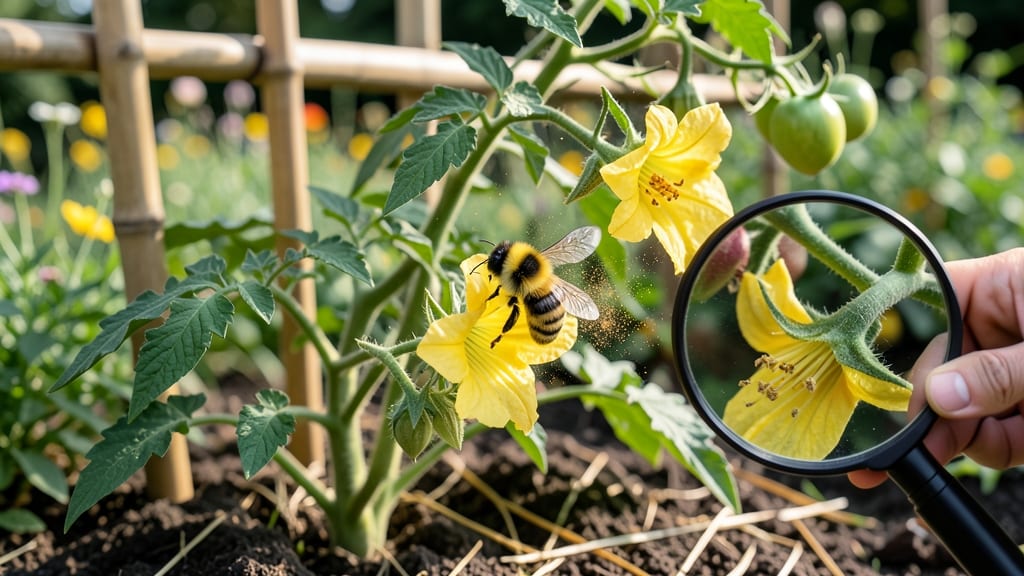
Tomato buzz pollination happens when bumblebees vibrate their flight muscles against tomato flowers, shaking loose pollen trapped in the flower's anthers. This unique technique boosts fruit set by up to 30% compared to traditional bee visits, making it essential for greenhouse-grown and high-value tomato crops where natural pollinators are scarce.
This specialized pollination method works because tomato flowers have poricidal anthers—tiny pores that only release pollen when physically agitated. 🔥 Unlike many flowers, tomatoes rely on bees' high-frequency vibrations (around 250 Hz) to dislodge pollen grains, which standard bee visits often miss.
Greenhouse growers frequently use artificial buzz pollination tools to replicate this effect when natural bee populations are insufficient, ensuring consistent fruit development even in controlled environments.
What's fascinating is how this process directly impacts yield—studies show buzz-pollinated tomato plants can produce 20-50% more fruit than those pollinated passively. The vibrations don't just release pollen; they also help distribute it more efficiently across the flower's stigma, increasing the chances of successful fertilization.
For home gardeners, attracting bumblebees through native plantings or providing bee houses can naturally enhance this process, while commercial growers often supplement with specialized tools during flowering seasons.
💡 In This Article
- How Buzz Pollination Boosts Tomato Fruit Production
- Practical Ways to Enhance Tomato Pollination in Gardens
How buzz pollination boosts tomato fruit production
The magic of tomato buzz pollination lies in the flower's unique anatomy—specifically its poricidal anthers, which store pollen in tiny, sealed pores. Unlike many flowers that release pollen freely, tomato anthers only open their pores when subjected to high-frequency vibrations between 200-300 Hz.
When bumblebees land on tomato blossoms, they rapidly contract their flight muscles at this precise frequency, creating vibrations that physically shake pollen loose from these anthers.
This process is so efficient that a single buzz pollination event can release 10-15 times more pollen than a standard bee visit that only brushes against the flower.
What makes this even more remarkable is the flower's morphology. Tomato flowers have a two-lobed stigma that splits open during buzz pollination, creating a "V" shape that channels released pollen directly toward the receptive surface.
Without these vibrations, much of the pollen remains trapped inside the anthers, leading to poor fruit set. Studies show that in greenhouse conditions where natural pollinators are limited, buzz pollination can increase fruit set from 10-20% to over 80%—a difference that translates directly to commercial viability for growers.
The vibrations also help distribute pollen more evenly across the stigma, increasing the chances of successful fertilization at multiple points.
This pollination method becomes particularly crucial in controlled environments like greenhouses, where factors like temperature, humidity, and airflow can be optimized—but natural pollinators are often absent. Here, growers frequently use electric buzz pollination tools that mimic bumblebee vibrations, delivering 100-200 vibrations per second for 1-2 seconds per flower.
The tools are especially valuable for high-value tomato varieties where fruit quality and consistency are paramount. Even in open fields, the presence of bumblebees can boost yields by 30-50% compared to honeybees, which lack the necessary muscle structure for effective buzz pollination.
The science behind this efficiency extends to the pollen itself. Tomato pollen grains are relatively large (0.03-0.05 mm) and sticky, making them ideal candidates for vibration-based release rather than wind or passive insect transfer.
When bees vibrate the flower, they create a fluid-like motion within the anthers that propels pollen outward with enough force to reach the stigma. This mechanical advantage is why buzz pollination works so well with tomatoes—a plant that has evolved this specialized relationship with its primary pollinators.
The process also benefits from the bee's position: bumblebees often press their bodies directly against the flower's center, maximizing contact and vibration transfer.
What most gardeners don't realize is how quickly this process occurs. A single buzz pollination event lasts only 1-3 seconds, yet during that time, the bee can release enough pollen to fertilize dozens of ovules within a single flower.
This rapid efficiency is why commercial tomato growers often schedule buzz pollination during peak flowering hours when temperatures are optimal (70-85°F) and humidity is moderate.
The combination of vibration frequency, flower morphology, and pollen characteristics creates a perfect storm for maximizing fruit set in tomatoes—a process that simply can't be replicated through passive pollination methods alone.
For those curious about the sensory experience, imagine holding a tomato flower and gently tapping it at the right frequency—you'd feel the subtle vibration through your fingers as pollen begins to dust out. This tactile feedback gives a small taste of what bumblebees experience during buzz pollination.
The process isn't just about quantity of pollen released; it's about precision in delivery that ensures every part of the flower's reproductive structures gets properly engaged. 🔥