
Plants
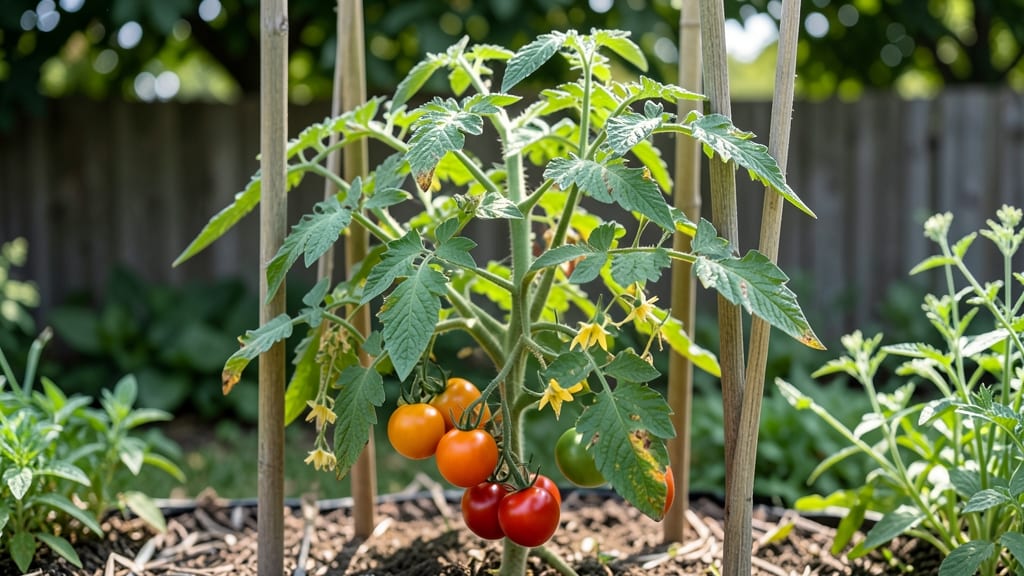
Tomato plants are not perennial—they die back after producing fruit each growing season, as they are annuals in most climates. However, in warm regions, they may survive multiple years with proper care and overwintering techniques.
Most tomato plants follow a one-season lifecycle because their energy focuses on fruit production rather than root or stem survival. 🌱 In cooler climates, frost kills them off completely, but in frost-free zones like USDA hardiness zones 10-11, you can coax them into a second year with careful pruning and protection.
I've seen gardeners successfully overwinter plants using thick mulch or moving them to containers for indoor storage during mild winters.
What makes this possible is their ability to regrow from the base if the crown survives. The key is stopping watering before the first frost and harvesting seeds from mature tomatoes to replant the following season. This technique works best with heirloom varieties that aren't bred specifically for annual production.
💡 In This Article
- Why Tomato Plants Die Annually: Biology and Climate Factors
- Overwintering Tomato Plants: Step-by-Step Survival Guide
Why tomato plants die annually: biology and climate factors
Tomato plants are classified as annuals because their biological energy is primarily directed toward fruit production rather than long-term survival. When temperatures drop below 40°F, their cellular structure begins to break down—a process called frost damage.
The plant's vascular system, which transports water and nutrients, becomes clogged with ice crystals, disrupting the flow of life-sustaining compounds. This is why even a light frost can kill a tomato plant within hours, leaving only the roots intact.
There's a key difference between determinate (bush) and indeterminate (vining) varieties in how they allocate energy. Determinate tomatoes, like 'Roma' or 'Celebrity,' focus all their resources on a single harvest before dying back.
Indeterminate types, such as 'Sungold' or 'Brandywine,' continue growing and producing fruit until frost stops them—but their energy is still prioritized toward fruit development over root or stem preservation.
In warmer climates like USDA zones 10-11, where frost rarely occurs, these plants can survive multiple years because they don't face the same energy drain from cold stress.
The root system plays a critical role in this lifecycle. Tomato roots are shallow and fibrous, designed to absorb nutrients quickly during their short growing season.
Unlike perennials like asparagus or rhubarb, which develop deep, woody root systems for winter storage, tomato roots are fragile and easily damaged by cold or overwatering. When temperatures drop, these roots can't sustain the plant's needs, leading to rapid decline.
Even in frost-free zones, the plant's natural tendency is to die after fruiting unless actively protected.
Climate is the biggest factor in determining whether a tomato plant lives beyond one season. In northern regions (USDA zones 1-7), where winter temperatures drop below -10°F, tomato plants have no chance of survival.
However, in zones 8-9, with milder winters (down to 15-20°F), you might find the base of a plant survives if properly insulated. The plant's ability to regrow from the crown depends entirely on whether the meristematic tissue at the base remains viable through winter.
What most gardeners don't realize is that tomato plants actually have the genetic potential to be perennial—they just haven't evolved that trait because their natural environment (tropical South America) has no winter season.
In ideal conditions (consistent warmth, no frost), a tomato plant could theoretically live for years, producing fruit continuously. This is why some tropical varieties, like 'Black Krim,' show more resilience in warm microclimates when given proper care.