
Pests and Diseases
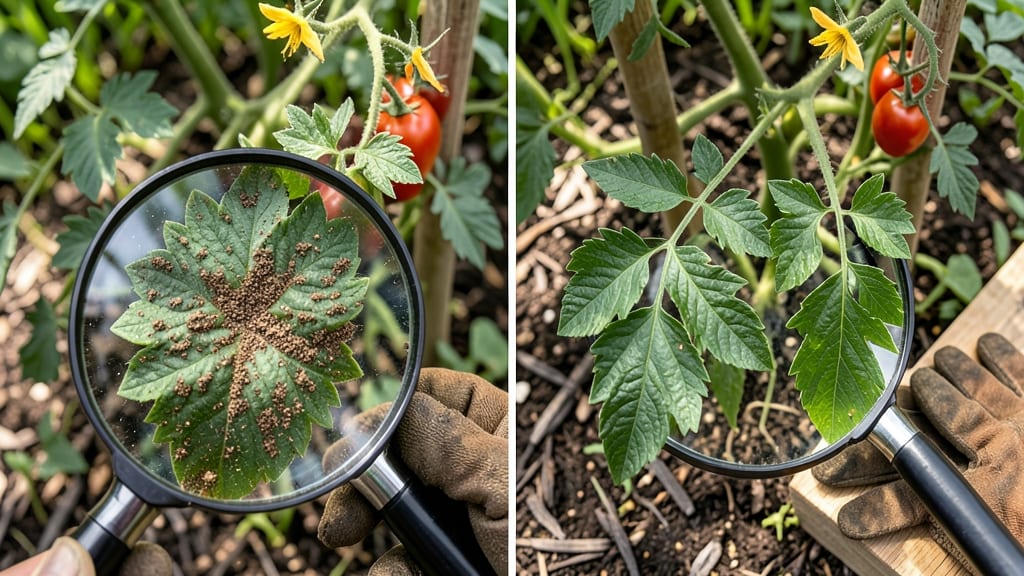
Those stubborn brown specks on your tomato leaves aren’t just unsightly—they’re a red flag for fungal diseases like early blight or septoria leaf spot. 🌱 I’ve battled this exact problem in my garden, and the difference between saving your plants and losing them comes down to acting fast and identifying the right issue.
The first step is figuring out what’s causing the specks: Are they concentric rings (septoria), irregular brown patches (early blight), or tiny yellow specks with webbing (spider mites)? Timing matters too—early blight starts at the bottom of older leaves, while late blight appears suddenly and spreads fast.
Once you know the culprit, you can tackle it with organic sprays like copper fungicide or neem oil, or prune away infected foliage before it spreads. You’ll see improvement within 7-10 days if you catch it early—healthier leaves, fewer spots, and tomatoes that keep producing.
The key is consistency: Remove infected leaves regularly, space plants properly for airflow, and rotate your fungicides to prevent resistance. This works for backyard gardens, containers, and even greenhouse setups. Let’s get those leaves looking green again!
Root Causes Of Leaf Spots
Understanding why your tomato leaves develop those pesky brown specks is the first step to saving your plants. These spots rarely appear out of nowhere—they’re usually a sign of environmental stress, fungal infections, or even tiny invaders wreaking havoc.
Let’s break down the most common culprits behind this unsightly (and often harmful) issue.
---
Fungi are the #1 reason for brown specks on tomato leaves, and several types can strike your plants. Here’s how they work:
- **Early Blight (Alternaria solani) - How it spreads: This fungal pathogen thrives in warm, humid conditions (60–85°F) and enters through wounds or old leaf tissue. - Symptoms: Concentric brown spots with darker rings, often starting on lower leaves and spreading upward. - Why it happens: Overhead watering, poor air circulation, or planting tomatoes in the same spot year after year creates the perfect breeding ground.
- Late Blight (Phytophthora infestans) - How it spreads: A devastating cousin of early blight, late blight loves cool, wet weather (50–77°F) and can destroy plants in days. - Symptoms: Irregular brown spots with white mold on undersides—often mistaken for early blight but far more aggressive. - Why it happens: Rainy seasons, contaminated soil, or nearby infected crops (like potatoes) accelerate its spread.
- Septoria Leaf Spot (Septoria lycopersici) - How it spreads: This fungus favors wet foliage and thrives in temperatures between 60–80°F. - Symptoms: Small, circular brown spots with tiny black dots (pycnidia) in the center. - Why it happens: Excessive moisture on leaves—whether from rain, dew, or overhead irrigation—gives it a foothold.
💡 Pro Tip: Fungi spread faster in crowded gardens. Prune leaves to improve airflow and avoid watering at night to keep foliage dry.
---
Not all brown specks are fungal—sometimes, your tomatoes are just fighting the elements.
- Sunburn (Sunscald) - How it happens: Intense sunlight (especially after rain or transplant shock) can scorch leaves, leaving crispy, brown patches. - Symptoms: Dry, papery brown spots on leaf edges or surfaces, often on young or newly exposed leaves. - Why it happens: Sudden heatwaves, poor acclimation, or lack of shade cloth in hot climates trigger this.
- Water Stress (Over/Under-Watering) - How it happens: Too little water causes leaf edges to brown and crisp (like a wilting plant), while overwatering leads to soggy, discolored spots. - Symptoms: Brown, leathery patches (underwatering) or yellowing with brown edges (overwatering). - Why it happens: Inconsistent moisture levels or poor drainage stress the plant, making it vulnerable to secondary infections.
- Nutrient Deficiencies - How it happens: Lack of key nutrients (like nitrogen, potassium, or magnesium) weakens leaves, making them prone to browning. - Symptoms: Brown spots between leaf veins (magnesium deficiency) or overall yellowing with brown edges (nitrogen deficiency). - Why it happens: Poor soil quality, over-fertilizing with synthetic salts, or compacted roots limit nutrient uptake.
🌡️ Quick Fix: Mulch your plants to retain moisture, use drip irrigation to avoid leaf wetness, and test your soil to rule out deficiencies.
---
Sometimes, tiny pests or physical trauma cause those brown specks.
- Spider Mites & Aphids - How they damage: These sap-sucking pests weaken leaves, causing stippling (tiny brown dots) and eventual browning. - Why it happens: Dry conditions or chemical sprays (which kill beneficial insects) create ideal conditions for outbreaks.
- Hail or Wind Damage - How it happens: Physical trauma from storms or rough handling bruises leaves, leading to brown, water-soaked spots. - Why it happens: No plant is immune to weather—even sturdy tomatoes can get battered.
- Chemical Burn - How it happens: Overuse of herbicides, fungicides, or even homemade sprays (like vinegar solutions) can scorch leaves. - Why it happens: Misapplication or exceeding recommended doses damages leaf tissue.
✨ Prevention Tip: Inspect leaves regularly for pests, and use row covers during hail-prone seasons to protect your plants.
--- Before jumping to conclusions, check for: - Bacterial Spot (Xanthomonas perforans) – Tiny, water-soaked spots that turn brown with yellow halos (common in humid climates). - Powdery Mildew – White, dusty spots that later turn brown and crispy (caused by poor airflow). - Viral Infections – Brown specks with mosaic patterns or stunted growth (often spread by insects).
🔍 Diagnostic Help:** Snap a clear photo of the spots (underside included) and compare it to [University Extension guides](https://horticulture.cals.cornell.edu/) for a definitive ID.
Quick Fixes for Leaf Spots
Brown specks on tomato leaves can be frustrating, but the good news is that most causes have straightforward fixes. Whether it’s fungal infections, environmental stress, or pests, taking action early can save your plants and keep your harvest thriving.
Below, we’ve mapped out the best solutions for each common cause—plus tips to prevent future outbreaks.
Fungal diseases like early blight, late blight, and septoria leaf spot thrive in damp conditions. The key? Stop the moisture, remove infected leaves, and apply fungicides if needed. #### 🔥 Step 1: Prune and Dispose of Infected Leaves - 👨🍳 Remove affected foliage immediately—don’t compost it! Fungal spores can survive in soil. - ✂️ Use clean, sharp pruners to avoid spreading spores to healthy leaves. - 🗑️ Bag and trash infected leaves (or burn them if possible). #### 🌡️ Step 2: Improve Airflow and Reduce Humidity - 🌬️ Space plants 18–24 inches apart to allow air circulation. - 💦 Water at the base (not overhead)—use drip irrigation or soaker hoses. - ⏰ Water early in the day so leaves dry quickly (fungi love overnight moisture). - 🌿 Avoid dense mulch near stems—keep it 2–3 inches away to prevent trapped dampness. #### 🛡️ Step 3: Apply Fungicidal Treatments If spots persist, act fast with these organic and chemical options:| Treatment | How to Use | Best For |
|---|---|---|
| Copper fungicide (e.g., Bordeaux mixture) | Spray every 7–10 days at dawn or dusk. Follow label rates. | Early blight, late blight |
| Neem oil (1–2%) | Mix with water and spray undersides of leaves. Reapply after rain. | Early signs of fungal spots, prevention |
| Baking soda spray (1 tsp baking soda + 1 quart water + few drops of dish soap) | Spray on dry leaves; reapply every 7–10 days. | Mild fungal infections, prevention |
| Chlorothalonil (e.g., Daconil) | Follow label instructions for severe infections. | Late blight, septoria leaf spot |
With these fixes, your tomato plants should bounce back in 1–2 weeks—and your speck-free leaves will be back to soaking up the sun (and producing juicy tomatoes!). 🍅🌞
Frequently asked questions
How can I tell if my tomato's brown specks are fungal or pest-related?
Check the leaf undersides and spot patterns: fungal spots (like early blight) often have concentric rings or black dots, while pest damage shows tiny yellow specks with webbing (spider mites) or sticky residue (aphids). Fungal spots also appear on older leaves first, while pests attack new growth.
Will removing infected leaves really stop the spread of fungal spots?
Fungal spores spread through water and air, so removing infected leaves immediately (especially lower ones) cuts off the infection source. Always use clean pruners and dispose of leaves in the trash—not compost—to prevent reinfection.
Can I still eat tomatoes with brown specks on the leaves?
Yes, but only if the fruit itself is healthy. Fungal spores rarely infect tomatoes through leaves, but severe cases (like late blight) can spread to fruit. When in doubt, harvest and cook tomatoes immediately—heat kills most pathogens.
How often should I spray neem oil for prevention?
Apply neem oil every 7–10 days during humid seasons or after rain to prevent fungal spots. Mix 1–2 tablespoons per gallon of water and spray undersides of leaves at dusk for best results.
What's the fastest way to fix sun-scorched tomato leaves?
Move plants to partial shade (30–50% shade cloth) and water deeply 1–2 times per week. Avoid midday transplanting—acclimate plants gradually to prevent further damage.