
Companion Plants
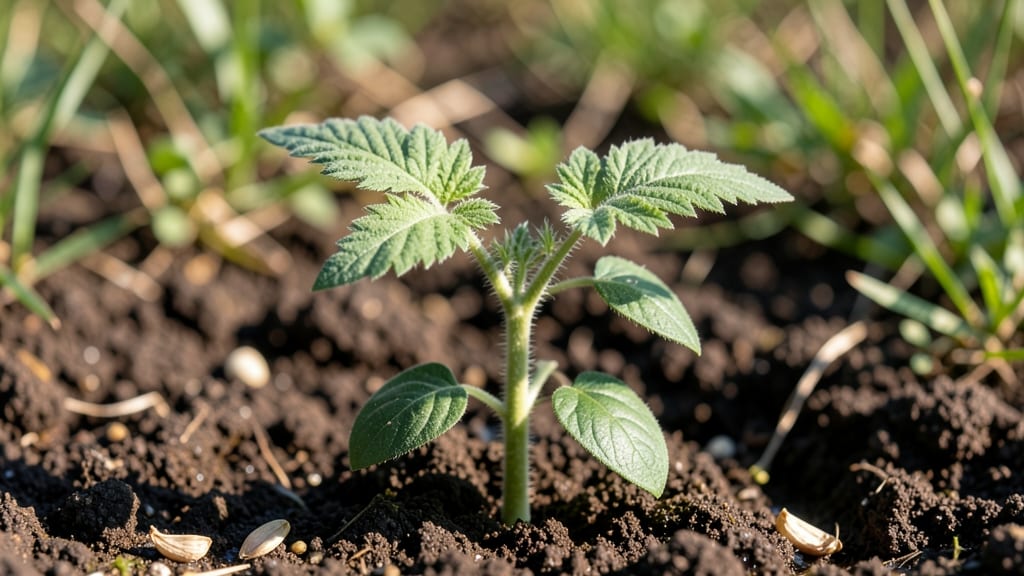
Tomato plants first sprout like two tiny, rounded leaves that look like miniature maple leaves—cotyledons—right after breaking soil. 🌱 These early leaves are thick and fleshy, storing energy for the plant’s next growth phase, and they’ll unfurl within 3-7 days of germination.
Unlike grassy wheat seedlings, tomato sprouts have a distinct, almost plump appearance that sets them apart. The real magic happens when the first true leaves emerge—smaller, serrated, and tomato-shaped. They grow in pairs along the stem, signaling healthy development.
If you spot yellowing or stunted growth at this stage, it’s often a sign of overwatering or poor soil drainage, but most seedlings bounce back quickly with proper care. By 10-14 days, you’ll see the plant’s main stem thickening, with leaves spaced evenly apart.
Healthy sprouts stand upright, while weak ones may lean or develop dark spots. This is when companion plants like basil can be introduced nearby to deter pests naturally. The key to success? Patience and observation.
A magnifying glass helps spot early signs of disease, but most tomato seedlings thrive with just bright light and consistent moisture. Once you recognize these early stages, you’ll never confuse them with weeds again!
📚 In This Guide
- What you need
- Instructions
- Tips and common mistakes
- Wrapping up and next steps
What you need
- ● Tomato seeds or seedlings: Choose heirloom, hybrid, or organic seeds based on your preference (e.g., cherry, beefsteak, or Roma). Pro tip: Start with 3–5 seeds per pot for better success rates!
- ● Seed-starting mix: 1–2 quarts of lightweight, sterile potting soil (avoid garden soil—it’s too dense!). Look for blends labeled "seed-starting" or "organic."
- ● Containers: For seeds: 4–6 small pots (3–4 inches deep) or a seed tray with individual cells.
- ● For transplants: 1–2 gallon pots or biodegradable peat pots (5–6 inches deep).
- ● Watering can or spray bottle: A fine-mist sprayer (like a Vivapak or Growneer model) to keep soil moist without drowning seeds.
- ● Grow lights or sunny windowsill: 12–16 hours of light daily (LED grow lights like Samsung LM300 work great for indoor setups).
- ● Plant labels: Small wooden sticks or biodegradable tags + a marker to track varieties.
- ○ Heat mat (optional but helpful): A seedling heat mat (set to 70–80°F) speeds up germination for slower varieties.
- ● Humidity dome or plastic wrap: Keeps moisture in while seeds sprout (remove once sprouts appear!).
- ● Fertilizer: A balanced, water-soluble fertilizer (e.g., Jack’s Classic 20-20-20) diluted to half-strength for seedlings.
- ● Pruning shears or scissors: For trimming leggy seedlings later (sterilize with rubbing alcohol!).
- ● Warmth: Ideal germination temps: 70–85°F (65°F minimum for most varieties).
- ● Patience: Sprouts typically emerge in 5–14 days (cherry tomatoes germinate fastest!).
- ● Space: Ensure seedlings get 12+ inches of vertical space to grow before transplanting.
How to identify tomato seedlings in their earliest stages
Here's how to spot those first delicate tomato sprouts—before they grow into familiar plants.
🌱 Step 1: Watch for the Radicle's Appearance
The very first sign is a tiny white or pale yellow root called the radicle, which emerges from the seed within 3-7 days at 75-85°F soil temperatures. You'll see it pushing through the soil surface before the shoot appears, like a single thread breaking through the earth.
This root anchors the seedling and starts drawing up moisture. If you're using clear plastic domes, you might spot it first through the bottom of the container. Don't disturb it—even a slight touch can damage this fragile structure.
🌿 Step 2: Spot the Hypocotyl and Cotyledons
Within 24-48 hours after the radicle appears, a small hook-shaped stem (the hypocotyl) will arch upward, pushing through the soil. This is followed by the cotyledons—the first true leaves—emerging as tiny, rounded, deep green structures that look like small shields.
These aren't the plant's true leaves (those come later), but they're essential for photosynthesis. You'll notice them unfolding within 5-7 days of germination, often while the seedling is still bent at the soil line. This is normal—don't mistake it for a weak sprout.
☀️ Step 3: Identify True Leaves for Confirmation
After 10-14 days, the cotyledons will fall off as the first true leaves appear—these are serrated, lance-shaped, and resemble miniature tomato foliage. They'll grow in pairs opposite each other on the stem, confirming you're dealing with a healthy tomato seedling.
At this stage, the plant will also develop a stronger stem and start branching out. If you're growing from seed, this is the moment to thin seedlings if you planted multiple per cell—keep only the strongest one to avoid competition.
⏰ Step 4: Monitor Growth Patterns for Health
Healthy tomato seedlings grow at a steady pace, with new leaves emerging every 3-5 days. Look for vibrant green color and sturdy stems—pale or yellowing leaves signal insufficient light, while stunted growth may indicate overwatering or cool temperatures.
If you see dark spots or mold on the soil surface, remove the dome immediately to prevent damping-off. Leggy seedlings (long, weak stems) mean they're reaching for light—adjust your grow light to 2-4 inches above the plants to encourage compact growth.
Tips & tricks for identifying early tomato seedlings
Here's what nobody tells you about those first delicate tomato sprouts—and how to avoid common mistakes that can derail your garden.
Timing Secret: The 3-7 day window for radicle emergence is critical, but don't panic if it takes longer. Soil temperature matters more than days on the calendar—keep it consistently between 75-85°F for optimal germination. If your seedlings are slow to appear, check your soil temperature with a thermometer rather than assuming it's warm enough. I've seen seeds sprout in 10 days when soil was only 68°F, but they were weak and leggy.
Visual Cues for Step 2: Those cotyledons might look like weak sprouts at first, but their deep green color and shield-like shape are unmistakable once you know what to look for. The hypocotyl's hook shape helps it push through soil—think of it as nature's built-in crowbar. If you're using seed trays, place them near a south-facing window or under a grow light immediately after the radicle appears to prevent weak stems from developing.
Health Monitoring: The 3-5 day interval between new leaves is your best indicator of healthy growth. When seedlings start stretching toward light (leggy growth), it's usually because they're not getting enough light—move them closer to your light source or increase light duration to 14-16 hours per day. I've had seedlings grow 6 inches tall before realizing they needed more light, and they never recovered properly.
Thinning Strategy: When you reach Step 3 and see those serrated true leaves, it's time to thin—but don't pull seedlings by hand. Use clean scissors to snip at soil level to avoid disturbing roots of remaining plants. The strongest seedling (usually the one with the most vibrant true leaves) should be your keeper. I've learned this the hard way after accidentally uprooting my best seedling while trying to thin.
Pro Tips for What Do Tomato Plants Look Like When They First Sprout
- Here's what nobody tells you about those first delicate tomato sprouts—and how to avoid common mistakes that can dera...
- Timing Secret: The 3-7 day window for radicle emergence is critical, but don't panic if it takes longer. Soil tempera...
- Visual Cues for Step 2: Those cotyledons might look like weak sprouts at first, but their deep green color and shield...
Frequently asked questions
How long does it take for tomato seeds to sprout?
Tomato seeds typically sprout within 5–14 days, depending on temperature, moisture, and seed freshness. Keep soil consistently warm (70–85°F) and moist to speed up germination. If nothing appears after 2 weeks, try replanting—seeds may have expired or faced poor conditions.
What if my tomato sprouts look weird or stunted?
Stunted or oddly shaped sprouts often signal overcrowding, poor light, or cold soil. Thin seedlings to 1–2 inches apart and ensure they get 6+ hours of sunlight daily. If leaves are pale or yellow, check for damping off (a fungal issue) and improve airflow. Weak sprouts may recover with better care!
Can I transplant tomato seedlings too soon after sprouting?
Wait until seedlings have 2–3 true leaves (not just the first "seed leaves") and are 1–2 inches tall before transplanting. Hardening off (acclimating them to outdoor conditions) for 5–7 days reduces shock. Transplanting too early can stunt growth or invite pests.
Are there fast-growing tomato varieties for quicker sprouts?
Yes! Varieties like 'Early Girl,' 'Stupice,' or 'Tiny Tim' germinate faster (often 5–7 days) and thrive in cooler conditions. For even quicker results, soak seeds in warm water for 24 hours before planting. Just ensure they get plenty of light to prevent leggy growth.
What should I do if my tomato sprouts turn black or mushy?
Black, mushy stems or spots are signs of damping off, caused by overwatering or fungi. Stop watering immediately, improve drainage, and treat soil with a fungicide (like copper spray). Space seedlings wider to boost airflow. Discard severely affected plants to prevent spread.
Wrapping up and next steps
Now that you know what to expect when those first tiny tomato sprouts push through the soil, you’re ready to nurture them into thriving plants! 🌱 Remember, patience and care are key—those delicate leaves will soon transform into lush vines loaded with juicy tomatoes.
Your next step? Transplant them into pots or your garden bed once they’ve grown 2-3 inches tall and have a few true leaves. Happy gardening!