How To
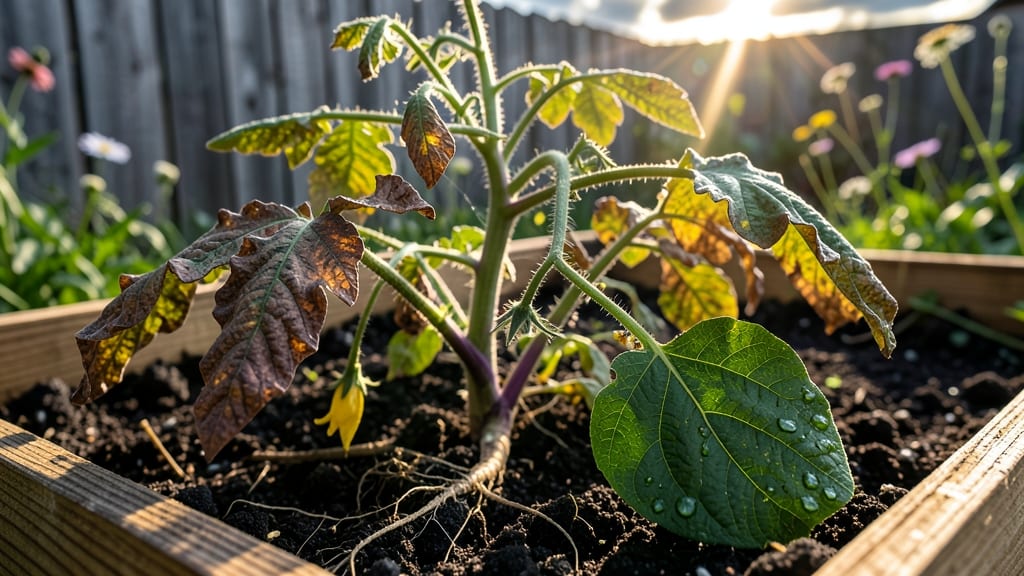
Your tomato plants are begging for help—those burnt tomato leaves aren’t just ugly, they’re stealing flavor from your harvest. 🌱 I’ve nursed back more scorched tomato plants than I’d like to admit, and the fixes work whether the damage comes from too much sun, thirsty roots, or a hidden infection.
The good news? You can often turn things around before the plant gives up.
First, figure out the real culprit: sunburn leaves crispy edges, while heat stress or drought makes leaves curl and blacken from the bottom up. Fungal infections like early blight create concentric rings of dead tissue.
Grab a magnifying glass—close-up clues tell you exactly what to fix, from adjusting shade cloth to adjusting watering or spraying with copper fungicide.
Within 7-10 days of proper care, you’ll see fresh green growth pushing through. The key is acting fast: mulch to keep roots cool, water deeply at the base (not overhead), and prune away the worst damage to redirect the plant’s energy.
Even severely burnt plants can bounce back if you catch it early.
For next season, space plants 18-24 inches apart, use shade cloth in peak afternoon sun, and rotate crops to break disease cycles. The payoff? Tomatoes that taste like summer, not ashes. Let’s get those leaves perking up again.
Root Causes Of Scorched Foliage
Tomato plants are resilient, but their leaves can turn crispy and blackened when exposed to stress—especially from environmental or cultural factors. Understanding the why behind burnt tomato leaves is the first step to prevention.
Below, we break down the most common culprits, backed by science, so you can diagnose and fix the issue before it’s too late.
---
When tomato plants sit in soggy soil for too long, their roots struggle to breathe. Oxygen deprivation forces the plant to starve for air, triggering a stress response that manifests as brown, brittle leaves.
- How it happens: - Excess water displaces oxygen in the soil, suffocating roots. - Poor drainage (common in clay or compacted soil) traps water, worsening the issue. - Overzealous watering—especially in cool, cloudy weather—can drown roots faster than the plant can recover.
- Actionable fix: - Test soil moisture with your finger: Water only when the top 1–2 inches are dry. - Amend heavy soil with perlite or compost to improve aeration. - Use drip irrigation instead of overhead watering to avoid wetting foliage (which can also lead to disease).
---
Tomatoes love sunlight, but too much direct UV exposure—especially in hot, dry climates—can scorch leaves faster than they can photosynthesize. This is most common on young, tender leaves or plants suddenly moved from shade to full sun.
- How it happens: - High temperatures (above 90°F/32°C) cause oxidative stress, breaking down chlorophyll. - Reflective surfaces (like white walls or pavement) amplify UV rays, acting like a magnifying glass. - Transplant shock (moving seedlings outdoors too early) leaves leaves vulnerable.
- Actionable fix: - Provide afternoon shade (use shade cloth or a temporary cover) during peak heat. - Mulch heavily (2–3 inches of straw or wood chips) to keep roots cool and soil moist. - Hardening off seedlings gradually (acclimating them to sun over 7–10 days) prevents shock.
---
Tomato leaves can crisp and blacken when exposed to high concentrations of salts, acids, or chemicals—whether from over-fertilizing, improper pesticide use, or even tap water with high mineral content.
- How it happens: - Salt buildup (from synthetic fertilizers like 10-10-10) draws water out of leaf cells, causing osmotic stress. - Acidic pesticides (some herbicides or fungicides) disrupt cell membranes when sprayed directly on foliage. - Hard water (high in calcium/magnesium) leaves white crusty deposits that block stomata (leaf pores).
- Actionable fix: - Flush soil with water after fertilizing to prevent salt buildup. - Use organic, slow-release fertilizers (like compost or worm castings) to avoid spikes in salt levels. - Test your water—if it’s hard, use rainwater or distilled water for sensitive plants. - Avoid spraying chemicals on leaves; apply pesticides to soil or undersides of leaves instead.
--- While not always "burnt" in the traditional sense, **pathogens like early blight (Alternaria solani) or bacterial spot (Xanthomonas) can cause leaves to blacken, crisp, and die in a pattern that mimics scorching.
- How it happens: - Early blight thrives in hot, humid conditions, entering through damaged leaves (e.g., from hail or poor pruning). - Bacterial spot spreads via water splashes, clogging stomata and causing rapid cell death. - Overhead watering keeps foliage wet, creating the perfect breeding ground.
- Actionable fix: - Remove infected leaves immediately (don’t compost them—bag and discard). - Space plants for airflow (18–24 inches apart) to reduce humidity around leaves. - Apply copper fungicide (for bacterial issues) or neem oil (for fungal prevention) preventatively. - Water at the base (never overhead) to keep leaves dry.
--- Too much or too little of certain nutrients can stress tomato plants, leading to leaf burn as a secondary symptom. The most common offenders?
| Nutrient Issue | Symptoms | Cause | |--------------------|---------------------------------------|--------------------------------------------| | Potassium (K) deficiency | Brown edges on older leaves | Poor soil, leaching from overwatering | | Magnesium (Mg) deficiency | Interveinal yellowing, then browning | Compacted soil, high calcium levels | | Chlorosis (iron/zinc deficiency) | Yellowing between veins, crispy edges | Alkaline soil (pH >7.0) blocks uptake | | Excess nitrogen (N) | Dark green leaves, weak stems, burnt tips | Over-fertilizing with synthetic N sources |
- Actionable fix: - Test your soil (a simple pH test kit helps). - Add Epsom salt (for magnesium) or chelated iron (for chlorosis) if deficient. - Balance your fertilizer—use a low-N, high-P/K blend (like 5-10-10) for fruiting plants. - Avoid fresh manure (high in ammonia, which can burn roots).
--- Physical damage from strong winds, hail, or even aggressive pruning can tear leaves, exposing them to rapid water loss and infection. Once damaged, leaves are more prone to oxidative browning (like a cut apple turning brown).
- How it happens: - Wind desiccation: Fast-moving air increases transpiration rates, drying leaves out. - Hail impact: Crushes cell walls, making leaves susceptible to rot or burn. - Over-pruning: Removing too much foliage at once disrupts the plant’s photosynthetic balance.
- Actionable fix: - Stake or cage tomatoes to protect them from wind damage. - Use row covers in storm-prone areas to shield plants. - Prune strategically: Remove only sick or crowded leaves—never more than 1/3 of the plant at once. - Mulch thickly** to reduce soil erosion (which can expose roots to wind stress).
Fixing and Preventing Leaf Scorch
Now that you know the causes behind those unsightly burnt tomato leaves, let’s tackle the fixes—without sacrificing flavor or productivity. The good news? Most issues are reversible with simple adjustments.
Below, we’ve mapped out targeted solutions based on the root cause, along with prevention tips to keep your plants thriving.
---
Problem: Soggy soil leads to root suffocation, stressing plants and causing leaf edges to crisp or blacken.
How to Fix: 1. 🔥 Stop Watering Immediately Let the top 1–2 inches of soil dry out completely before watering again. Stick your finger in—if it’s damp past your first knuckle, wait.
2. 🍳 Improve Drainage - For pots: Add a layer of perlite, gravel, or coconut coir to the bottom before repotting. - For garden beds: Amend heavy clay soil with compost or sand to loosen it.
3. 👨🍳 Repot if Needed If roots are circling or rotting, transfer the plant to a pot with drainage holes and fresh, well-draining potting mix.
Prevention Tips: - 💡 Water deeply but infrequently—tomatoes hate wet feet! Aim for 1–1.5 inches per week (adjust for climate). - 🌡️ Use a moisture meter to avoid guesswork. - ✨ Elevate pots slightly off the ground to prevent water pooling.
---
Problem: Intense afternoon sun or sudden heat waves can scorch leaves, turning them brown and papery.
How to Fix: 1. 🍳 Provide Afternoon Shade - Use shade cloth (30–50%) or a lightweight row cover during peak sun (12 PM–4 PM). - DIY hack: Drape a sheer curtain or old bedsheet over a trellis for partial shade.
2. 🥘 Mulch Generously Apply 2–3 inches of mulch (straw, wood chips, or grass clippings) to keep roots cool and retain moisture.
3. 🔪 Prune Damaged Leaves Snip off severely scorched leaves to redirect energy to healthy growth. Focus on lower leaves first.
Prevention Tips: - 🎯 Choose heat-tolerant varieties like ‘Solar Fire’ or ‘Heatmaster’ tomatoes. - 💡 Water in the morning to help leaves absorb heat and reduce evaporation. - 🌿 Avoid fertilizing during heatwaves—plants burn faster when stressed.
---
Problem: Blackened, mushy leaves with yellow halos or white/gray fuzz? Fungal diseases (like early blight or septoria leaf spot) or bacterial infections are likely culprits.
How to Fix: 1. 🔥 Remove Infected Leaves Immediately - 🔪 Snip off blackened or spotted leaves with sterilized pruners (wipe with rubbing alcohol). - 🚯 Do NOT compost them—dispose in the trash to prevent spread.
2. 🍳 Apply Fungicide - Organic option: Spray with a baking soda mix (1 tsp baking soda + 1 quart water + a drop of dish soap) every 7–10 days. - Chemical option: Use copper fungicide or neem oil (follow label instructions).
3. 👨🍳 Improve Airflow - 🌿 Space plants 18–24 inches apart or prune to encourage airflow. - ⏰ Water in the morning so leaves dry quickly.
Prevention Tips: - 💡 Rotate crops—never plant tomatoes in the same spot two years in a row. - 🌡️ Avoid overhead watering—use a drip irrigation system or water at the base. - ✨ Solarize soil (cover with clear plastic for 4–6 weeks in summer) to kill pathogens before planting.
---
Problem: Yellowing between veins, stunted growth, or leaf burn from excess salt (common with synthetic fertilizers).
How to Fix: 1. 🍳 Flush the Soil - 💧 Water heavily for 10–15 minutes to leach out excess salts. - Repeat 2–3 times over a week.
2. 🥘 Switch to Organic Fertilizer - 🌿 Use compost tea, worm castings, or a balanced organic fertilizer (like 5-5-5). - 📊 Avoid high-nitrogen fertilizers—they promote leafy growth at the expense of fruit.
3. 🔪 Prune Back Overgrowth - Trim suckers and excess foliage to reduce the plant’s demand for nutrients.
Prevention Tips: - 🎯 Test your soil before planting—aim for a pH of 6.0–6.8. - 💡 Feed lightly but often—use a weak fertilizer solution (half-strength) every 2–3 weeks. - ✨ Mulch with compost to slowly release nutrients without burning roots.
--- Pro Tip: 🌟 Combine fixes for best results! For example, if your tomatoes are scorched and overwatered, stop watering, improve drainage, and add shade simultaneously. Recovery time varies, but with consistency, your plants should bounce back in 2–4 weeks.
Frequently asked questions
Why do my tomato leaves look burnt on the edges but not the center?
This classic symptom usually means potassium deficiency or osmotic stress from over-fertilizing. The edges burn first because they're the oldest cells, while the center stays green longer. Test your soil—if potassium is low, add wood ash (1 cup per plant) or use a balanced fertilizer like 5-10-10. For salt stress, flush the soil with water for 10 minutes to leach out excess minerals.
Can burnt tomato leaves recover, or should I remove them?
Severely burnt leaves won't recover, but pruning them helps the plant redirect energy to new growth. Snip off only the most damaged leaves (never more than 1/3 of the plant at once). For mild scorching, the plant may regrow healthy foliage in 2-3 weeks if you fix the root cause—whether it's adjusting watering, adding shade, or improving soil drainage.
Is it safe to eat tomatoes from plants with burnt leaves?
Yes, but only if the fruit itself isn't damaged and the plant isn't suffering from a serious disease like blight. Burnt leaves typically indicate environmental stress (sun, water, or nutrients), not toxicity. The tomatoes will still be safe to eat, though flavor may be affected. For disease-related burn (like bacterial spot), remove infected leaves and treat the plant before harvesting.
How can I tell if my tomato leaves are burnt from sun vs. disease?
Sunburn creates crispy, dry edges that look like they've been singed, often on leaves exposed to direct afternoon sun. Disease (like early blight) causes soft, mushy spots with concentric rings and may have white/gray fuzz. Check the undersides of leaves—disease often starts there. Sunburn leaves stay attached, while diseased leaves may drop prematurely.
Will Epsom salt help my burnt tomato leaves?
Only if the burn is caused by magnesium deficiency—Epsom salt (magnesium sulfate) won't help with sunburn, overwatering, or disease. For magnesium issues, dissolve 1 tablespoon in a gallon of water and spray foliage weekly. But first, confirm the problem: magnesium deficiency shows as yellowing between veins, not crispy burnt edges. Test your soil for accurate diagnosis.