
How To
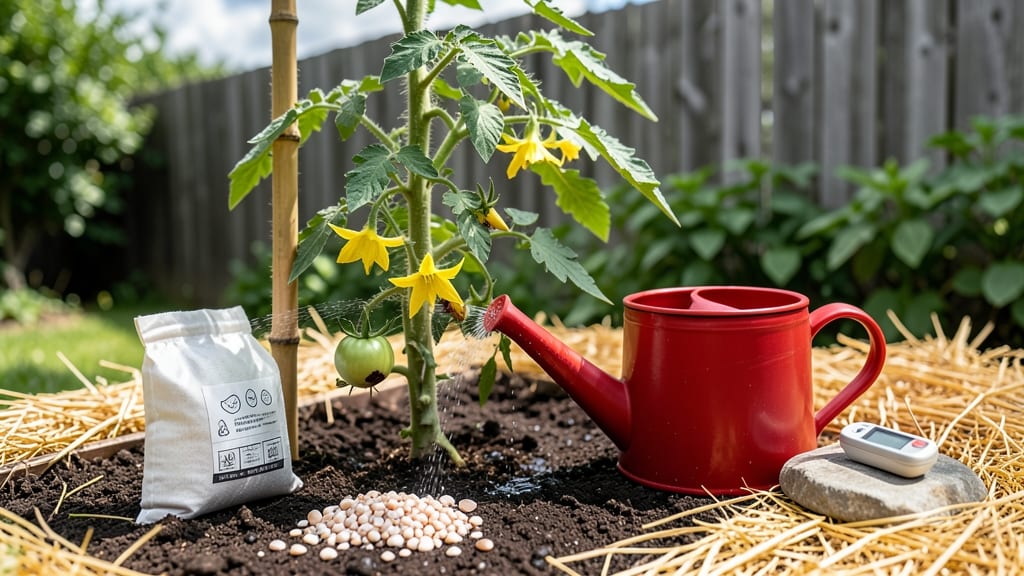
How to stop blossom end rot on tomato plants—turn your perfect tomatoes into shriveled, leathery messes—until you fix the calcium. 🌱 I’ve lost entire harvests to this stubborn problem, but a few targeted fixes (and a little prevention) can save your season. The key isn’t just adding calcium—it’s making sure your plants absorb it when they need it most.
Inconsistent watering and compacted soil are the real villains here. When roots can’t access calcium, your tomatoes develop those dark, sunken spots at the blossom end. The fix? Deep watering (1-2 inches per week) and soil amendments like crushed eggshells or gypsum—both release calcium slowly.
I swear by a mulch layer too; it keeps moisture steady and roots happy.
You’ll see the difference in 2-3 weeks: new growth stays firm, and existing spots won’t spread. The best part? Once you adjust your watering rhythm, your plants build resilience. No more tossing tomatoes—just juicy, blemish-free harvests. (Yes, I’ve cried over fewer rotten tomatoes.)
For stubborn cases, a foliar spray with calcium nitrate gives a quick boost. But here’s the secret: Prevention is easier than cleanup. Start now, and your next tomato season will be flawless. Let’s get those plants thriving!
The root causes of blossom end rot
Blossom end rot is a frustrating but common issue for tomato gardeners, turning your hard work into a sad, mushy mess at the bottom of your prized fruits. 🍅😬 The good news?
Understanding the real culprits behind this problem is the first step to fixing it for good. Let’s break down the science—without the jargon overload—so you can take action fast.
---
Blossom end rot is, at its core, a calcium disorder. Tomatoes need calcium to build strong cell walls, especially in rapidly growing fruit. When calcium levels drop—even slightly—the youngest cells (at the blossom end) can’t form properly, leading to those telltale dark, sunken spots.
But here’s the catch: Calcium isn’t always the direct issue. It’s more about availability. Even if your soil has enough calcium, your plants might not be able to absorb it efficiently due to: - Too much moisture: Calcium moves through the plant via water.
If the soil is soggy, roots struggle to take it up, and the plant “drowns” the fruit’s calcium supply. - Uneven distribution: Fast-growing tomatoes can outpace calcium uptake, leaving the blossom end starved while the rest of the plant thrives. - pH imbalances: Soil that’s too acidic (below 6.0) or too alkaline (above 7.0) locks calcium out of the plant’s reach.
Pro tip: 💡 Think of calcium like a delivery service—it’s not just about having enough in the soil, but making sure it gets to where it’s needed!
---
Tomatoes are thirsty, but they hate inconsistency. Blossom end rot often flares up when watering habits go haywire. Here’s how: - Inconsistent moisture: Plants need steady hydration.
If they’re soaked one day and dried out the next, calcium uptake stutters, and the blossom end pays the price. - Surface-level watering: Watering the leaves or soil unevenly (like from a sprinkler) can cause uneven calcium distribution.
The roots need deep, even moisture to pull calcium from the soil. - Overwatering: Compacted or waterlogged soil cuts off oxygen to the roots, slowing calcium absorption. Roots that can’t “breathe” can’t feed the plant properly.
Pro tip: 🌡️ Aim for 1–1.5 inches of water per week, delivered at the soil level (not the leaves). Use drip irrigation or soaker hoses for consistency!
---
Tomatoes are tough, but they’re not immune to stress.
Extreme or sudden changes in temperature or humidity can disrupt calcium metabolism: - Hot spells: Rapid growth during heatwaves can outpace calcium uptake, leaving fruit vulnerable. - Cold snaps: Chilly nights slow root activity, reducing the plant’s ability to absorb nutrients—including calcium. - Transplant shock: Moving young plants or disturbing roots (even during repotting) can stress them, temporarily halting calcium flow.
Pro tip: 🔥 Mulch your plants with straw or grass clippings to keep soil temps stable and reduce stress. Avoid fertilizing during heatwaves—it speeds up growth without giving roots time to catch up.
---
Fertilizer and soil amendments can backfire if overused. Here’s how they contribute to blossom end rot: - Excess nitrogen: Too much nitrogen (common in “fast-growth” fertilizers) promotes leafy growth at the expense of fruit development.
The plant diverts energy away from calcium-rich fruit production. - High salt content: Over-fertilizing or using poor-quality soil amendments can salt the soil, making it harder for roots to absorb calcium. - Organic matter overload: While compost is great, too much can create anaerobic (oxygen-poor) pockets in the soil, suffocating roots and blocking nutrient uptake.
Pro tip: 📊 Test your soil before amending! A simple DIY test kit can reveal if your pH or nutrient levels are off. Aim for a balanced fertilizer (like 5-5-5) and avoid heavy-handed compost piles.
--- Physical stress to the roots—even if you don’t see it—can trigger blossom end rot: - Weeds or competition: Roots fighting for space with invasive plants or grass can’t absorb calcium efficiently. - Compacted soil: Heavy or clay soils restrict root growth, limiting the plant’s ability to forage for nutrients. - Root pruning: Disturbing roots during planting, weeding, or even walking on the soil can cause microscopic damage, slowing calcium transport.
Pro tip: ✨ Loosen soil around plants gently with a fork (but don’t stab the roots!). Add perlite or vermiculite to improve drainage and root access to calcium.
Fixing and Preventing Blossom End Rot
Blossom end rot doesn’t have to be the end of your tomato-growing dreams! With the right fixes and a little prevention, you can save your plants and enjoy a bountiful harvest. Below, we’ve mapped out practical, step-by-step solutions based on the root causes—plus tips to keep your tomatoes thriving.
---
Blossom end rot thrives when water levels fluctuate wildly, starving the plant of calcium. Here’s how to rebalance moisture and calcium in 3 easy steps:
1. 🔥 Deep Water Consistently - Water deeply 1–2 times per week (instead of shallow daily sprinkles) to encourage strong root growth.
Aim for 1–1.5 inches of water per week, adjusting for rain. - Pro Tip: Use a moisture meter or the "squeeze test"—grab a handful of soil; if it crumbles, water more; if it’s soggy, hold off.
2. 🍳 Calcium Rescue Treatment - Mix 1 tablespoon of calcium chloride or gypsum into a gallon of water and apply it directly to the soil (not leaves). Repeat every 7–10 days until new fruit forms. - Alternative: Sprinkle crushed eggshells (baked and ground) around the base—nature’s slow-release calcium!
3. 🌱 Mulch to Lock in Moisture - Spread 2–3 inches of organic mulch (straw, grass clippings, or wood chips) to keep soil evenly moist and cool. This reduces stress on roots.
--- Tomatoes hate temperature swings—too hot or too cold disrupts calcium uptake. Shield your plants with these quick fixes:
- 🌿 Provide Shade Cloth - If temps hit above 90°F (32°C), drape 30–50% shade cloth over plants for a few hours daily. This prevents transpiration stress (when plants lose water faster than roots can absorb it).
- 🥗 Adjust Watering for Heat - Water early in the morning (before 9 AM) to let foliage dry by evening, reducing fungal risks. Avoid evening watering—wet leaves + nighttime humidity = rot.
- ❄️ Protect from Chill - If nights dip below 50°F (10°C), cover plants with frost blankets or row covers. Tomatoes need consistent warmth (60–85°F / 15–29°C) to absorb calcium efficiently.
--- If your soil is low in calcium, high in salt, or compacted, your tomatoes will suffer. Test and fix it now:
1. 🔍 Get a Soil Test Kit - Grab a DIY test kit (or send a sample to your local extension office) to check pH (6.0–6.8 ideal) and calcium levels.
If pH is off, amend with: - Lime (to raise pH) or sulfur (to lower it). - Gypsum (calcium sulfate) to boost calcium without altering pH.
2. 💪 Add Organic Matter - Mix in compost or well-rotted manure to improve soil structure and nutrient availability. Aim for 2–3 inches worked into the top 6 inches of soil.
3. 🌱 Choose the Right Fertilizer - Avoid high-nitrogen fertilizers (they promote leafy growth but starve fruit of calcium). Instead, use a balanced 5-10-10 or calcium-rich fertilizer like bone meal (5-10-0).
--- Once you’ve saved your current crop, set up your garden for success next year:
- 💡 Plant at the Right Time - Wait until after the last frost and soil temps are consistently above 60°F (15°C). Early planting in cold soil = calcium uptake failure.
- 🌱 Use Calcium-Rich Soil Amendments - Work crushed eggshells, oyster shell lime, or dolomitic lime into the soil 4–6 weeks before planting.
- 🥘 Monitor and Maintain - Check plants weekly for early signs of rot (small dark spots on blossom ends). Remove affected fruit to redirect the plant’s energy.
- 🌿 Companion Planting Helps - Grow basil, marigolds, or borage nearby—they improve soil health and deter pests that stress tomato plants.
--- | Problem | Fix It Now | Prevent Next Time | |---------------------------|----------------------------------------|----------------------------------------| | Inconsistent watering | Deep water + calcium treatment | Mulch + moisture meter | | Extreme heat/cold | Shade cloth + adjusted watering | Choose heat-tolerant varieties | | Poor soil | Gypsum + compost | Soil test + lime/amendments | | Over-fertilizing | Switch to calcium-rich fertilizer | Balanced 5-10-10 or bone meal |
--- With these targeted fixes, your tomato plants will bounce back—and you’ll be feasting on plump, rot-free tomatoes in no time. 🍅🔥 Happy gardening!
Frequently asked questions
Why do my tomatoes get blossom end rot even when I water them regularly?
Inconsistent watering—even if you water often—can still cause blossom end rot. The key is deep, even moisture (1-2 inches per week). Shallow watering or letting soil dry out between waterings disrupts calcium uptake. Try using a soaker hose or drip irrigation to deliver water directly to the roots. Mulching helps maintain steady moisture too!
Can I save tomatoes that already have blossom end rot?
Unfortunately, once the dark spots appear, the fruit is already damaged and won't improve. However, you can prune the affected fruit to redirect the plant's energy to healthier growth. Focus on preventing new cases by adjusting watering and adding calcium-rich amendments like gypsum or crushed eggshells to the soil.
How quickly will my tomato plants show improvement after fixing blossom end rot?
You should see results within 2-3 weeks of implementing fixes like consistent watering and calcium treatments. New fruit forming after your changes will be less prone to rot. For existing fruit, improvement depends on the severity—mild cases may recover slightly, but severe rot won't reverse. Prevention is always better than cleanup!
Is there a difference between blossom end rot and early blight?
Yes! Blossom end rot appears as dark, sunken spots on the blossom end (bottom of the tomato) and is caused by calcium deficiency. Early blight shows as brown, concentric rings on leaves and stems and is a fungal disease. While both affect tomatoes, their causes and treatments differ: blossom end rot needs calcium and consistent water, while early blight requires fungicide sprays and proper spacing for airflow.
Can I use coffee grounds to fix blossom end rot?
Coffee grounds can actually worsen blossom end rot because they're acidic and can lower soil pH, making calcium less available. Instead, use calcium-rich amendments like gypsum, crushed eggshells, or oyster shell lime. These provide the calcium your plants need without altering pH. If you love coffee grounds, use them sparingly and mix them with compost to balance acidity.