
Companion Plants
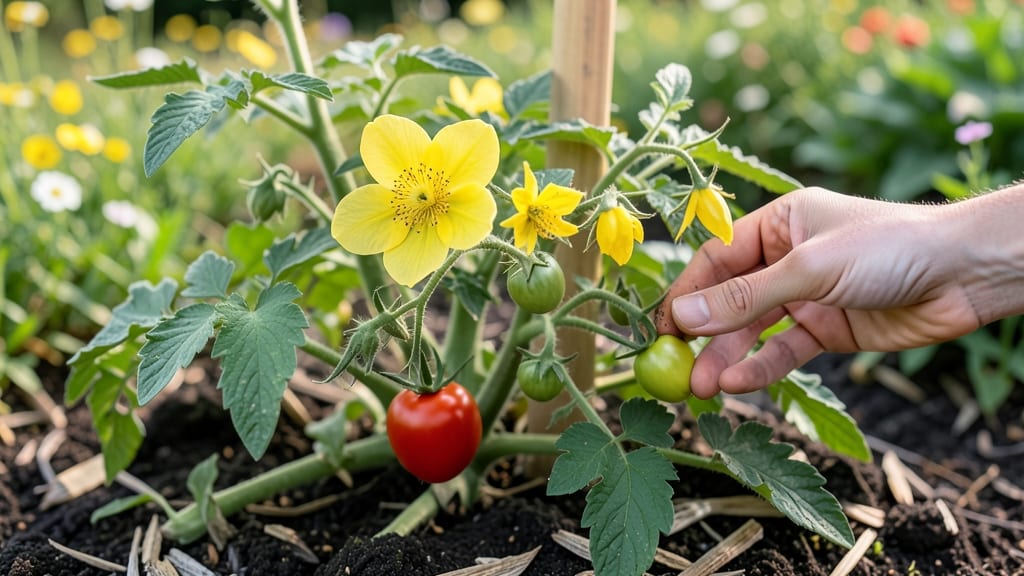
Tomato plants need to be pollinated to produce fruit, since their flowers depend on pollen transfer from anthers to stigmas—whether through wind, bees, or manual assistance in greenhouses. Without proper pollination, blossoms simply drop off without developing into tomatoes.
This process is essential because tomato flowers have both male and female parts, but they can't self-pollinate effectively without outside help. 🌸 In outdoor gardens, bees and gentle breezes handle the job naturally, but greenhouse growers often need to step in with a soft brush or cotton swab.
The key is timing—pollen must reach the stigma when the flower is fully open, usually in the morning when humidity is lower. Without this transfer, you'll end up with lots of pretty blossoms but no fruit to harvest.
Many gardeners assume tomatoes will fruit automatically, but skipping pollination leads to what's called "blossom drop"—where flowers wilt and fall off within days. This is especially common in hot weather or when plants are stressed, as high temperatures can actually prevent pollen from sticking properly.
Understanding this process helps you troubleshoot why your tomato plants might not be producing as expected, even when they look healthy.
💡 In This Article
- How Tomato Plant Pollination Works Naturally
- Manual Pollination Techniques for Greenhouse Tomatoes
How tomato plant pollination works naturally
Tomato flowers have a unique anatomy that makes them rely on external pollination agents. Each flower contains both male (anthers) and female (stigma) parts, but the anthers don't release pollen effectively unless disturbed.
The stigma must receive pollen within 24-48 hours of the flower opening, or it becomes unreceptive and the blossom drops. This is why you'll see perfect flowers on your plants but no fruit forming—nature's way of ensuring only properly pollinated flowers develop into tomatoes.
In outdoor gardens, wind and bees are the primary pollinators. Bees are particularly effective because they're attracted to tomato flowers' bright yellow centers and collect pollen while feeding on nectar. A single bee can pollinate hundreds of flowers in an hour, transferring pollen between plants with each visit.
Wind pollination works too, especially for determinate varieties, but it's less efficient—pollen grains must be light enough to travel 1-2 feet through the air to reach stigmas. Humidity below 60% improves pollen viability, while high heat (90°F+) can cause pollen to dry out and fail to stick.
The type of tomato variety plays a role too. Indeterminate varieties like 'Sungold' or 'Brandywine' often need more pollination help because their flowers are more spread out, while compact determinate types like 'Roma' may get by with wind alone.
What's fascinating is how temperature affects this process—pollen sticks best at 70-80°F. Below 55°F, pollen becomes sluggish, and above 95°F, it can't germinate properly, leading to what's called "pollen tube failure" where fertilization doesn't complete even if pollen reaches the stigma.
You might notice that some tomato flowers develop into fruit while others don't, even on the same plant. This happens because early morning flowers (opened before 8 AM) get better pollination from bees that are most active then, while afternoon flowers may get missed.
The stigma also needs to be moist for pollen to adhere—this is why you'll see more fruit set on cloudy days when humidity is higher. 🌿 Understanding these natural rhythms helps explain why your tomato plants might produce unevenly, even with plenty of flowers.
Another interesting factor is flower color—white or pale yellow flowers often indicate male-sterile varieties that need cross-pollination, while deep yellow flowers suggest self-fertile types. The scent of tomato flowers also plays a role: some varieties emit pheromone-like signals that attract specific pollinators.
For example, 'Sweet Million' tomatoes produce a scent that particularly draws in bumblebees, which are heavier and more effective at transferring pollen between plants.
What most gardeners don't realize is how quickly problems can arise when pollination fails. Within 2-3 days of a flower opening without proper pollination, the petals will start wilting and the ovary will shrivel. This is nature's way of conserving energy—why waste resources developing fruit that won't form?
The key takeaway is that pollination isn't just about having flowers; it's about creating the perfect conditions for pollen transfer at exactly the right moment in each flower's life cycle.