Planting
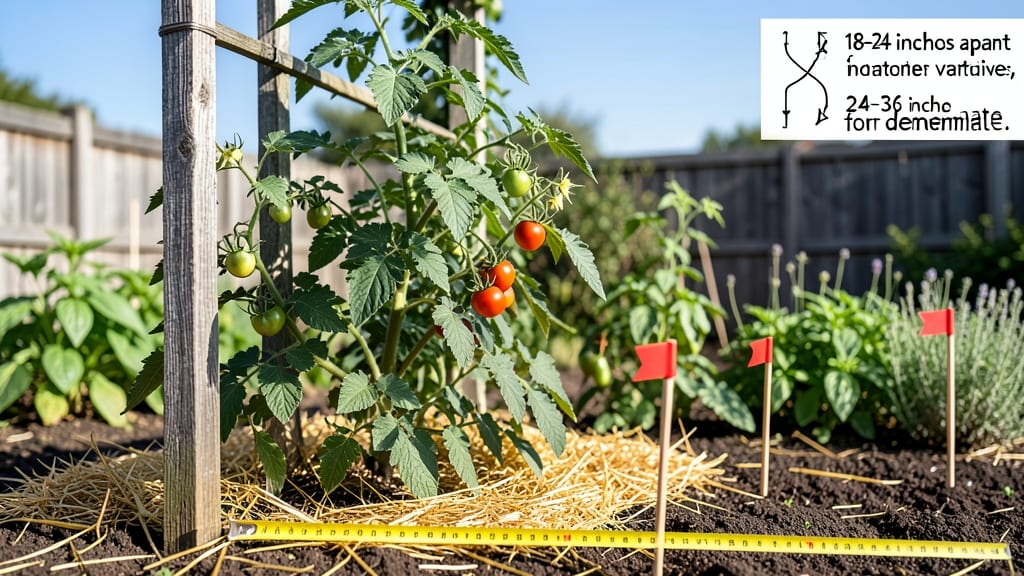
Proper tomato plant spacing isn't just about fitting more plants in—it's the secret to stronger stems, bigger yields, and fewer diseases. 🌱 I learned this the hard way when my crowded plants flopped over by midsummer, their leaves yellowing from trapped moisture.
The right spacing gives roots room to breathe, sunlight to reach the lower leaves, and air to circulate—all of which prevent common problems like blight and powdery mildew.
Determinate tomatoes (the bush types) need 18-24 inches between plants, while indeterminate vining varieties should get 24-36 inches—or even more if your plants are particularly vigorous. Soil type matters too: heavy clay holds moisture longer, so you might space plants a bit wider to avoid root rot.
And if you're growing in containers, each plant needs its own 5-gallon pot minimum to prevent competition for nutrients.
What you’ll end up with is tomatoes that grow taller, bushier, and more productive than ever before. The stems thicken naturally, supporting heavy fruit without snapping, and the plants resist pests better because they’re not stressed from overcrowding.
Even my black thumb can’t mess this up once the spacing is right.
This method works for raised beds, in-ground gardens, and even vertical growing systems. The key is planning your layout before planting—sketch it out or use stakes to mark spots before you drop those seedlings in the ground. Trust me, your future self will thank you when harvest time rolls around.
📚 In This Guide
- What you need
- Instructions
- Tips and common mistakes
- Wrapping up and next steps
What you need
- ● Tomato seedlings or seeds: Choose disease-resistant varieties (e.g., Roma, Cherry, or Beefsteak). Seedlings: 10–20 plants (depending on garden size). Seeds: 2–3 per hole (for higher germination rates).
- ● Garden soil or potting mix: 1–2 bags (10–20 lbs each) of high-quality, well-draining soil (pH 6.0–6.8). Add compost or aged manure for nutrients.
- ● Fertilizer: Balanced fertilizer (10-10-10): 1–2 lbs per 100 sq ft.
- ● Organic options: Bone meal (1 tbsp per plant) or worm castings (1 cup per hole).
- ● Stakes or cages: 5–6 ft tall (1 per plant). Bamboo stakes ($0.50–$1 each) or tomato cages ($1–$3 each).
- ● Mulch: Straw or shredded leaves (2–3 inches thick, 1–2 bags).
- ● Watering can or hose with a gentle nozzle: 1–2 gallons capacity.
- ○ Gloves and knee pads: Optional but highly recommended for comfort!
- ● Row covers: Lightweight fabric to protect seedlings from pests or frost ($10–$20).
- ● Pruning shears: For trimming suckers (small, sharp blades work best).
- ● pH test kit: To check soil acidity before planting ($5–$10).
- ● Drip irrigation system: For consistent moisture (saves time and water!).
- ● Plant markers: Labels or sticks to track varieties (fun for beginners!).
Step-by-step guide to spacing tomato plants for stronger stems
Here’s how to space tomato plants for better airflow, sturdier stems, and bigger harvests.
🌱 Step 1: Determine Plant Type and Spacing Needs
Tomatoes fall into two main categories: indeterminate (vining types that grow continuously) and determinate (bush types that stop growing at a certain height). Indeterminate varieties like 'Sungold' or 'Cherokee Purple' need 18-24 inches apart, while determinate types like 'Roma' or 'Celebrity' can grow more compactly at 12-18 inches apart. Check your seed packet or plant tag for exact spacing guidelines.
If you’re growing in containers, space plants 12-18 inches apart in pots that are at least 5 gallons each. Crowding in containers leads to weak stems and poor fruit production. I always use larger pots for indeterminate varieties—they need room to sprawl and support their own weight.
☀️ Step 2: Choose the Right Location for Airflow
Tomatoes thrive with full sun (6-8 hours daily), but proper spacing isn’t just about sunlight—it’s about air circulation. Place plants 2-3 feet apart in rows if growing in a traditional garden bed, with 3 feet between rows. This spacing prevents fungal diseases like early blight and septoria leaf spot, which spread in damp, crowded conditions.
If your garden bed is narrow, stagger plants in a stair-step pattern rather than planting in straight lines. This creates a natural breeze between plants and reduces the risk of stems touching, which can lead to rot. Watch for yellowing leaves or black spots—these are early signs of disease from poor airflow.
🪴 Step 3: Plant Deeply for Stronger Stems
When transplanting, bury one-third to half of the stem below soil level. This encourages roots to grow along the buried portion, creating a stronger, more stable base. Use your finger to make a small trench around the stem and gently pack soil into it, ensuring the plant stays upright but not crowded.
If you’re growing in cages or stakes, plant the tomato 1-2 inches deeper than recommended to reinforce the stem. I’ve found that deeper planting also helps indeterminate varieties develop secondary roots, which improve water and nutrient uptake. Avoid pressing the soil too firmly—just enough to hold the plant steady.
✂️ Step 4: Prune for Better Airflow and Bushier Growth
Once plants reach 12-18 inches tall, start pruning suckers—the small shoots that grow in the leaf axils. Remove these every 1-2 weeks to redirect energy into thicker stems and fruit production. Use clean pruners or your fingers to snap them off cleanly, leaving a small stub to prevent disease entry.
For indeterminate varieties, prune lower leaves as the plant grows to improve airflow and reduce humidity near the soil. Aim to keep 3-4 main stems for bushier growth, and remove any leaves touching the ground. You’ll see sturdier stems and fewer issues with blight once you establish this routine.
💧 Step 5: Monitor and Adjust Spacing as Plants Grow
Check plant spacing every 2-3 weeks and adjust if stems start touching. If you notice leggy growth or weak stems, it’s a sign the plants are too crowded. Gently separate stems or stake them individually to maintain airflow. I use soft plant ties to secure stems to stakes without crushing them.
If you’re growing in containers, consider thinning out lower leaves to prevent overcrowding. The goal is to keep the plant’s canopy open and airy. Watch for wilting or yellowing leaves—these can signal overcrowding or poor airflow. With the right spacing, your tomatoes will develop thicker stems, better fruit set, and fewer diseases.
Tips & tricks for perfect tomato plant spacing
These little adjustments make all the difference between floppy, disease-prone plants and sturdy, productive tomato vines.
Plant Type Matters: The spacing differences between indeterminate and determinate varieties aren't just suggestions—they're critical. Indeterminate types like 'Sungold' need that full 18-24 inches because their vines will keep growing until frost. I've seen vines reach 10 feet tall when given enough space! Determinate varieties like 'Roma' stay compact, so you can tuck them in tighter at 12-18 inches. Check your seed packet—this is your first clue about how much room each plant will need.
Sunlight Strategy: Those 6-8 hours of daily sun are non-negotiable, but here's what nobody tells you: morning sun is more important than afternoon. Position your plants so they get direct sunlight from 8 AM to noon. This helps prevent sunscald on fruits and gives plants energy for vigorous growth. If your garden gets afternoon shade, rotate containers every few days to ensure even light exposure.
Container Confidence: The 5-gallon minimum for containers is a starting point, but don't stop there. Indeterminate varieties need at least 7 gallons to support their weight. I've seen tomatoes in 3-gallon pots struggle—stems get weak, and fruit production drops dramatically. Use larger containers and fill the extra space with compost-rich soil to give roots room to expand.
Pruning Precision: When you're pruning those suckers every 1-2 weeks, aim for consistency. Use clean pruners or your fingers to remove them at the base, leaving no stubs. This prevents disease entry points. For indeterminate varieties, I focus on keeping 3-4 main stems—they'll produce more fruit and have stronger support. Watch for new suckers appearing after pruning, especially in warm weather.
Pro Tips for Spacing Of Tomato Plants
- These little adjustments make all the difference between floppy, disease-prone plants and sturdy, productive tomato v...
- Plant Type Matters: The spacing differences between indeterminate and determinate varieties aren't just suggestions—t...
- Sunlight Strategy: Those 6-8 hours of daily sun are non-negotiable, but here's what nobody tells you: morning sun is ...
Frequently asked questions
Got questions about spacing your tomato plants for the best harvest? You’re not alone! Here are some of the most common queries—and their straightforward answers—to help you grow like a pro.
What’s the ideal spacing for tomato plants in containers vs. garden beds?
In garden beds, space determinate (bush) tomatoes 18–24 inches apart and indeterminate (vining) types 24–36 inches apart. For containers, opt for 5-gallon pots or larger (at least 12–18 inches in diameter) and plant one tomato per container—crowding leads to poor air circulation and disease.
Can I plant tomatoes too close together and fix it later?
While you can transplant seedlings when young, spacing is best addressed at planting. If you’ve already crowded them, prune suckers aggressively and stake vertically to improve airflow. For severe cases, consider thinning to the strongest stems—but act fast, as roots struggle with disturbances.
Does spacing change if I’m growing tomatoes in hot or cold climates?
In hot climates, space 2–4 inches wider (e.g., 30–40 inches for indeterminates) to reduce competition for water and shade roots. In cooler climates, tighter spacing (e.g., 18–24 inches) can work if you use row covers or black plastic mulch to warm the soil. Always adjust based on your microclimate!
How do I know if my tomato plants are spaced too close?
Watch for these red flags: yellowing leaves, stunted growth, or excessive fruit rot. Poor airflow also invites pests like aphids or diseases like early blight. If vines touch, it’s time to prune, stake, or replant. Pro tip: Step back and snap a photo—if your plants look like a jungle, they’re too crowded!
Are there any spacing hacks for small spaces or urban gardens?
Try these space-saving tricks:
- Vertical gardening: Use trellises or cages to grow indeterminates upward, saving floor space.
- Interplanting: Pair tomatoes with shallow-rooted herbs (basil, thyme) or lettuce in containers.
- Dwarf varieties: Choose ‘Tiny Tim’ or ‘Patio Princess’ (determinate) for 5-gallon pots.
- Square-foot gardening: Plant 1 tomato per square foot in a grid for efficiency.
Wrapping up and next steps
Perfecting the spacing of tomato plants is your secret weapon for bountiful, healthy harvests! 🌱 Whether you’re working with determinate or indeterminate varieties, the right distance ensures strong stems, better airflow, and fewer pests.
Now that you’re armed with pro tips—like pruning, staking, and proper soil prep—it’s time to roll up your sleeves and grow with confidence.
Your next step? Mark your garden beds, plant with care, and watch your tomato plants thrive! Ready to turn theory into a sunny, tomato-filled reality? Let’s get planting! 🍅✨