
Planting
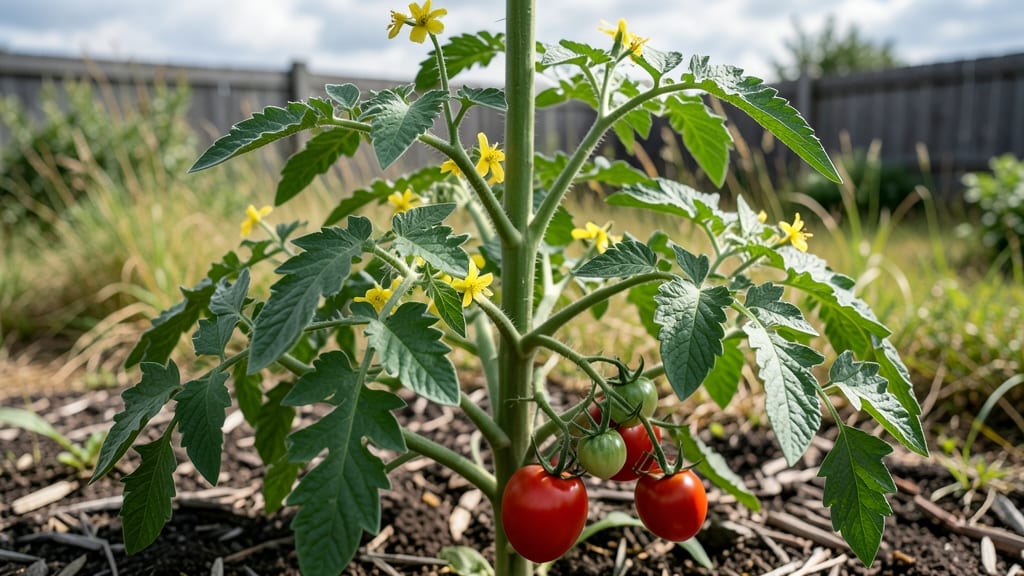
The best soil type for tomato plants is well-draining loamy soil rich in organic matter, with a slightly acidic to neutral pH (6.0–6.8) and a balance of sand, silt, and clay for optimal root development and nutrient retention.
Tomatoes need soil that breathes and holds nutrients without suffocating their roots. Loamy soil—made up of roughly 40% sand, 40% silt, and 20% clay—strikes the perfect balance, letting water drain efficiently while keeping essential minerals accessible. 🌱 Without proper drainage, roots rot; without enough organic matter, plants starve.
I always test my garden beds with a simple pH kit before planting, since tomatoes hate alkaline soil over 7.0. A handful of compost or aged manure mixed into the top 12 inches of soil works wonders for both structure and fertility.
For container growers, combine 60% potting mix with 30% perlite or vermiculite and 10% worm castings to mimic loamy conditions. The key is avoiding compacted soil—whether from clay-heavy native dirt or cheap bagged mixes that repel water.
Even a 5% addition of coconut coir can transform dense soil into tomato-friendly territory. Remember: healthy soil today means fewer pests and bigger harvests tomorrow.
💡 In This Article
- Why Loamy Soil Is Ideal for Tomato Growth
- How to Amend Soil for Healthy Tomato Plants
Why loamy soil is ideal for tomato growth
The magic of loamy soil for tomatoes lies in its three-part structure: roughly 40% sand, 40% silt, and 20% clay. This ratio creates microscopic air pockets that tomato roots crave for oxygen exchange, while the silt particles hold water and nutrients just out of reach of rapid evaporation.
Think of it like a well-designed sponge—it absorbs moisture but doesn't drown the roots. 🌱 The clay component (20%) acts as a natural glue, binding the soil particles together without creating that suffocating compacted feeling you get with pure clay.
Here's what happens when you get the balance right: The sand fraction (0.05-2mm particles) prevents waterlogging by creating drainage channels, while the silt (0.002-0.05mm) acts as a nutrient reservoir. The clay (less than 0.002mm) holds onto essential minerals like potassium and phosphorus that tomato plants need for fruit development.
What's fascinating is how this structure changes with moisture—when dry, the soil holds its shape (thanks to clay), but when wet, it crumbles easily, preventing that cement-like consistency that strangles roots.
Tomato roots are particularly sensitive to oxygen levels. In heavy clay soils, roots can suffocate because water fills the spaces between particles, cutting off oxygen. But in ideal loam, even after heavy rain, the soil drains within 6-12 hours while retaining enough moisture for roots to access.
This is why professional growers often aim for a soil that's 60% solid particles and 40% pore space—the perfect balance for tomato cultivation. The pore space isn't just for air; it's also where beneficial microbial activity happens, breaking down organic matter into plant-available nutrients.
Consider this comparison: Pure sand drains too quickly, flushing away nutrients, while pure clay holds water but becomes impermeable. Loam gives you the best of both worlds—water retention without waterlogging, and nutrient availability without leaching.
The organic matter component (typically 5-10% of loam) acts as a biological supercharger, feeding the microbial life that tomatoes depend on for nutrient uptake. Without this microbial activity, even perfectly balanced mineral soil would fall short of optimal conditions. 🌿
The pH range of 6.0-6.8 isn't arbitrary either. At this range, essential nutrients like nitrogen, phosphorus, and potassium become most available to tomato plants. Below 6.0, aluminum toxicity becomes a risk, while above 6.8, calcium and magnesium become less accessible.
The soil's cation exchange capacity (CEC)—its ability to hold onto nutrients—peaks in this pH range, ensuring tomatoes have steady access to what they need throughout their growing season. This is why soil testing before planting isn't just recommended; it's essential for serious tomato growers.
What most gardeners overlook is how soil structure affects root depth. Tomatoes develop deep taproots that can reach 3-5 feet in ideal conditions, accessing water and nutrients beyond the surface layer. Compacted soil forces roots to stay shallow, making plants more susceptible to drought stress and nutrient deficiencies.
The loose, crumbly texture of proper loam encourages this deep root development, which directly translates to stronger plants and higher yields. This is why amending heavy clay or sandy soils is so crucial—you're not just improving appearance, you're creating the physical environment that allows tomato roots to thrive. 🌱