
Pests
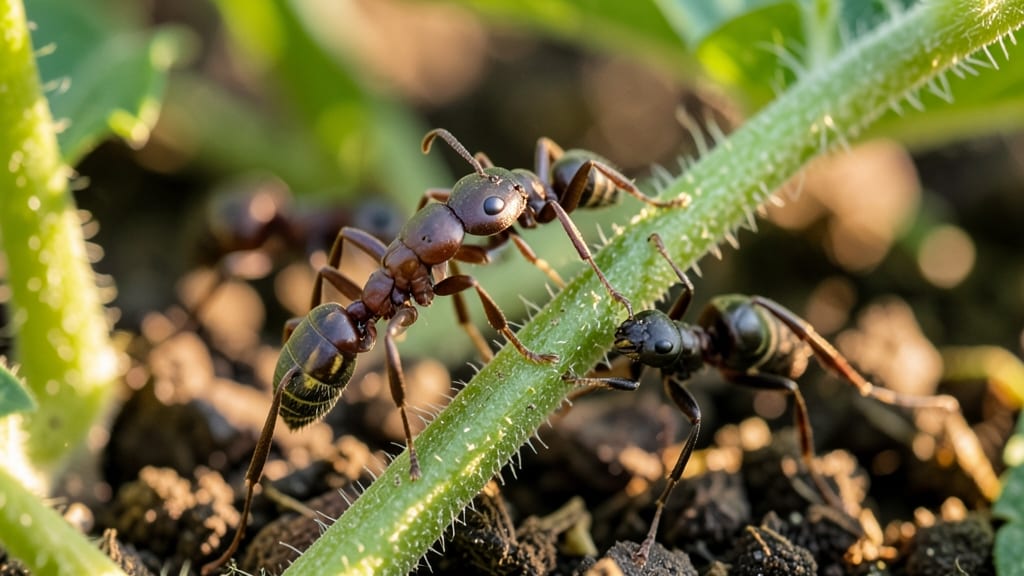
Ants on tomato plants aren’t just annoying—they’re a warning sign that bigger pests are on the way. 🐜 I’ve watched my thriving tomato plants turn into aphid buffets overnight because of these tiny trailblazers, and I’m here to show you how to kick them out for good without harsh chemicals.
The problem starts when ants farm aphids for their sticky honeydew, which weakens your plants and attracts wasps. My go-to fix? A simple diatomaceous earth barrier around the base of your plants—it’s organic, safe, and works within 24-48 hours.
You’ll see fewer ants, healthier leaves, and tomatoes that stay pest-free all season.
This trick works for backyard gardens, containers, and even raised beds. The best part? You’ll skip the sticky residue and chemical smells while keeping your harvest clean and thriving. No more watching your plants get hijacked by aphids—just strong, productive tomatoes.
Fair warning: if your garden is already overrun, you might need to repeat the barrier every 7-10 days until the ants give up. But trust me, it’s worth the effort for that first bite of homegrown tomato without a side of pests.
The Hidden Reasons Ants Invade
Ants on your tomato plants aren’t just a random nuisance—they’re often drawn by a mix of food, shelter, and even unintentional human habits. Understanding these triggers is the first step to stopping their takeover. Here’s why these tiny invaders show up in your garden:
Ants are attracted to sugary substances, and tomato plants can become a buffet without you realizing it. Here’s how:
- Sap-feeding pests like aphids, whiteflies, and scale insects suck plant juices, excreting sticky honeydew—a liquid goldmine for ants. Ants "farm" these pests, protecting them in exchange for a steady sugar supply.
- Overripe or damaged fruit releases natural sugars, creating a scent trail ants follow like a GPS. Even a single split tomato can trigger a full invasion.
- Pollination nectar from tomato flowers is another ant magnet. While they don’t harm flowers directly, their presence can deter beneficial pollinators like bees.
💡 Pro Tip: Inspect your plants for sticky residue or tiny pests clustering on stems. If you spot aphids on the undersides of leaves, ants are likely nearby—soon.
Ants need water and safe passage to thrive. Tomato plants provide both:
- Damp soil from overwatering or poor drainage creates ideal nesting conditions. Ants dig tunnels near roots, using the moisture to raise their young.
- Leaf litter and mulch act as highways for ants. A thick layer of organic debris (even well-meaning mulch) gives them cover to march unnoticed.
- Cracks in containers or pots offer direct entry points. If you’re growing tomatoes in pots, ants can crawl right in through tiny gaps.
⚠️ Warning: Ants don’t just stop at tomatoes—they’ll raid nearby crops, compost piles, or even your kitchen if given the chance. A single colony can grow to thousands in weeks!
Sometimes, the problem starts with us. Here’s how everyday gardening practices can lure ants:
| Action | Why It Draws Ants |
|---|---|
| Using sugary fertilizers (e.g., fish emulsion) | Residue on leaves or soil mimics honeydew, signaling a food source. |
| Leaving fallen fruit on the ground | Fermenting tomatoes release ethanol and sugars, creating a scent trail. |
| Planting tomatoes near sweet herbs (e.g., basil, mint) | Herbs with high sugar content attract ants, which then spread to tomatoes. |
| Ignoring ant trails on fences or sidewalks | Ants follow pheromone trails—if they find a path to your garden, they’ll reinforce it. |
🔥 Hot Fix: If you’ve already spotted ants, disrupt their trails by sprinkling diatomaceous earth or cinnamon along their paths. This breaks their communication and deters new recruits.
Now that you know why ants target your tomato plants, the next step is cutting off their access—without harming your harvest or the planet. Stay tuned!
Natural Ways to Outsmart Garden Invaders
Discovering ants marching through your tomato plants can feel like a tiny army invading your harvest—but don’t panic! With the right approach, you can turn these pests into a manageable (and even preventable) issue.
Below, we’ll break down solutions by cause, from quick fixes to long-term strategies, all while keeping your garden organic and thriving. 🌱🐜
If ants are directly climbing or nesting on your tomato plants, they’re likely after aphids, honeydew, or even your fruit. Here’s how to kick them out—fast.
🍳 Boiling Water or Soapy Spray (Emergency Strike)
For a non-toxic, instant deterrent, mix 1 gallon of boiling water with 1 tablespoon of mild dish soap (like Castile soap). Pour or spray directly onto ant trails and nests. The soap disrupts their exoskeletons, while the heat sends them scrambling. Best for: Heavy infestations on stems or leaves.
⏰ When to do it: Early morning or late evening (avoid harming bees). Reapply after rain.
👨🍳 Diatomaceous Earth Barrier (Silent Sentinel)
Sprinkle food-grade diatomaceous earth (DE) around the base of your tomato plants and along ant trails. This powdery substance dries out ants’ exoskeletons, killing them within 48 hours. Best for: Preventing ants from reaching plants or re-infesting after other treatments.
💡 Pro tip: Reapply after watering or rain, and avoid breathing the dust (wear a mask). Keep it away from beneficial insects like ladybugs.
🥘 Orange or Lemon Peel Rings (Citrus Repellent)
Ants hate citrus! Crush orange or lemon peels into small rings and scatter them around your tomato plants, especially near the soil. The scent confuses their trail pheromones and deters them naturally. Best for: Light to moderate infestations and as a preventive measure.
✨ Bonus: Use leftover peels to make a compost tea for extra plant nutrition!
If ants are protecting aphids on your tomato plants, you’ll need to break their "symbiotic relationship." Aphids produce honeydew, which ants love—so tackle both pests together.
🔪 Blast Aphids with Water (Quick Knockdown)
Use a sharp stream of water from a hose to dislodge aphids from leaves and stems. This removes the food source ants rely on, forcing them to leave. Best for: Early-stage infestations with visible aphid clusters.
💡 Pro tip: Do this in the morning so leaves dry quickly, reducing fungal risks.
🎯 Introduce Natural Predators (Eco-Friendly Army)
Encourage ladybugs, lacewings, and parasitic wasps—they devour aphids and will naturally reduce ant interest. Plant dill, fennel, or marigolds nearby to attract these beneficial insects. Best for: Long-term pest control with minimal effort.
🌱 Plant companions: Basil near tomatoes also repels aphids and improves flavor!
🛡️ Sticky Traps or Borax Baits (For Stubborn Colonies)
If ants are nesting in the soil, set out borax bait stations (mix 1 part borax with 3 parts sugar and water) in shallow containers. Ants carry it back to the colony, eliminating the queen and workers.
For above-ground trails, use yellow sticky traps coated with petroleum jelly. Best for: Large colonies or repeated infestations.
⚠️ Caution: Borax is toxic to pets—place baits where animals can’t access them.
Once you’ve evicted the ants, keep them from returning with these proactive steps:
🌿 Create Physical Barriers
Surround your tomato plants with a 1-inch-deep trench filled with crushed eggshells, sand, or wood ash. Ants struggle to cross these barriers, especially if kept dry. Best for: High-ant-risk areas or container gardens.
🍃 Mulch Strategically
Avoid thick, damp mulch near tomato bases—ants love moisture and shelter. Instead, use straw or pine needles sparingly, and keep mulch 2–3 inches away from stems to reduce hiding spots.
🌞 Improve Garden Hygiene
Ants seek out sugar and protein sources. Clean up:
- 🍯 Spilled soda or fruit juices (even from picnics!)
- 🥜 Pet food or fallen birdseed
- 🍃 Overripe fruit or fallen tomatoes
Store compost bins far from tomato plants and seal lids tightly.
🌍 Use Ant-Proof Containers
If growing tomatoes in containers, choose pots with feet or a built-in saucer to prevent ants from climbing up. Place pots on gravel or broken pottery shards to block their access.
With these methods, you’ll not only save your tomato plants but also create a garden that’s less inviting to future ant armies. 🚫🐜 The key? Act fast, stay consistent, and let nature’s balance work in your favor!
Frequently asked questions
Are ants actually harmful to tomato plants?
Ants themselves don't directly damage tomato plants, but they create bigger problems by protecting aphids, mealybugs, and scale insects that feed on plant sap. The real danger comes from these pests, which weaken your plants and spread diseases. Ants also carry aphids to new plants, turning a small issue into a full-blown infestation.
Why do ants suddenly appear when my tomatoes start fruiting?
As tomatoes ripen, they release natural sugars that attract ants. The scent of overripe or damaged fruit acts like a dinner bell, drawing colonies from nearby areas. Plus, aphids often multiply faster when plants are fruiting—giving ants more honeydew to farm. Remove fallen fruit immediately to break this cycle.
Will vinegar kill ants on tomato plants?
Yes, but it's not the most effective long-term solution. A 1:1 vinegar-water spray disrupts ant trails and can kill individual ants on contact. For better results, combine it with dish soap (1 tsp per cup) to break their exoskeletons. Reapply every 3-4 days since vinegar loses effectiveness after rain.
Can I use coffee grounds to repel ants from tomato plants?
Coffee grounds can help, but they're not a complete solution. The caffeine disrupts ant trails and smells unpleasant to them. For best results, mix coffee grounds with crushed eggshells and sprinkle around plant bases. Refresh every 5-7 days as the scent fades. Avoid using fresh grounds—they can attract other pests.
How do I know if ants are nesting in my tomato plant soil?
Look for these signs: small mounds of dirt near the base, visible ant trails leading into the soil, or sudden ant activity when you disturb the area. Tap gently on the soil—if you hear a rustling sound, they're likely nesting underground. For soil nests, use borax baits or introduce nematodes to target the colony.