
Pests
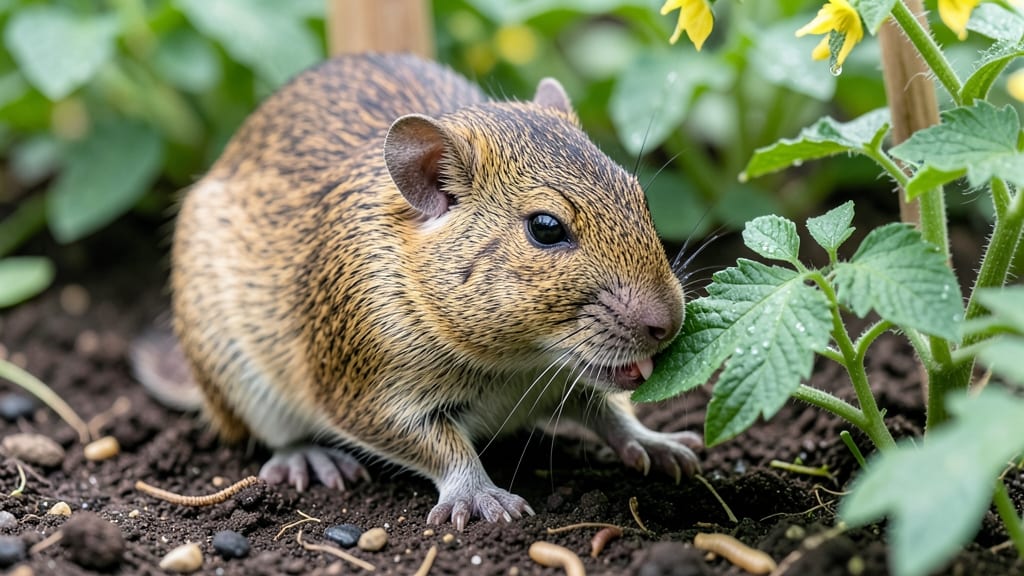
Yes, gophers eat tomato plants by gnawing on roots, stems, and leaves, which can stunt growth or even kill young plants. Their burrowing also damages soil structure, increasing disease risks for your garden.
Gophers are particularly destructive to tomato plants because they don't just nibble—they systematically attack the plant's foundation. 🌱 The root damage weakens the plant's ability to absorb water and nutrients, while their surface gnawing can create jagged edges on stems that invite pests.
I’ve seen gardens where gopher activity left tomato plants looking like they’d been pruned by a chainsaw, with no clear pattern to the destruction. Their burrows also create air pockets in the soil, which can cause plants to topple over during storms or even collapse under their own weight.
What makes this especially frustrating is how quickly gophers can devastate a garden. A single gopher can consume up to 10 pounds of plant material daily, and since they’re most active at dawn and dusk, you might not even notice the damage until your tomatoes are already struggling.
The key is to act fast—once they’ve established a burrow network, they become much harder to dislodge.
💡 In This Article
- How Gophers Damage Tomato Plants and Gardens
- Effective Gopher-Proofing Strategies for Tomato Gardens
How gophers damage tomato plants and gardens
Gophers primarily attack tomato plants by targeting the roots and underground stems, which is their most destructive behavior. Their sharp, chisel-like incisors allow them to gnaw through ¼-inch thick roots with ease, severing the plant's connection to vital water and nutrient sources.
This root damage often appears as jagged, clean-cut wounds rather than the ragged tears caused by other pests. 🌱 The plant may initially show signs of stress like yellowing leaves or stunted growth before eventually wilting completely if the damage is severe enough.
Surface damage occurs when gophers move above ground, often during their foraging at dawn or dusk. They'll gnaw on stems just below the soil line, creating a 1-2 inch diameter wound that can cause the plant to topple over.
Their burrowing also creates a network of tunnels that destabilize the soil, making it more prone to erosion and disease. I've observed gardens where tomato plants literally collapse into the newly formed tunnels, leaving behind a trail of broken stems and exposed roots.
The soil around affected plants often has a spongy texture due to the air pockets created by their digging.
One of the most insidious effects is how gopher activity increases disease susceptibility. The disturbed soil allows harmful pathogens to thrive, while the open wounds on stems provide entry points for fungal infections.
Tomato plants weakened by root damage often develop early blight or verticillium wilt more readily than healthy plants. The combination of physical damage and increased disease risk can turn a thriving tomato garden into a wasteland within just a few weeks of gopher activity.
Identifying gopher damage requires looking for specific signs beyond just wilting plants. Check for freshly turned soil mounds (about 3-6 inches wide) near your tomato plants, which are their tunnel entrances. You might also spot chewed plant debris mixed with soil near these mounds.
Unlike rabbits that leave surface-level damage, gophers create underground chaos that's often invisible until it's too late. Their feeding patterns are particularly destructive to young tomato seedlings, which can be completely uprooted in a single night.
The timing of gopher activity matters too—spring and early summer are peak seasons when they're most aggressive. This coincides with when tomato plants are establishing their root systems, making them especially vulnerable.
A single gopher can create enough damage to reduce a tomato plant's yield by 50-70%, and in severe cases, completely destroy the plant. The key is recognizing these signs early and implementing protection before the damage becomes irreversible.