
Companion Plants
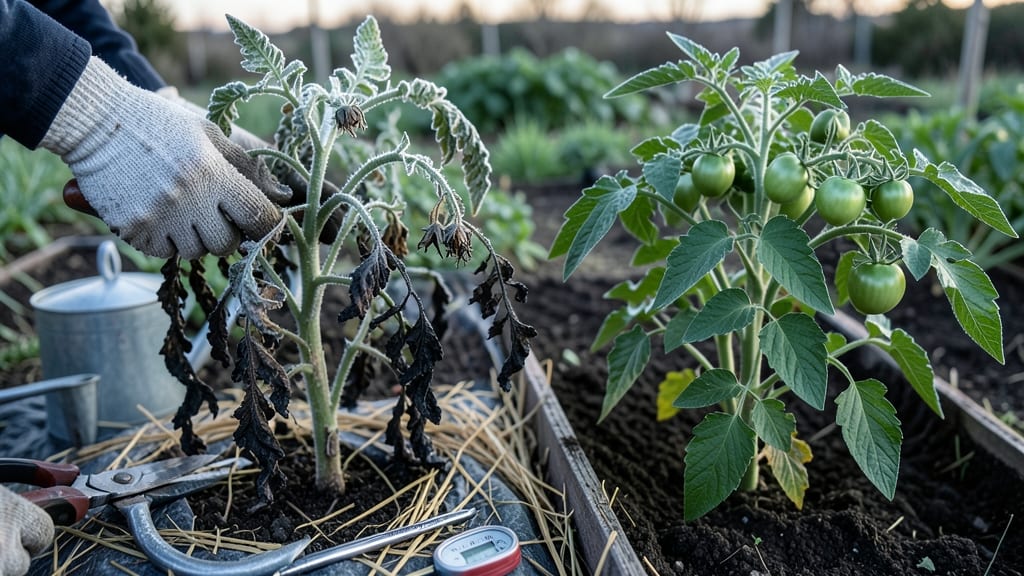
Frost damaged tomato plants don’t mean the end of your harvest—my garden proved that last April when blackened vines looked hopeless. 🌱 The key is acting fast: prune dead growth, protect remaining stems, and give the plant time to rebound.
I’ve revived plants that looked finished, and you can too with these three simple steps that work even when the forecast calls for more cold snaps.
First, cut away any blackened or mushy stems with clean shears—don’t leave damaged tissue, or it’ll slow recovery. Next, wrap remaining vines in frost cloth or bubble wrap at night, especially if temps dip below 40°F.
Mulch heavily around the base to insulate roots, which often survive when the tops look done for. The plant will focus energy on regrowing from the base, not fighting dead material.
Within 7-10 days, you’ll spot new green shoots at the soil line—this is your plant’s comeback. Keep soil moist but not soggy, and fertilize lightly with compost tea to boost strength.
Even if blooms are gone, the plant will redirect energy to leaves and roots, setting up a stronger second flush of tomatoes by mid-summer.
For next year, choose cold-tolerant varieties like ‘Mountain Merit’ or ‘Stupice’, and use black plastic mulch early to warm soil faster. A simple row cover over plants on cold nights can add 5-10°F of protection—worth it to avoid the heartbreak of losing your whole crop again.
Cold Stress Explained
Frost-damaged tomato plants don’t suffer from a single cause—they’re the victims of a perfect storm of environmental factors. Understanding why your once-vibrant vines turn mushy or crispy after a cold snap is the first step to preventing future heartbreak.
Let’s break down the science behind the suffering, so you can shield your plants (and your harvest) next time.
Tomatoes are tropical plants at heart—they thrive in warmth and bolt at the first hint of frost. When temperatures plummet below 32°F (0°C), the damage happens in stages:
- Cell membrane rupture: Ice crystals form inside plant cells, piercing their walls like tiny shards of glass. This disrupts water flow and nutrient transport, causing wilting or blackened leaves.
- Metabolic shutdown: Enzymes that regulate growth (like RNA polymerase) freeze or denature, halting photosynthesis. Without energy, the plant can’t recover.
- Root system collapse: Soil moisture freezes, suffocating roots and cutting off hydration. Even if leaves survive, the plant starves without water uptake.
Actionable insight: Tomatoes can tolerate brief dips to 50°F (10°C) but suffer irreversible damage below 28°F (-2°C). If frost is forecasted, act fast—cover plants with row fabric or cloches before the sun sets.
Not all cold is created equal. A hard frost (temperatures at or below freezing for several hours) is far deadlier than a light freeze (temperatures between 28–32°F/-2–0°C). Here’s why:
| Type of Cold | Damage Mechanism | Recovery Potential |
|---|---|---|
| Overnight Frost (32°F/0°C or lower) |
|
Low—irreversible damage to vascular tissue. |
| Light Freeze (28–32°F/-2–0°C) |
|
Moderate—pruning dead foliage can spur regrowth. |
Pro tip: If frost hits after sunset, damage is worse because plants can’t photosynthesize to generate protective sugars. Monitor forecasts and protect plants before temperatures drop.
Wet leaves act like ice cubes when temperatures dip, magnifying frost damage. Here’s how moisture makes matters worse:
- Ice nucleation: Water droplets on leaves freeze faster than dry tissue, creating sharp ice crystals that tear leaf surfaces.
- Heat loss acceleration: Evaporative cooling from wet foliage pulls heat away from the plant, lowering internal temperatures 5–10°F faster than in dry conditions.
- Fungal invasion: Frost weakens plant defenses, and standing water creates the perfect breeding ground for Alternaria or Phytophthora, which rot damaged tissue.
Solution: Water tomato plants deeply but early in the day (by 10 AM) to allow foliage to dry before evening. Avoid overhead sprinklers before frost warnings—opt for drip irrigation instead.
Not all tomato parts are equally frost-sensitive. Younger plants and new growth are far more fragile than mature vines:
- Seedlings: Their thin stems and delicate leaves lack the protective waxy coating of older plants. A single night below 30°F (-1°C) can kill them.
- Flower buds: Frost turns blossoms to mush, but the plant may still recover if the stem survives. However, no flowers = no fruit.
- Mature stems: Thick, woody stems can endure brief frosts (down to 25°F/-4°C) if the center of the plant stays insulated.
💡 Smart move: If you’re growing tomatoes in short-season climates, choose frost-resistant varieties like ‘Mountain Merit’ or ‘Stupice’—they tolerate light frosts better than heirlooms.
Cold soil is just as harmful as cold air. When ground temperatures drop below 40°F (4°C), roots:
- Lose the ability to absorb water and nutrients.
- Suffer from chilling injury, where cell membranes leak potassium and other vital minerals.
- Become susceptible to root rot if thawing is uneven (e.g., warm days followed by freezing nights).
Fix it: Mulch heavily with straw or leaves (6+ inches deep) to insulate roots. Avoid synthetic mulches—they don’t breathe and can trap moisture, worsening damage.
Reviving Frost-Burned Tomatoes
Frost-damaged tomato plants can feel like a gardener’s worst nightmare—especially when you’ve poured love into your vines. But don’t toss those wilted leaves just yet! With the right steps, you can nurse your plants back to health and even salvage a harvest.
Here’s how to tackle frost damage by cause, plus smart prevention tips to keep your tomatoes thriving next season.
If your tomato leaves are brown, brittle, or curled from frost, they’re suffering from frost burn. The good news? The plant itself may still be alive beneath the damage.
What to do:
- Trim the damage (but don’t panic-cut!). Use clean pruners to snip off only the blackened or mushy leaves—never more than ⅓ of the plant at once. Healthy green tissue underneath? That’s your lifeline. ⏰ Best time: Wait until daytime when the plant is warm to avoid shocking it further.
- Protect the stem. Frost often weakens the main stem. Wrap it in bubble wrap or an old sock to insulate it from future cold snaps. Secure it loosely so airflow isn’t blocked.
- Boost recovery with fertilizer. After pruning, feed your plant with a balanced, water-soluble fertilizer (like 10-10-10) to jumpstart regrowth. Dilute it to half-strength to avoid overloading stressed roots.
💡 Pro Tip: If the stem is mushy or black, the plant may not recover. Check for green tissue inside the stem—if it’s still firm, there’s hope!
If your tomatoes were uprooted or planted in frozen soil, their roots may have taken a hit. Look for yellowing leaves, stunted growth, or soil that’s still icy—these are red flags.
What to do:
- Insulate the soil. Pile straw, leaves, or mulch around the base of the plant (but keep it 3–4 inches away from the stem to prevent rot). This acts like a blanket, keeping roots warmer.
- Water deeply (but carefully). Frozen soil can’t absorb water well, so warm the soil first by pouring lukewarm water around the base. Avoid overhead watering—it can refreeze and worsen damage.
- Transplant if needed. If the soil is rock-hard or heaving, gently dig up the plant (being careful not to tear roots) and replant it in a warmer, sheltered spot with loose, amended soil.
✨ Prevention Hack: Next season, plant tomatoes in raised beds or use black plastic mulch to absorb sunlight and keep soil temps stable.
Frost can kill blossoms and green tomatoes before they ripen, but you might still salvage what’s left on the vine.
What to do:
- Pick unripe tomatoes early. If fruit is firm and green, harvest it and ripen indoors in a warm, sunny spot (like a windowsill). Avoid bruising—handle gently!
- Prune spent blossoms. Remove any frost-bitten flowers (they won’t produce fruit) to redirect the plant’s energy into new growth and remaining fruit.
- Use a cloche or row cover. If frost is forecast, throw a clear plastic dome or lightweight fabric over the plant to trap heat. Remove it during the day to avoid overheating.
🎯 Smart Move: If your tomatoes are mostly damaged but the roots are fine, consider replacing the top half of the plant by cutting it back to a healthy stem and letting it regrow. It’s like hitting the reset button!
Once you’ve revived your tomatoes, protect them from future frost with these easy strategies:
| Method | How to Do It | Best For |
|---|---|---|
| Row Covers | Drape frost cloth over plants at night. | Light frosts, early/late season. |
| Cold Frames | Build a low, glass-covered box around plants. | Extended cold snaps. |
| Windbreaks | Plant tall shrubs or use a fence to block cold wind. | Open or exposed gardens. |
| Choose Late Bloomers | Pick heat-tolerant varieties like ‘Solar Fire’ or ‘Heatmaster’. | Hot climates with cool nights. |
| Mulch Heavily | Use straw or wood chips (4–6 inches deep) to insulate soil. | Preventing root freeze. |
🔥 Bonus: Companion plants like basil or marigolds can help—basil’s scent deters pests that might stress already weak plants, while marigolds improve soil health.
Frost damage doesn’t have to mean game over. With quick action and a little TLC, your tomato plants can bounce back—and you might still get a bountiful harvest! 🍅🌟
Frequently asked questions
How can I tell if my tomato plant is dead after frost or just dormant?
Check the stem just above the soil line—if it’s green and firm when you cut into it, the plant is alive. Black, mushy stems mean it’s dead. For borderline cases, wait 3-5 days—new growth from the base signals recovery. Never assume a plant is dead until you see regrowth!
Can I save green tomatoes that were on the vine during frost?
Yes! Harvest any firm, unbruised green tomatoes and place them in a paper bag with a banana (the ethylene gas speeds ripening). Store them in a warm, dark place (like a pantry) for 2-4 weeks. Avoid refrigeration—it stops the ripening process.
What’s the best way to protect tomato plants from future frost?
Layered protection works best: use black plastic mulch to warm soil, wrap stems in bubble wrap, and cover plants with frost cloth at night. For extra insurance, plant cold-tolerant varieties like ‘Mountain Merit’ or ‘Stupice’—they handle 28°F (-2°C) better than heirlooms.
Will pruning frost-damaged leaves help my tomato plant recover faster?
Prune only the blackened or mushy leaves—never more than ⅓ of the plant at once. This removes dead tissue that could harbor disease and lets the plant focus energy on new growth. Always use clean, sharp pruners and do it during the day when the plant is warm.