
Vegetables
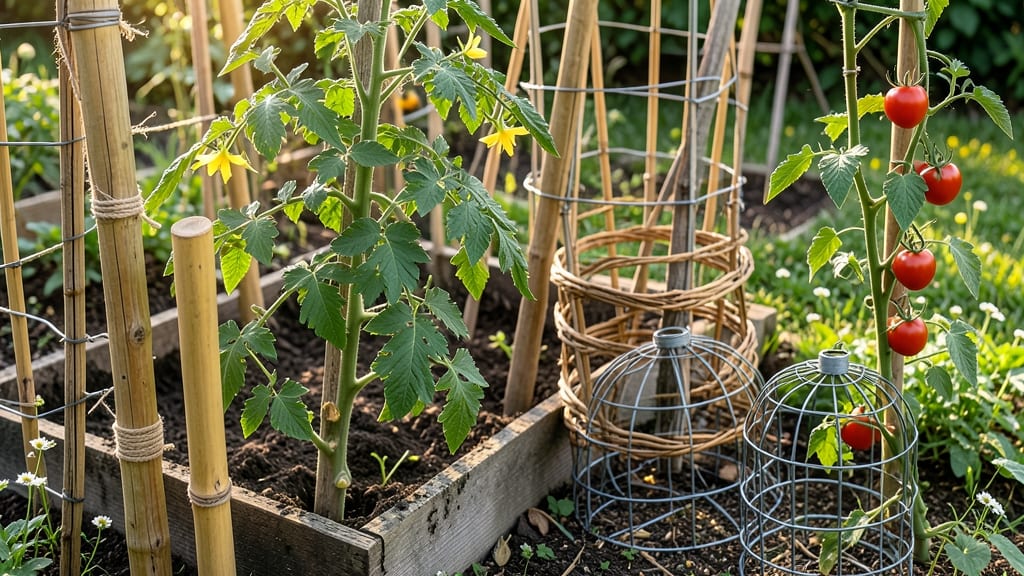
Skip the store-bought cages—homemade tomato supports save money and let you customize exactly what your plants need. 🌱 I’ve built everything from bamboo towers to repurposed fencing, and the right support turns sprawling vines into productive vertical gardens that yield more fruit with less sprawl.
You’ll need just a few supplies: sturdy stakes (bamboo, wooden dowels, or even metal rods), zip ties or twine, and some basic tools. The beauty of DIY is that you can adapt—whether you’re working with limited space or just want to avoid plastic.
My favorite setup uses 6-foot bamboo stakes tied into a teepee shape, which holds up to 10-pound tomatoes without flopping.
Once installed, your plants will climb faster and produce more fruit because the weight of heavy tomatoes won’t snap weak stems. The vertical growth also improves airflow, cutting down on disease risks. By mid-summer, you’ll have a lush, trellised tomato tower that’s both functional and neighborhood-worthy.
Works for any garden size—containers, raised beds, or in-ground—and you can reuse materials year after year. The key is securing stakes deep enough (at least 12 inches) so they don’t lean. Ready to build yours?
📚 In This Guide
- What you need
- Instructions
- Tips and common mistakes
- Wrapping up and next steps
What you need
- ● Base Materials (Choose One): Bamboo stakes (3–5 ft tall, ½–1 inch in diameter) – 3–5 stakes per plant
- ● Wooden dowels or stakes (2–4 ft long, ¾–1 inch thick) – 3–5 stakes per plant
- ● PVC pipes (2–4 ft sections, 1–2 inch diameter) – 1–2 per plant
- ● Reclaimed wood (e.g., pallet slats or fence pickets) – Cut to 3–5 ft lengths
- ● Fasteners: Zipties or plastic cable ties (for securing stakes to plants or trellises)
- ● Twine, jute twine, or soft plant ties (for gentle support)
- ● Screws or nails (if assembling a wooden frame or trellis)
- ● Tools: Hacksaw or handsaw (for cutting wood/PVC to size)
- ● Measuring tape or ruler
- ● Drill (if pre-drilling holes for screws or stakes)
- ● Sandpaper (to smooth rough edges on wood)
- ○ Optional Extras for Extra Sturdy Supports: Metal rebar or sturdy stakes (for heavy plants or windy areas)
- ● Concrete mix or heavy rocks (to anchor stakes into the ground)
- ● Paint or sealant (to weatherproof wood)
- ● Garden twine or burlap strips (for eco-friendly ties)
- ● Access to a workspace (garage, patio, or garden area)
- ● Basic DIY skills (or patience to follow step-by-step instructions!)
- ● Tomato plants ready for staking (or prepared to transplant soon)
- ● Sunny spot in your garden (tomatoes love vertical space!)
Step-by-Step instructions for building homemade tomato supports
Here's how to create sturdy, budget-friendly supports that keep your tomatoes growing strong all season.
🪴 Step 1: Gather Materials for Your Supports
For 4 tomato plants, you'll need 4 bamboo stakes (5-6 feet long), 4 feet of twine or soft plant ties, and 2-3 feet of chicken wire or mesh (optional for extra stability). Bamboo is my top choice—it’s naturally straight, lightweight, and strong enough to handle 6-8 pound tomatoes without bending. If you can’t find bamboo, sturdy wooden dowels or even PVC pipes (3/4-inch diameter) work well too.
Cut the bamboo stakes to 5-6 feet tall—taller than your plants will grow, with 1-2 feet buried in the ground for stability. If using PVC, drill small holes every 6 inches along the length for tying the tomato stems later. I always test each stake by pressing down firmly; if it bends, swap it out before planting.
✂️ Step 2: Prepare and Plant the Stakes
Drive each stake 6-8 inches deep into the soil 2-3 inches from the main stem of your tomato plant. Use a mallet or hammer for bamboo—PVC needs a post driver or heavy-duty mallet to avoid cracking. The stake should stand straight and firm; if it wobbles, dig deeper or add a second stake on the opposite side for balance.
Once planted, tie the main stem of the tomato to the stake using soft twine or plant ties (never wire—it can cut into the stem). Loop the twine gently around the stem and stake, leaving 2-3 inches of slack to allow the plant to grow. I like to make a loose figure-eight knot at the base so I can adjust it as the plant climbs. Watch for new growth—when the tomato reaches 12 inches tall, tie it again to keep it upright.
🌿 Step 3: Secure the Plant as It Grows
Every 4-6 inches of new growth, gently tie the main stem to the stake. Avoid wrapping the twine too tightly—you’ll see reddish marks on the stem if it’s too snug, which can restrict growth. Instead, crisscross the twine in a diagonal pattern to distribute pressure evenly. For indeterminate tomatoes (the ones that keep growing all season), I add a secondary stake at 3 feet tall to prevent leaning.
If your tomatoes start to sag or lean, check the ties immediately. Loosen them if needed and adjust the stake’s angle slightly to guide the plant upward. Pro tip: Prune suckers (those little shoots in the leaf axils) to redirect energy into the main stem and fruit production. This keeps the plant focused on climbing instead of branching out wildly.
🪴 Step 4: Reinforce for Wind and Heavy Fruit (Optional)
For large or windy gardens, add a chicken wire cage around the stake. Cut a 3-foot section of wire, bend it into a loose circle, and secure it to the stake with twine at the top and bottom. This creates a mini trellis that supports side branches and prevents the plant from toppling over when laden with fruit. I’ve seen 10-pound tomatoes ripen without breaking thanks to this extra support.
If you’re growing in containers or pots, use two stakes per plant—one on each side—to create a teepee effect. This distributes weight better and gives the plant more stability. For extra security, stake the pot itself to the ground with sturdy stakes to prevent tipping during storms or watering.
⏰ Step 5: Maintain and Adjust Through the Season
Check your supports weekly for signs of stress—loose ties, leaning stakes, or cracked bamboo. Replace any damaged stakes immediately, especially after heavy rain or wind. If the twine wears out, swap it for new ties before the plant outgrows them. I keep a small roll of twine in my gardening toolbox for quick fixes.
As the season progresses, prune lower leaves that touch the soil to prevent disease. This keeps the plant’s energy focused on fruit production and reduces the risk of rot. By late summer, your tomatoes should be climbing steadily up the stakes, with heavy fruit hanging just below the leaves. If you see overloaded branches, gently tie them to the stake or wire cage to support the weight.
Tips & tricks for sturdy vertical tomato supports
Building your own tomato supports is all about balance—between strength and flexibility, simplicity and durability. Here’s what I’ve learned from years of testing these setups in my garden.
Material Matters: When cutting your 5-6 foot bamboo stakes, look for ones that are straight and hollow—they’re naturally lighter and stronger. If you’re using PVC, make sure the 3/4-inch diameter is thick enough to handle heavy fruit without bending. I’ve found that bamboo handles 6-8 pound tomatoes beautifully, but PVC is better for windy areas where flexibility matters more than weight capacity.
Stability Starts Underground: The key to preventing stakes from toppling is getting that 6-8 inch depth right in Step 2. Use a level to ensure they’re perfectly vertical before hammering. For extra security in loose soil, I like to add a handful of small rocks around the base to create a stable foundation. This is especially important if you’re growing in containers where wind can be more unpredictable.
Tie Like a Pro: The figure-eight knot in Step 2 is your secret weapon—it lets you easily adjust the tie as the plant grows without damaging the stem. When you see new growth every 4-6 inches in Step 3, use the diagonal crisscross pattern to distribute pressure. I’ve ruined more tomato plants than I’ll admit by using regular knots that cut into the stem as it thickens.
Wind and Weight Strategy: For that optional chicken wire cage in Step 4, use 18-gauge wire—it’s strong enough to support side branches but flexible enough to bend with the plant’s movement. When creating the teepee effect for container plants, space your two stakes about 12 inches apart at the base to give the plant room to grow upright without crowding.
Pro Tips for Homemade Tomato Supports
- Building your own tomato supports is all about balance—between strength and flexibility, simplicity and durability.
- Material Matters: When cutting your 5-6 foot bamboo stakes, look for ones that are straight and hollow—they’re naturally lighter and stronger.
- Stability Starts Underground: The key to preventing stakes from toppling is getting that 6-8 inch depth right in Step 2.
Frequently asked questions
Got questions about building your own tomato supports? You’re in the right place! Here are answers to the most common queries to help you grow like a pro.
What’s the best material for homemade tomato stakes?
Bamboo stakes, wooden dowels, or sturdy PVC pipes are top choices! Bamboo is lightweight and biodegradable, while PVC lasts longer but isn’t eco-friendly. Avoid softwoods like pine—they rot faster. For heavy vines, opt for 1- to 2-inch diameter stakes driven deep (18+ inches) into the soil.
When should I install tomato supports?
Set up stakes before planting! For seedlings, insert them at the same time you transplant. If using bare-root plants, drive stakes in 2–3 weeks ahead. This gives roots time to anchor while vines climb. Pro tip: Add a loop of twine or wire at the top to secure the main stem early—it prevents flopping later!
Can I reuse tomato supports from last year?
Maybe! Clean and disinfect wooden or bamboo stakes with a bleach solution (1 part bleach to 9 parts water) to kill pathogens. PVC can be reused indefinitely if undamaged. Avoid reusing stakes from diseased plants—better safe than sorry! For composting, chop bamboo into small pieces to speed decomposition.
What if my tomato plant won’t stay upright on the stake?
Start by gently tying the main stem to the stake with soft plant ties (avoid wire—it can damage stems). If the plant leans, adjust the stake angle slightly or add a second stake for extra support. For floppy vines, prune suckers (side shoots) to redirect energy upward. Bonus: Weigh down the base with a brick or rock if wind is an issue!
Are there eco-friendly alternatives to traditional stakes?
Try cane supports (split bamboo or reed), tree branches (from pruned trees), or recycled materials like old broomsticks. For a no-stake option, build a cage from chicken wire or twine-wrapped branches. Just ensure supports are tall enough (6+ feet for indeterminate varieties) and stable!
Wrapping up and next steps
Crafting your own homemade tomato supports is a rewarding way to boost your garden’s productivity while keeping costs low and sustainability high. Whether you choose bamboo stakes, wooden trellises, or repurposed materials, these sturdy structures help your tomato plants grow tall, healthy, and bountiful—all while reducing waste. 🌱
Now that you’re equipped with the know-how, why not roll up your sleeves and build your first set of supports this weekend? Start small with a single plant, experiment with designs, and watch your tomatoes thrive like never before!