
Planting
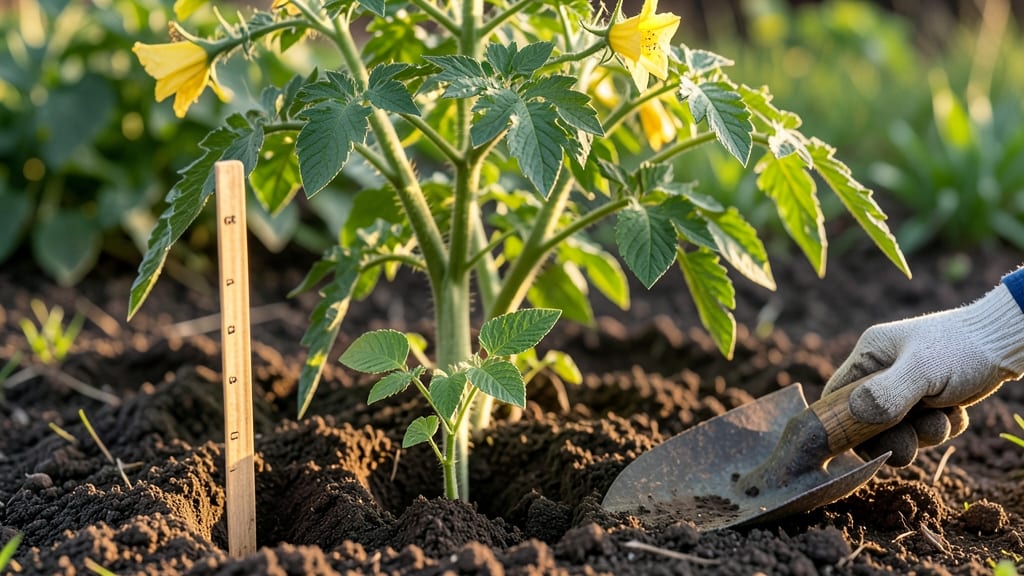
Tomato plants need to be planted at least 12-18 inches deep to give their roots the space they crave for strong growth and heavy fruit production.
Picture this: your carefully chosen 🍅 seedlings go into the ground, but instead of thriving, they wilt or fail to produce. That’s often the result of planting too shallow or too deep—something I’ve learned the hard way after watching my own vines struggle.
Getting the depth right isn’t just about sticking the plant in the ground and hoping for the best. Soil type, climate, and even how you prepare the bed play a huge role in whether those roots will spread deep enough to support a bountiful harvest.
In this guide, I’ll walk you through the ideal planting depth, how to prep your soil for maximum root growth, and the common mistakes that can sabotage your tomatoes before they even take off.

Ideal soil depth for tomato plants: root system requirements explained
When planting tomatoes, the soil depth directly impacts your plant's ability to thrive. A tomato root system needs at least 12-18 inches of loose, nutrient-rich soil to support its growth and heavy fruit production.
Shallow roots struggle to access water and nutrients, leading to wilting and poor yields, while planting too deep can suffocate the plant.
Tomatoes develop a taproot system with secondary roots spreading outward. The primary root grows downward, while lateral roots expand horizontally, absorbing water and nutrients. Without adequate depth, these roots can't establish properly, making your plants more susceptible to drought stress and nutrient deficiencies.
Soil type plays a crucial role in root development. Sandy soil drains quickly but lacks moisture retention, while clay soil holds water but can become compacted. Both extremes require amendments to create an ideal environment for deep root growth. The goal is to achieve a balance where roots can spread freely without drowning or drying out.
Here’s a quick reference for the ideal tomato planting depth based on root system needs and soil conditions:
| Requirement | Specification | Notes |
|---|---|---|
| Minimum Root Depth | 12-18 inches | Allows for full root system development and stability. |
| Planting Hole Depth | 12-15 inches deep | Accommodates roots and prevents crowding. |
| Soil Looseness | Deeply aerated | Critical for root penetration in clay or compacted soil. |
| Drainage | Well-draining | Prevents root rot in heavy or waterlogged soils. |
| Nutrient Zone | Top 6-12 inches | Focus fertilizer here to encourage shallow root growth initially. |
Adequate soil depth ensures your tomato plants can access moisture and nutrients during dry spells. Without it, roots become concentrated near the surface, where they dry out quickly. This leads to leaf curling, blossom drop, and stunted fruit development.
Even in container gardening, ensure the pot is at least 12 inches deep to accommodate root growth.
In sandy soil, roots may spread wider but won’t penetrate deeply without organic matter. Amend with compost or well-rotted manure to improve moisture retention. For clay soil, add sand or perlite to break up compaction and encourage deeper root growth.
Both amendments help create an ideal balance for tomato roots.
If your garden bed is shallow or compacted, consider using raised beds or deep containers. These allow you to control soil depth and structure, ensuring your tomato plants have the space they need to develop strong roots.
For example, a 5-foot-deep raised bed provides ample room for roots to explore while improving drainage and aeration.
Another key factor is the planting method. When transplanting seedlings, bury the stem deeper than you might with other plants—up to the first set of leaves. This encourages additional roots to form along the buried stem, creating a more robust root system.
Just avoid burying the stem crown too deeply, as this can lead to rot.
Proper soil depth isn’t just about the initial planting—it’s an ongoing consideration. As your tomato plants grow, monitor their health and adjust your care routine. For instance, deep watering (1-2 inches per week) encourages roots to grow deeper in search of moisture.
Avoid shallow watering, which promotes surface roots that dry out quickly.
Finally, mulching around your tomato plants helps retain moisture and regulate soil temperature, creating an ideal environment for root growth. Use organic mulch like straw or wood chips to protect roots from temperature fluctuations and prevent soil erosion.
This simple step can make a big difference in the long-term health of your tomato plants.
How to prepare your garden bed for maximum tomato root depth
Tomatoes thrive when their roots can spread freely through loose, nutrient-rich soil. The key to a bountiful harvest starts with preparing a deep planting hole—at least 12-18 inches deep—to accommodate their extensive root systems.
Shallow planting forces roots to compete for water and nutrients near the surface, leading to stunted growth and poor fruit production. Let’s break down how to create the perfect environment for your tomato plants to flourish.
Before digging, test your soil’s drainage by filling a jar halfway with soil, adding water, and observing how quickly it drains. Clay-heavy soil can suffocate roots, while sandy soil drains too fast, both requiring amendments.
Aim for soil that holds moisture but allows excess water to escape within 30-60 minutes. If your soil doesn’t meet these criteria, we’ll address that next.
Step-by-Step Guide to Deep Planting
-
Step 1: Choose Your Location
Select a spot with 6+ hours of sunlight and minimal competition from weeds or other plants. Mark the area with stakes or spray paint for clarity. -
Step 2: Loosen the Soil
Use a broadfork or digging fork to loosen soil to a depth of 12-18 inches. Avoid compacting the soil further—this is critical for root penetration. -
Step 3: Amend the Soil
Mix in 2-3 inches of compost or well-rotted manure into the top 6 inches of soil. For clay soil, add sand or perlite (1 part sand to 3 parts soil) to improve drainage. -
Step 4: Create the Planting Hole
Dig a hole twice as wide as the root ball and 12-18 inches deep. For container-grown seedlings, gently loosen the roots if they’re circling. -
Step 5: Add Drainage (If Needed)
For heavy clay or poor-draining soil, add a 2-inch layer of gravel or coarse sand at the bottom of the hole before planting. This prevents waterlogging. -
Step 6: Plant and Backfill
Place the seedling in the hole so the top of the root ball sits 1 inch below soil level. Backfill with amended soil, tamping gently to remove air pockets. -
Step 7: Mulch and Water
Apply 2-3 inches of mulch (straw or shredded leaves) around the base to retain moisture and suppress weeds. Water deeply to settle the soil.
If you’re working with raised beds, ensure they’re at least 12 inches deep to accommodate tomato roots. Fill the bed with a mix of topsoil, compost, and perlite (50% topsoil, 30% compost, 20% perlite) for optimal drainage and aeration.
For container gardening, choose pots 18+ inches deep—5-gallon buckets work well for determinate varieties, while larger containers (10+ gallons) suit indeterminate types.
After planting, monitor the soil moisture closely. Tomatoes need 1-2 inches of water per week, delivered at the base of the plant to encourage deep root growth. Avoid overhead watering, which can spread disease. In hot climates, consider drip irrigation to maintain consistent moisture without wetting the foliage.
With these steps, your tomato plants will develop strong, deep roots capable of supporting heavy fruit loads. Remember, the effort you put into preparing the soil now will pay off with larger yields and healthier plants throughout the season. Happy gardening! 🌱