
How To
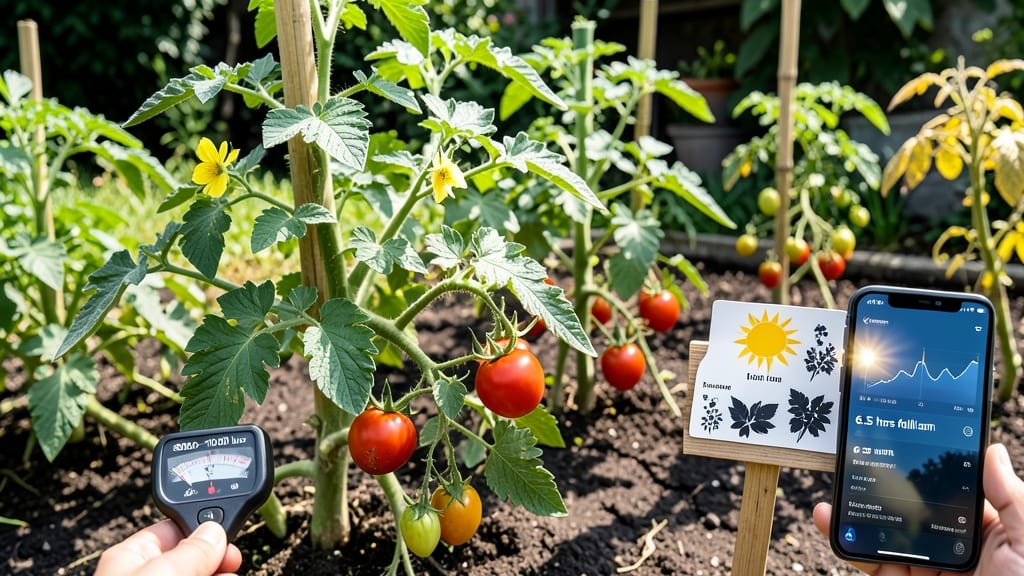
How much light does a tomato plant need? It’s 6 to 8 hours of direct sunlight daily to grow strong, flavorful fruit 🍅 — anything less and you’ll end up with leggy vines and tiny harvests.
Picture this: you’ve spent weeks nurturing your seedlings, only to watch them stretch toward the sky like they’re reaching for something they can’t quite grab. That’s your tomato plants begging for more light, and the fix isn’t as complicated as you might think.
Sunlight isn’t just about hours—it’s about intensity. Shade-loving plants might thrive in partial light, but tomatoes demand full sun to set fruit, ripen properly, and pack that sweet, juicy flavor we all crave.
Skip this step, and you’ll be left with bland, underdeveloped tomatoes that barely cover the cost of the seeds.
Below, I’ll break down exactly how much light your tomato plants need, how to spot the signs of light starvation, and the easiest ways to boost their sunlight—whether you’re working with a sunny backyard or a shady balcony.


Optimal sunlight hours for tomato plants: the science behind bigger fruit
Tomatoes are sun-worshippers, and their fruit production depends heavily on light intensity and duration. While most varieties thrive with 6-8 hours of direct sunlight daily, the exact needs vary between determinate (bush) and indeterminate (vining) types.
Understanding these differences ensures your plants grow strong stems, abundant flowers, and sweet, flavorful fruit instead of bitter, undersized tomatoes.
Sunlight isn’t just about hours—it’s about light quality. Tomatoes need full-spectrum sunlight, particularly blue and red wavelengths, which drive photosynthesis and flowering. Morning sun provides gentle warmth, while afternoon sun boosts fruit ripening.
Without enough light, plants stretch toward the sun, become leggy, and produce fewer flowers, leading to poor yields.
Here’s the breakdown you need to maximize your tomato harvest:
Determinate tomatoes (like Roma or Bush Early Girl) grow to a fixed size and produce fruit all at once. They tolerate slightly less light—6-8 hours daily—but still need strong afternoon sun to ripen fruit efficiently. Indeterminate varieties (like Sungold or Cherokee Purple) keep growing and producing fruit until frost, so they demand 10+ hours of sunlight for maximum yield and flavor.
Seasonal adjustments are critical. In spring and fall, when days are shorter, supplement with reflective mulch (white plastic or aluminum foil) to bounce extra light onto leaves. For winter growing in warm climates, use grow lights (LED or fluorescent) for 12-14 hours daily to maintain flowering.
Even 1-2 extra hours of light can double your fruit set during cloudy periods.
Light intensity matters just as much as duration. Direct sunlight (not filtered through trees) provides the high-energy photons tomatoes need for photosynthesis. If your plants are in partial shade, rotate them weekly to ensure even light exposure.
Watch for yellowing leaves or stretched stems—these are red flags for insufficient light.
For container-grown tomatoes, place pots on south-facing balconies or use self-watering grow bags with reflective sides. If your space gets only 4-5 hours of sun, choose compact varieties like ‘Tiny Tim’ or ‘Micro Tom’ and supplement with grow lights for 4-6 hours in the evening.
Even artificial light can prevent leggy growth and improve fruit quality.
Pro tip: Monitor your plants’ flowering response. Healthy tomatoes produce yellow flowers that open in the morning. If flowers drop without setting fruit, it’s often due to heat stress (above 90°F) or light deficiency.
In such cases, provide afternoon shade cloth (30-50% shade) to protect blooms while keeping morning sun exposure high.
Remember, more sunlight doesn’t always mean better. In hot climates (Zone 9+), afternoon shade prevents sunscald on fruit. Balance is key: aim for 6-8 hours of full sun with 2-4 hours of afternoon shade if temperatures exceed 95°F. Your goal is consistent, high-quality light—not just quantity.
By tailoring sunlight to your tomato type and climate, you’ll unlock bigger, sweeter fruit and healthier plants. Start with the right variety for your light conditions, then adjust as seasons change. Your harvest will thank you! 🌱☀️
How to maximize sunlight for tomato plants in different climates
Not all gardens receive the ideal 6-8 hours of sunlight tomatoes crave. Urban balconies, shaded yards, and northern climates often leave gardeners struggling to meet these light requirements. The good news? With strategic planning, you can still grow healthy, productive tomato plants—even in low-light conditions.
The key lies in understanding how to supplement natural light and adjust care routines to compensate for shorter daylight hours.
First, let's address the hard truth: tomatoes are sun-hungry plants. While they can technically survive with 4-6 hours of sunlight, anything less will result in smaller fruit, fewer blooms, and leggy growth.
In climates with shorter summer days (like the Pacific Northwest) or urban areas with obstructed sunlight, you'll need to get creative. The solutions range from choosing the right varieties to implementing artificial lighting systems—and everything in between.
For urban gardeners or those with limited sunlight access, start with reflective surfaces. Installing mirrors or white walls behind your tomato containers can bounce additional light onto plants, effectively adding 1-2 extra hours of sunlight.
Pair this with dwarf tomato varieties like 'Tiny Tim' or 'Patio Princess', which thrive with 4-6 hours of sunlight—perfect for partial shade conditions. These varieties also produce compact plants with abundant fruit, making them ideal for container growing on balconies or patios.
If you're dealing with consistently low light (like in northern climates), consider supplemental grow lights. LED grow lights are the most energy-efficient option, providing the full-spectrum light tomatoes need for photosynthesis and flowering.
Position lights 12-18 inches above plants and provide 12-16 hours of light daily during shorter days. For budget-friendly solutions, start with a single LED bulb on a timer—this can make a noticeable difference in plant vigor and fruit production.
Don't overlook the power of season extension techniques. In cooler climates, use hoop houses or cold frames to trap heat and extend the growing season by 4-6 weeks. This gives your tomatoes more time to soak up sunlight before cooler weather arrives.
Combine this with early planting (after your last frost date) and late harvesting to maximize sunlight exposure. Even in shaded areas, these techniques can help your plants reach their full potential.
Finally, adjust your care routine to compensate for lower light levels. Prune aggressively to redirect energy toward