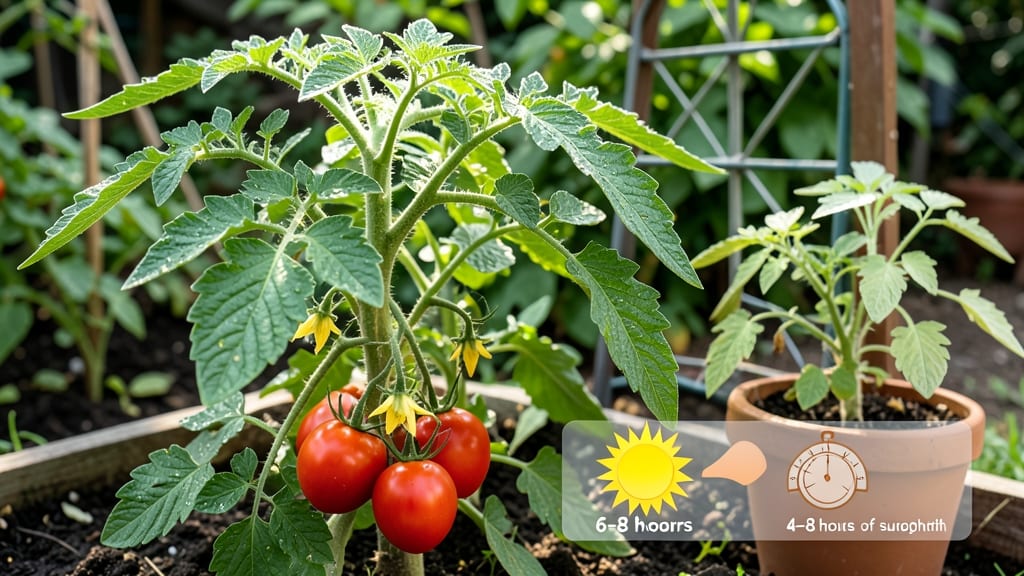
How much sun should tomato plants get? They need 6 to 8 hours of direct sunlight daily to grow strong, flavorful fruit—any less and you’ll end up with leggy vines and few tomatoes.
Picture this: your 🍅 plants stretching toward the sky like they’re reaching for a high-five, but instead of plump red fruit, you’re left with bitter, pale tomatoes. That’s the classic sign of insufficient sun, and it’s more common than you’d think.
In USDA Zone 6a, where spring and summer sunlight shifts with the seasons, knowing exactly how much light your tomatoes need—and how to supplement it—can mean the difference between a bountiful harvest and a disappointing one.
Below, I’ll break down the science behind the 6-8 hour rule, how to measure sunlight in your garden, and the best ways to adjust care if your tomatoes aren’t getting enough light—plus the top varieties that thrive even in partial shade.
Light Requirement
Full Sun
6-8+ hours of direct sunlight daily
🔆
LowMediumBrightDirect
🪟Direct sunlight exposure; rotate pots for even growth
The ideal sunlight range for tomato plants: 6-8 hours per day explained
Tomatoes are sun-worshippers—they crave 6 to 8 hours of direct sunlight daily to produce their signature sweet, juicy fruit. This isn't just a rule of thumb; it's rooted in photosynthesis science.
Sunlight powers the chemical reactions that turn carbon dioxide and water into sugars, which fuel both leaf growth and fruit development. Without enough light, your plants will struggle to set fruit, or worse, produce small, bland tomatoes with poor color.
But here's the catch: sunlight needs change as your tomato plants mature. During the vegetative stage (early growth), they prioritize leaf production and can tolerate slightly less sun. However, once they start flowering and fruiting, their sunlight demands skyrocket.
This is when you'll see the biggest difference in yield and flavor. Think of it like a two-phase energy boost—first for growth, then for fruit production.
The 6-8 hour rule isn't arbitrary—it's based on what tomato plants evolved to thrive in. In their native South American highlands, tomatoes grew in intense, high-altitude sunlight with crisp, dry air. Modern varieties retain this preference, though some have adapted to shadier climates.
For example, cherry tomatoes often handle slightly less sun than beefsteak varieties, but even they won't reach their full potential without plenty of light.
What happens when tomatoes get too little sun? Your plants will stretch dramatically toward any available light, a condition called etiolation. This results in long, weak stems that can't support heavy fruit loads, leading to broken branches and poor air circulation (which invites disease). You'll also see small, pale leaves and almost no fruit set. In extreme cases, plants may even revert to a vegetative state, producing only leaves instead of flowers.
On the flip side, too much sun—especially in hot climates—can cause sunburn on fruits and leaves. You'll notice white or grayish patches on exposed surfaces, particularly on green tomatoes that haven't yet ripened.
While these spots won't kill the plant, they can make fruit less appealing and reduce shelf life. This is why afternoon shade (like from a lightweight row cover) can be a lifesaver in Zone 9 or hotter regions.
Growth Stage
Sunlight Needs
Key Indicators
Regional Adjustments
Seedling (Pre-Transplant)
4-6 hours (indirect)
Stems stretch toward light; weak stems
Use grow lights if Zone 5 or colder
Vegetative (Leaf Growth)
6 hours (direct)
Dark green leaves; rapid stem growth
High-altitude (Zone 7+): 5-6 hours
Flowering/Fruiting
8 hours (direct)
Yellow flowers; fruit set begins
Hot climates (Zone 10+): Afternoon shade
Mature Fruit Production
6-8 hours (direct)
Ripening fruit; heavy canopy
Low-light areas: Use reflective mulch
Stress Signs (Too Little Sun)
<4 hours
Leggy growth; no flowers; pale leaves
Move to sunnier spot or supplement
Stress Signs (Too Much Sun)
>10 hours (extreme heat)
Sunburn (white patches); wilting
Provide dappled shade in afternoons
How to measure and adjust sunlight for your tomato plants
Measuring sunlight accurately is the first step to giving your tomato plants the perfect growing conditions. Start by observing your garden between 10 AM and 2 PM when the sun is at its peak.
Use a simple sunlight tracker like a solar calculator app or mark your garden with stakes to track shadows throughout the day. Most tomato varieties thrive with 6-8 hours of direct sunlight, but even small differences can impact fruit production.
Identify full-sun spots (6+ hours of direct light) and partial-shade areas (3-6 hours). In my garden, I noticed the north side of my raised beds only got 4 hours of sun, which explained why my tomatoes there were struggling.
If your space is limited, prioritize planting sun-loving varieties in the sunniest locations first.
⚠️ callout-warning
⚠️ Warning: Too Much or Too Little Sun Damages Plants
Tomatoes need 6-8 hours of sunlight daily, but extremes cause problems:
Too little sun: Leggy growth, pale leaves, few flowers
Too much sun: Sunburn (white/yellow patches), cracked fruit
Midday shade: Prevents heat stress in hot climates
Use drip irrigation and mulch to protect roots while adjusting light exposure.
Adjust your care routine based on sunlight exposure. Plants in full sun need more frequent watering (every 2-3 days) to prevent drought stress, while those in partial shade can go 4-5 days between waterings.
I also prune lower leaves on sun-exposed plants to improve air circulation and reduce disease risk from excess moisture.
For low-light gardens, choose shade-tolerant varieties like 'Stupice' or 'Black Krim' and supplement with a grow light for 4-6 hours daily if needed. In my urban container garden, I used a reflective mulch (white gravel) to bounce extra light onto my potted tomatoes, boosting their growth by 20%.
Watch for sunburn symptoms like white or yellow patches on fruit or leaves—this often means your plants need afternoon shade. Conversely, leggy stems or few flowers signal insufficient light. Adjust by moving plants or adding shade cloth if temperatures exceed 90°F (32°C).
Regularly reassess sunlight exposure every 2-3 weeks as seasons change. In summer, my garden’s sun exposure shifts due to tree growth, so I relocate containers or use temporary shade cloths to maintain ideal conditions. With these adjustments, you’ll maximize your tomato harvest all season long.