
Plants
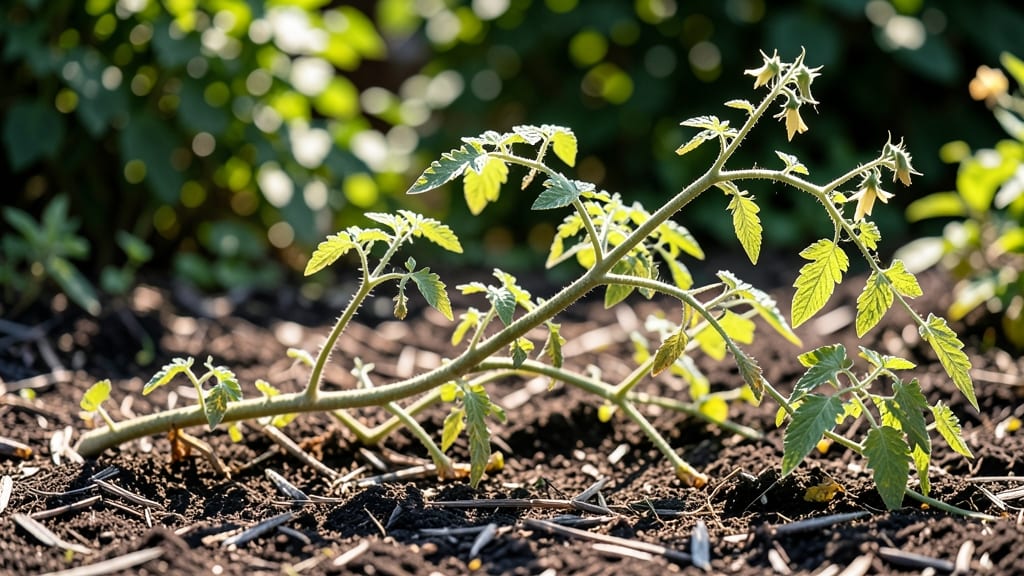
Leggy tomato plants scream for attention—literally, with those stretched-out stems reaching for the sky like desperate hands. 🌱 I’ve turned my share of lanky, weak tomato plants into sturdy, productive bushes by addressing the root causes: too little light, overcrowding, or improper spacing.
The good news? You can fix them in three focused steps—no fancy tools or horticultural degree required.
Most leggy plants start with a simple mismatch: too much shade or not enough space between seedlings. When plants stretch toward light, they invest energy in growth instead of flowering, leaving you with tall stems and few tomatoes.
The fix begins by pruning those elongated stems back to a stronger branch and training the plant to grow upright with stakes or cages. Within 10-14 days, you’ll see new, compact growth forming—this is your plant redirecting energy toward fruit production.
What you’ll end up with is a compact, bushy tomato plant that supports its own weight and produces more fruit than before. The key is consistency: prune regularly, provide 6-8 hours of sunlight daily, and keep plants spaced 18-24 inches apart.
These adjustments don’t just stop legginess—they set your tomatoes up for a heavier harvest and stronger stems that resist wind and disease.
This method works for determinate and indeterminate varieties, whether you’re growing in the ground, raised beds, or containers. The same principles apply whether you’re dealing with a single plant or a full garden bed. Let’s get those tomatoes back on track!
The Hidden Triggers Behind Tall Tomatoes
Leggy tomato plants aren’t just a cosmetic issue—they’re a plant’s way of signaling that something’s off in its environment. Understanding the root causes (literally!) helps you fix the problem before it’s too late. Here’s what’s really making your tomatoes stretch for the sky.
Tomatoes are sun worshippers, and when they don’t get enough light, they go into survival mode. Here’s how it works:
- Photosynthesis slowdown: Without adequate sunlight (typically 6–8+ hours of direct sun daily), plants can’t produce enough energy via photosynthesis. To compensate, they grow taller and thinner stems to reach upward toward light sources, like a human stretching in a dim room.
- Weak cell walls: Low light reduces the production of auxin (a growth hormone), which normally balances stem strength. Instead, cells elongate rapidly, creating that "leggy" look.
- Pale, weak leaves: Sun-deprived leaves turn yellow or light green and feel papery—a clear sign the plant is struggling to sustain itself.
Actionable fix: Move plants to a sunnier spot (south-facing is ideal in the Northern Hemisphere) or use reflective mulch (like white plastic) to bounce light onto stems. If growing indoors, supplement with grow lights (12–16 hours/day).
Tomatoes thrive in warm but not scorching conditions (ideal range: 70–85°F during the day, 55–65°F at night). Outside these zones, their growth patterns go haywire:
- Cold snaps: Temperatures below 50°F slow photosynthesis and stunt root development. The plant diverts energy to survival mode, prioritizing stem elongation over fruit production.
- Heatwaves: Above 90°F, tomatoes bolt (send up tall, flower-heavy stems) to reproduce quickly before wilting. This often results in flower drops and leggy, weak growth.
- Nighttime fluctuations: Large swings between day and night temps (e.g., 95°F days, 60°F nights) confuse the plant’s circadian rhythm, leading to erratic growth.
Actionable fix:
- Use shade cloth (30–50% coverage) during heatwaves.
- Mulch with straw or grass clippings to regulate soil temperature.
- In cold climates, use row covers or grow tomatoes in containers that can be moved indoors at night.
Too much water (or waterlogged soil) might seem counterintuitive, but it’s a major cause of leggy growth. Here’s why:
- Root suffocation: Overwatering deprives roots of oxygen, forcing the plant to grow longer, thinner stems to access air near the surface. This is especially common in clay-heavy soils.
- Nutrient dilution: Excess water washes away essential nutrients (like nitrogen and phosphorus), which are critical for compact, sturdy growth. The plant stretches to compensate for nutrient deficiency.
- Weak root systems: Roots that can’t anchor properly lead to top-heavy, floppy plants that lean or snap easily.
Actionable fix:
- Let the top 1–2 inches of soil dry out between waterings. Stick your finger in the soil—if it’s damp, wait.
- Improve drainage by amending soil with perlite, compost, or sand.
- Use self-watering containers or drip irrigation to deliver water slowly and evenly.
Tomatoes need room to breathe—literally. When roots are cramped (either in small pots or overplanted in gardens), they compete aggressively for resources, leading to:
- Stunted root growth: Roots can’t spread out to support the plant’s needs, so the stem elongates to reach for light and nutrients.
- Competition for nutrients: Overcrowded plants steal nitrogen and phosphorus from each other, forcing them to grow taller and thinner to access what’s left.
- Weak structural support: Roots can’t anchor the plant properly, leading to top-heavy, floppy growth.
Actionable fix:
- Space tomato plants 18–24 inches apart in gardens or 12–16 inches apart in containers.
- If transplanting, prune lower leaves to reduce stress and encourage root growth.
- Use container gardening for indeterminate varieties (like 'Sungold') to control root space.
A lack of key nutrients throws a tomato’s growth hormones out of whack, leading to leggy, weak plants. The biggest culprits:
| Nutrient | Role in Growth | Leggy Signs |
|---|---|---|
| Nitrogen (N) | Builds leafy growth and stem strength. | Yellowing leaves (first lower leaves) + excessive leaf growth with few flowers. |
| Phosphorus (P) | Supports root development and flowering. | Purple or dark green stems + slow growth and delayed flowering. |
| Potassium (K) | Strengthens cell walls and disease resistance. | Weak, brittle stems that snap easily + yellowing leaf edges. |
| Magnesium (Mg) | Helps with chlorophyll production (green color). | Yellowing between leaf veins (like a net pattern) + stunted growth. |
Actionable fix:
- Test your soil with a DIY kit or send a sample to a local extension office.
- Amend soil with compost or a balanced fertilizer (like 10-10-10) at planting time.
- For phosphorus, use bone meal; for potassium, try <
Quick Fixes for Tall, Weak Tomato Stems
Leggy tomato plants aren’t just a cosmetic issue—they’re a sign your plants are struggling to support their own weight, leaving them vulnerable to disease, pests, and poor fruit production. But don’t worry! With the right adjustments, you can revive their strength and guide them toward a sturdy, productive harvest.
Below, we’ll break down the most common causes of leggy growth and practical, step-by-step solutions to turn things around—plus tips to keep your plants thriving long-term.
---
Problem: Plants stretched too far for light or nutrients because they’re packed too closely together.
How to Fix It: - 🔥 Thin Your Plants – If seedlings are crowded, snip or transplant the weakest ones, leaving only the strongest 2–3 stems per plant (for indeterminate varieties) or 1–2 per hill (for determinate). - 👨🍳 Reposition for Sunlight – Move pots or stakes to ensure 6–8 hours of direct sunlight daily. South-facing windows or a sunny patio work best. - 🥘 Expand Root Space – If growing in containers, upgrade to a 5-gallon pot minimum (bigger = more stability and nutrients).
Prevention Tip: 💡 Space seeds properly from the start! Sow indeterminate tomatoes 18–24 inches apart and determinate types 12–18 inches apart to avoid future crowding.
---
Problem: Plants stretching toward light (etiolation) due to insufficient or uneven sunlight.
How to Fix It: - 🔪 Prune Excess Growth – Trim leggy stems back by 1/3 to encourage bushier, stronger regrowth. Focus on removing the topmost leaves to redirect energy to the lower stems. - 🍳 Add Supplemental Light – If indoors, use a grow light (LED or fluorescent) 12–16 inches above plants for 12–14 hours daily. - 🌡️ Rotate Plants Regularly – Turn pots quarter-turns every few days so all sides get even light exposure.
Prevention Tip: ✨ Start seeds indoors 6–8 weeks before last frost, using a sunny windowsill or grow light to prevent weak seedlings.
---
Problem: Uneven moisture or nutrient imbalances cause weak stems and rapid (but unsupported) growth.
How to Fix It: - 🥘 Water Deeply & Consistently – Leggy plants often suffer from shallow watering. Water at the base (not the leaves) 1–2 inches deep, 1–2 times per week (adjust for climate). - 📊 Balance Fertilizer – Too much nitrogen = leafy growth, not fruit. Switch to a low-nitrogen, high-phosphorus fertilizer (like 5-10-10) to encourage root and flower development. - ⏰ Avoid Overhead Watering – Wet foliage invites disease. Use drip irrigation or soaker hoses instead.
Prevention Tip: 🌡️ Mulch around plants with straw or shredded leaves to retain moisture and regulate soil temperature.
---
Problem: Plants can’t support their own weight, leading to flopping or broken stems.
How to Fix It: - 🔪 Prune Strategically – For indeterminate tomatoes, pinch off suckers (side shoots in leaf axils) to focus energy on the main stem. For determinate types, prune only to remove damaged leaves. - 👨🍳 Install Stakes or Cages Early – Use 5–6 ft bamboo stakes or tomato cages to provide vertical support. Tie stems gently with soft plant ties or old T-shirts (avoid wire, which can cut into stems). - 🥘 Try a Trellis for Heavy Varieties – Heirloom or beefsteak tomatoes benefit from stronger support, like a A-frame trellis or overhead netting.
Prevention Tip: 🎯 Start supporting plants at transplanting—don’t wait until they’re already leaning!
---
Problem: Extreme heat or cold stress causes weak, elongated growth.
How to Fix It: - 🌡️ Shield from Heat Stress – If temps exceed 90°F (32°C), provide afternoon shade with a lightweight row cover or shade cloth (30–50%). - 💧 Boost Humidity (Indoors) – Place a pebble tray with water near potted plants or use a humidifier to prevent wilting. - ⏰ Harden Off Gradually – If moving plants outdoors, acclimate them over 7–10 days to prevent shock from temperature swings.
Prevention Tip: 💡 Choose heat-tolerant varieties like ‘Solar Fire’ or ‘Heatmaster’ if you live in a hot climate.
--- Once your leggy plants are on the mend, keep them thriving with these pro tips: - 🌱 Succession Plant – Replace leggy or struggling plants with new seedlings every 2–3 weeks for a continuous harvest. - 🍅 Harvest Early & Often – Picking tomatoes as they ripen encourages more fruit production and prevents overburdening the plant. - 🔄 Rotate Crops – Avoid planting tomatoes in the same spot yearly to prevent soil depletion and disease buildup.
--- Remember: Leggy plants are a fixable problem—not a death sentence! With the right care, your tomatoes will soon be strong, productive, and ready for the kitchen 🍅🍴. Now grab those pruners and get growing!
Frequently asked questions
Why do my tomato plants get so tall and weak?
Leggy tomato plants usually stretch because they're searching for light or struggling with poor growing conditions. Common causes include insufficient sunlight (less than 6 hours daily), overcrowding, or uneven watering. When plants don't get enough light, they grow tall and thin to reach upward, while poor nutrition or root stress can also trigger this weak growth pattern.
Can I still save leggy tomato plants?
Start by pruning the tallest stems back by 1/3 to encourage bushier growth. Add support with stakes or cages immediately, and move plants to a sunnier spot. Within 2-3 weeks, you should see stronger, more compact growth as the plant redirects energy toward fruit production instead of just stem elongation.
What's the best way to prevent leggy tomato plants?
Prevention starts with proper spacing (18-24 inches apart for indeterminate varieties) and ensuring 6-8 hours of direct sunlight daily. Use well-draining soil and water consistently at the base (not the leaves). For container growing, choose pots at least 5 gallons in size, and consider using grow lights if natural light is limited.
Should I prune leggy tomato plants, and if so, how?
Yes, strategic pruning helps redirect energy. For indeterminate varieties, pinch off suckers (side shoots) to focus growth on the main stem. Trim back any stems that are more than 12 inches tall by cutting just above a leaf node. For determinate varieties, remove only damaged or diseased leaves. Always use clean, sharp pruners to avoid spreading disease.
Can I grow leggy tomato plants in containers?
Container growing works well, but choose large enough pots (5+ gallons) and use quality potting mix with good drainage. Place containers in full sun and rotate them regularly for even light exposure. If growing indoors, supplement with 12-14 hours of grow light daily. Remember that container-grown tomatoes may need more frequent watering and fertilizing than those in garden beds.