Watering
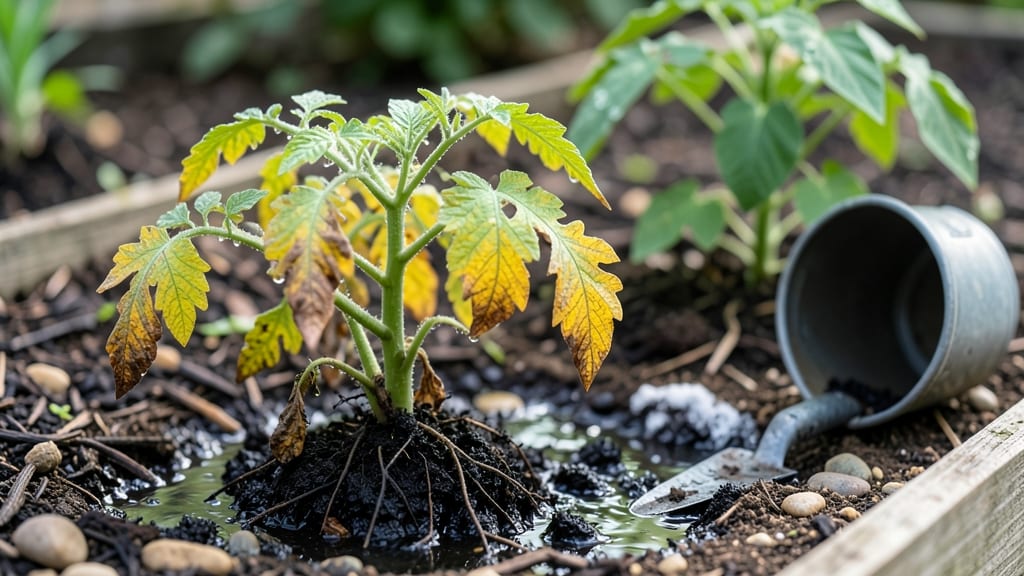
My overwatered tomato seedlings looked like drowned puppies—yellowing leaves, limp stems, and that dreaded mold smell. Overwatered tomato seedlings are more common than you think, but the good news is recovery is simple when you act fast.
The first step is stopping all water immediately and letting the soil dry out completely. You’ll need to check the roots for mushy, dark spots (that’s rot) and trim any affected areas with clean scissors.
Repot in fresh, well-draining soil mix if the roots are circling or the container feels waterlogged. A 50/50 blend of potting soil and perlite works wonders for preventing future soggy soil. Within a week, you’ll see new green growth as the roots recover.
Keep watering light—only when the top inch of soil feels dry—and use pots with drainage holes to avoid repeating the mistake. This method has saved my seedlings three times this year alone. The key is patience and observation.
Healthy seedlings bounce back faster than you’d expect, and once they’re back on track, they’ll grow into vibrant, productive plants that reward your efforts with juicy tomatoes all season.
Root Causes Of Overwatered Seedlings
When your tomato seedlings start wilting despite a soggy soil surface, the issue likely stems from excessive moisture disrupting their delicate root systems. Unlike mature plants, seedlings have shallow, fibrous roots that are highly sensitive to oxygen deprivation and fungal growth.
Understanding the root causes—literally and figuratively—helps you adjust care before irreversible damage occurs.
🌱 Poor Drainage Traps Water
Seedlings thrive in soil that drains freely, but compacted or heavy soils (like clay) or containers without drainage holes act like sponges, holding water long after roots need air. When excess moisture lingers:
- Oxygen depletion: Roots suffocate because water fills the soil pores, blocking the O₂ they need for respiration. Without oxygen, roots can’t absorb nutrients or grow.
- Fungal infections: Pathogens like Pythium and Phytophthora thrive in waterlogged conditions, rotting roots and cutting off water/ nutrient uptake.
- Nutrient lockout: Overwatering leaches essential minerals (e.g., nitrogen, phosphorus) beyond the root zone, starving seedlings even as the soil looks wet.
Actionable fix: Use lightweight seed-starting mixes (50% peat/ coco coir + 50% perlite/ vermiculite) and containers with drainage holes. Elevate trays to prevent standing water.
💧 Inconsistent Watering Patterns
Seedlings don’t need daily drinks—overzealous watering (or uneven moisture) stresses them more than drought. Common triggers:
- Top-watering only: Pouring water on leaves or soil surface creates a hydrophobic crust, repelling moisture deeper down while keeping the top layer soggy.
- No bottom-watering routine: Seedlings absorb water through their roots, not their leaves. Surface watering encourages shallow roots that drown easily.
- Environmental whiplash: Moving seedlings between dry and overly wet conditions confuses their root development, leading to osmotic stress (roots struggle to regulate water uptake).
Actionable fix: Water at the base only when the top ½ inch of soil is dry. Use a spray bottle for gentle hydration or a wicking system (e.g., a cotton string from pot to water reservoir) for consistent moisture.
🌡️ Temperature And Humidity Mismatches
Cooler temps (below 60°F/15°C) or high humidity slows evaporation, making soil stay damp longer. Combine this with:
- Plastic trays without ventilation: Condensation forms on lids or covers, dripping onto seedlings and increasing soil moisture.
- Low-light conditions: Weak seedlings can’t photosynthesize efficiently, reducing their ability to transpire (release water vapor), so excess moisture lingers.
- Cold soil: Roots in chilly soil (<55°F/13°C) metabolize slower, making them more susceptible to rot even with "light" watering.
Actionable fix: Keep seedlings in a warm (70–80°F/21–27°C), humidity-controlled space (use a fan for airflow if humidity exceeds 70%). Avoid plastic covers after germination; switch to breathable mesh.
🌿 Overcrowded Roots Compete For Air
Seedlings packed too closely or left in small containers develop root-bound conditions, where roots tangle and suffocate. Signs include:
- Circular root growth: Roots grow in a spiral (from pot edges) instead of downward, reducing soil aeration.
- Stunted stems: Roots compete for nutrients/water, causing seedlings to stretch (etiolation) or collapse.
- Slow drying soil: Dense root networks block water movement, keeping the center of the pot perpetually wet.
Actionable fix: Transplant seedlings into individual 3–4 inch pots once they have 2–3 true leaves. Use a soil-less mix (e.g., coco coir + perlite) to improve drainage.
⚠️ Chemical Imbalances In Water
Hard water (high in calcium/magnesium) or tap water with chlorine can alter soil chemistry, making it harder for seedlings to regulate moisture. Problems include:
- Salinization: Excess minerals raise soil salinity, reducing water availability to roots (even if soil looks wet).
- pH swings: Water with a pH <5.5 or >7.0 disrupts nutrient uptake, weakening seedlings’ stress response.
- Chlorine toxicity: Residual chlorine in tap water can burn root tips, reducing their ability to absorb water efficiently.
Actionable fix: Use filtered, rainwater, or distilled water. If using tap water, let it sit out for 24 hours to off-gas chlorine. Test soil pH (ideal: 6.0–6.8) and amend with lime (to raise pH) or sulfur (to lower it) if needed.
Fixing Overwatered Seedlings Fast
Now that you know the signs and causes, let’s get your tomato seedlings back on track with simple, actionable fixes—no stress, just results! The key is acting quickly to prevent root rot and give your plants a fighting chance.
Below, we’ll match common causes to easy solutions, plus pro tips to keep your seedlings thriving.
---
Cause: Excessive moisture from overwatering or poor drainage. Fix: Pause watering for 24–48 hours to let the soil dry out slightly. If the pot feels soggy or water pools at the bottom, skip watering entirely until the top 1–2 inches of soil are dry to the touch.
Pro Tip: 💡 Use a moisture meter or stick your finger in the soil—if it’s damp beyond 1 inch deep, wait longer.
---
Cause: Compacted or waterlogged soil trapping moisture. Fix: Follow these 3 quick drainage upgrades:
1. Repot if needed 🌱 - If your seedlings are in plastic trays or small pots with no drainage holes, transfer them to containers with holes (even yogurt cups with poked holes work in a pinch). - Use a well-draining mix: Combine 50% potting soil, 30% perlite or vermiculite, and 20% coconut coir or compost.
2. Raise the pots 🏗️ - Place pots on elevated surfaces (like a saucer, tray with pebbles, or a wooden board) to prevent water from sitting at the bottom.
3. Flush the roots 🚿 - If roots are visibly mushy, gently rinse them under lukewarm water to remove excess soil, then replant in fresh, dry mix.
--- Cause: Inconsistent or overly frequent watering. Fix: Water only when the top 1–2 inches of soil are dry—here’s how:
| Seedling Stage | Watering Frequency | Best Time to Water | |-------------------|----------------------|----------------------| | Germination | Every 2–3 days | Morning (avoid evening) | | True Leaves | Every 3–5 days | Early morning or late afternoon | | Transplanting | Every 5–7 days | After repotting, wait 2–3 days before watering |
Pro Tip: 🌡️ Check soil moisture by weight—lift the pot! A dry pot means it’s time to water.
--- Cause: Stagnant air or weak light slowing recovery. Fix: Give your seedlings a breath of fresh air and sunlight:
1. Move to a brighter spot ☀️ - Place seedlings near a south-facing window or under grow lights (12–16 hours/day). Avoid cold drafts or direct midday sun, which can stress them further.
2. Increase airflow 🌬️ - Use a small fan on low speed (24/7) to mimic wind and prevent fungal growth. Keep it 6+ inches away to avoid damaging leaves.
3. Prune if necessary ✂️ - If leaves are yellow or mushy, snip them off with sterilized scissors to redirect energy to healthy growth.
--- Once your seedlings bounce back, lock in these habits to avoid future water woes:
- 💡 Use the "Finger Test" – Stick your finger in the soil before watering.
If it’s damp, wait. - ✨ Choose the right pots – Opt for terracotta or fabric pots (they dry faster than plastic). - 🌱 Mulch lightly – Add a thin layer of straw or perlite to the soil surface to slow evaporation. - 🔥 Monitor humidity – If your home is dry, mist seedlings lightly (but avoid wetting leaves). - 📅 Stick to a schedule – Set a reminder for watering days to avoid guesswork.
--- Final Thought: Overwatered seedlings can recover fast with the right care—just drain, dry, and adjust! With these fixes, your tomatoes will be strong, healthy, and ready to thrive in no time. 🍅💪
Frequently asked questions
How can I tell if my tomato seedlings are overwatered vs. underwatered?
Check the soil first—overwatered seedlings have soggy, cold soil that stays wet for days, while underwatered ones have dry, cracked soil. Look for yellowing leaves with dark, mushy spots (overwatered) or crispy, brown edges (underwatered). Overwatered seedlings also wilt despite wet soil and may develop white mold on the surface.
Can I save tomato seedlings with root rot?
Yes, but act fast! Gently remove the seedling, rinse the roots under lukewarm water to clean off soil, then trim any black, mushy roots with sterilized scissors. Repot in fresh, dry potting mix with perlite and hold off on watering for 3–4 days to let roots recover. Keep the area well-ventilated to prevent further rot.
Why do my tomato seedlings keep getting overwatered even when I’m careful?
Common culprits include plastic trays without drainage, compacted soil, or high humidity trapping moisture. Switch to terracotta pots with holes and use a 50/50 soil-perlite mix. Elevate pots on pebbles to prevent water pooling. A moisture meter helps—water only when it reads dry at 1 inch deep.
How long does it take for overwatered tomato seedlings to recover?
With proper care, you’ll see improvement in 3–7 days. Focus on draining excess moisture, repotting if needed, and providing bright light. New growth may appear within a week, but avoid watering until the soil is completely dry to the touch. Patience is key—don’t rush the recovery process.