
Plants
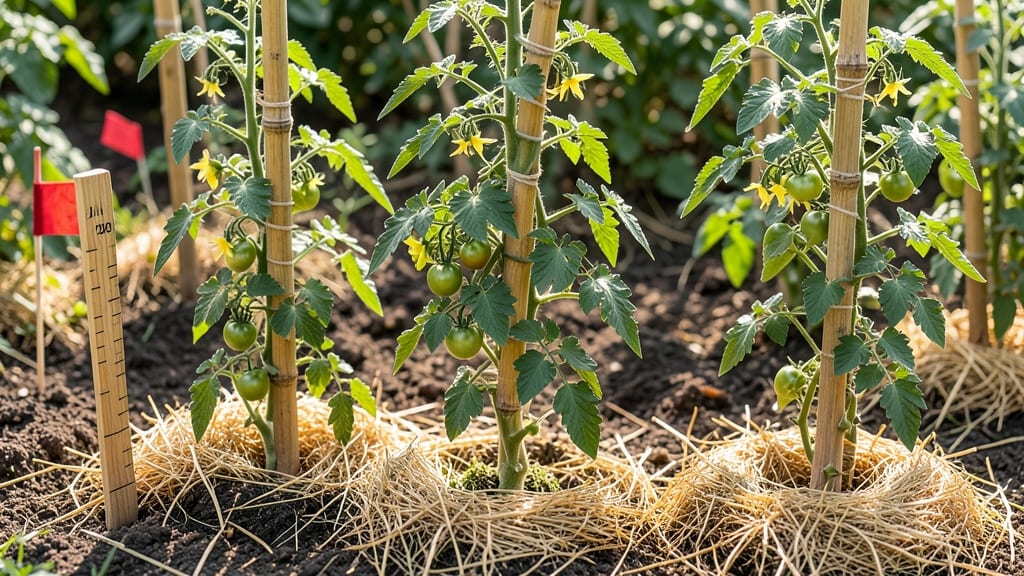
Proper spacing for cherry tomato plants 🍅 is the secret weapon behind a bursting harvest—and most gardeners miss the mark by 18 inches or more.
Picture this: you’ve spent weeks nurturing your cherry tomatoes, only to watch them fight for sunlight, crowd each other out, or succumb to blight because airflow was nonexistent.
The right spacing—whether in-ground or in containers—isn’t just about fitting more plants in; it’s about giving each vine room to thrive, climb, or sprawl without sacrificing fruit quality.
Indeterminate varieties (the ones that grow 6 feet tall or more) need 24–36 inches between plants, while compact determinate types can squeeze into 18-inch circles. But here’s the twist: trellises vs. cages change the game entirely—one maximizes vertical space, the other lets vines sprawl.
I’ll break down the science-backed layouts that double your yield without sacrificing plant health.
Ready to turn your cherry tomato patch from "meh" to mouthwatering abundance? Let’s dive into the spacing secrets that’ll have your neighbors begging for cuttings.
Optimal spacing for cherry tomato plants: science-backed guidelines by growth type
Getting the spacing right for your cherry tomato plants can make or break your harvest. Too close, and you risk disease and poor fruit development; too far apart, and you waste garden space.
The key lies in understanding whether you're growing indeterminate or determinate varieties—each has unique spacing needs. Let's break down the science-backed guidelines to maximize your yield while keeping your plants healthy and thriving.
Indeterminate cherry tomatoes—like 'Sweet 100' or 'Tiny Tim'—grow continuously throughout the season, producing fruit until frost. These vining plants need more vertical space and better airflow to prevent fungal diseases like blight.
Determinate varieties, such as 'Tumbling Tom' or 'Patio Princess', grow to a fixed size and set fruit all at once, requiring slightly different spacing strategies. Both types benefit from proper spacing, but their growth habits demand tailored approaches.
Before planting, consider your garden layout. In-ground planting, containers, and raised beds all require adjustments to spacing. For example, container-grown cherry tomatoes need slightly closer spacing than in-ground plants because their root systems are more confined.
Meanwhile, row spacing in traditional gardens should account for both plant width and mature height to ensure sunlight reaches all leaves. Let’s dive into the specifics to help you plan your garden like a pro.
For indeterminate cherry tomatoes, aim for 18-24 inches between plants in the row. This spacing allows their vines to sprawl without competing for sunlight or nutrients. If you're planting in rows, space them 30-36 inches apart to give roots room to spread and improve airflow.
This reduces the risk of fungal diseases like early blight, which thrives in damp, crowded conditions. If you're growing in containers, one indeterminate plant per 5-gallon pot is ideal, as their roots will fill the space quickly.
Determinate varieties, on the other hand, are more compact and don’t require as much space. You can plant them 12-18 inches apart in rows spaced 24-30 inches apart.
These plants produce fruit in clusters at the ends of their branches, so they don’t need the same vertical support as indeterminate types. In containers, you can fit 1-2 plants in a 5-gallon pot, making them perfect for balconies or small gardens.
Their bushier growth also means they’re less prone to sprawling, so pruning is rarely necessary.
If you're growing dwarf or compact cherry tomatoes, like 'Tumbling Tom', you can get away with even closer spacing—10-12 inches apart in rows spaced 18-24 inches apart. These varieties are perfect for container gardening or small-space gardens, as they stay low to the ground.
In containers, you can fit 2-3 plants in a single 5-gallon pot, maximizing your yield without sacrificing plant health. Just ensure they get plenty of sunlight, as their smaller size means they’re more sensitive to shade.
For trailing cherry tomato varieties, like 'Cherry Sweet', consider using hanging baskets or vertical trellises. Space plants 12-18 inches apart in the basket, and ensure the basket is at least 12 inches deep to accommodate their roots.
If planting in the ground, use a trellis or cage to guide their growth upward, keeping them off the ground to prevent rot. This method not only saves space but also makes harvesting easier and reduces the risk of soil-borne diseases.
Proper spacing isn’t just about fitting more plants into your garden—it’s about creating an environment where each plant can thrive. Good airflow and sunlight exposure are critical for preventing diseases and ensuring sweet, flavorful fruit. If you notice your plants developing yellow leaves or powder
Trellis vs. cage layouts: which supports cherry tomatoes better for yield?
When growing cherry tomatoes, the choice between a trellis system and a cage layout can dramatically impact your harvest. Both methods offer unique benefits, but understanding their differences helps you decide which maximizes fruit production and plant health for your specific garden setup.
Let’s break down the key factors to consider.
Indeterminate cherry tomato varieties, which grow continuously throughout the season, thrive with vertical support. Determinate types, which produce fruit in one cluster, benefit from both methods but in different ways.
The right choice depends on your space constraints, maintenance preferences, and how you prioritize airflow and fruit accessibility.
Trellis System vs. Cage Layout for Cherry Tomatoes
Trellis System
- ✅ Pros:
- Maximizes space in small gardens
- Improves airflow, reducing disease risk
- Easier harvesting and pruning
- Supports indeterminate varieties better
- ❌ Cons:
- Requires more maintenance (tying vines)
- Less stable in high winds
- Harder to access fruit at the bottom
Cage Layout
- ✅ Pros:
- Easier installation and low maintenance
- Better fruit accessibility at all levels
- More stable in windy conditions
- Works well for determinate varieties
- ❌ Cons:
- Takes up more ground space
- Can restrict airflow if overcrowded
- Harder to prune and manage vines
- Limited vertical growth for indeterminate types
For indeterminate cherry tomatoes, a trellis system is often the better choice. It allows vines to grow vertically, saving space and improving air circulation, which is critical for preventing fungal diseases like early blight.
With a trellis, you’ll also find it easier to prune suckers and harvest fruit as the season progresses. However, this method requires regular tying of vines to the trellis, which can be time-consuming.
A cage layout shines when growing determinate cherry tomatoes or when you prefer a low-maintenance approach. Cages provide built-in support without the need for tying, and their circular design makes it easier to access fruit at all levels.
However, cages can become overcrowded if not spaced properly, leading to poor airflow and increased disease risk. For small gardens or container growing, cages are a practical compromise.
If you’re working with limited space, a trellis system paired with proper spacing (18-24 inches between plants) will give you the highest yield. For larger gardens, a combination of both—using trellises for indeterminate varieties and cages for determinate types—can optimize your harvest.
Always prioritize airflow and sunlight exposure to ensure healthy plants and abundant fruit production.
Experiment with both methods in your garden to see which works best for your cherry tomato varieties and growing conditions. With the right support system, you’ll enjoy a bountiful harvest and healthier plants all season long. 🌱✂️🍅