
Planting
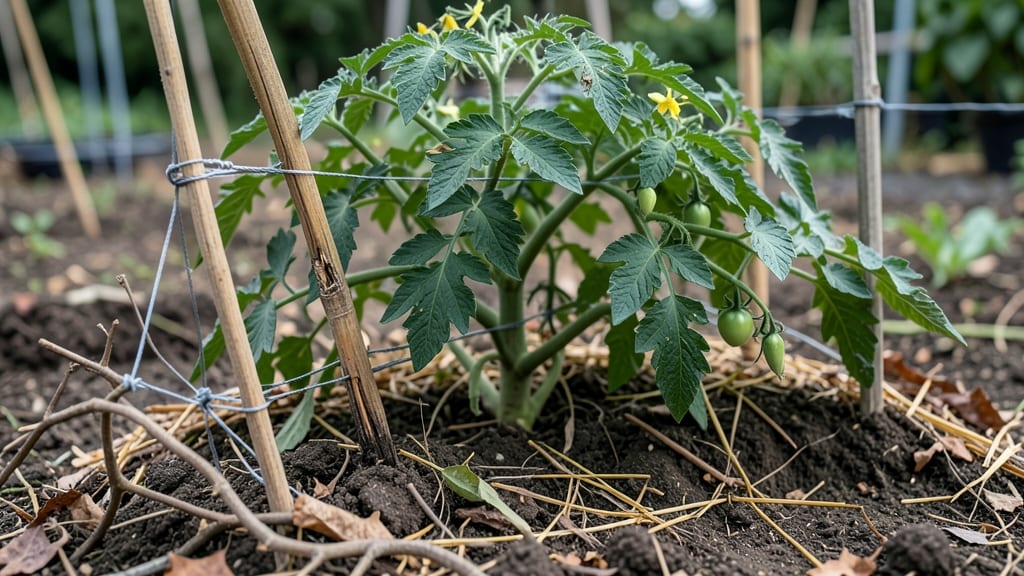
Wind can flatten tomato plants in minutes—what I’ve learned is that tomato plant wind damage doesn’t mean the season’s over. Last summer, a late storm snapped my heirloom stems mid-morning, and by afternoon, I had them back upright with just a few simple moves.
The key is acting fast: bent stems can straighten, torn leaves regrow, and broken plants often recover if you support them right away.
First, check for broken stems—if they’re snapped clean through, you’ll need to prune below the damage and hope for new suckers. Most of the time, though, it’s just bent stems that need staking or tying.
I use soft plant ties (not wire) to gently wrap the main stem to a sturdy stake, and within 3-5 days, the plant often rights itself. For torn leaves, trim the damage cleanly to prevent disease, and the plant will push out fresh foliage in about a week.
Prevention is easier than repair: windbreaks (like burlap or even a fence) save more work than you’d think. If you’re growing in containers, move them to a sheltered spot before storms. The goal is to keep the plant’s energy focused on recovery—not struggling to stay upright.
With the right support, your tomatoes will bounce back faster than you’d expect, and you’ll be back to harvesting juicy, unbroken fruit in no time.
This works for both outdoor gardens and container-grown tomatoes—just adjust the stakes to fit your setup. The biggest mistake? Waiting too long to act. Even if your plants look rough after a storm, they’re tougher than they appear. Give them a little help, and they’ll keep producing all season.
Why it happens
H2: What Triggers Tomato Plant Stress?
When your lush tomato plants suddenly look like they’ve been caught in a storm, wind is often the silent culprit. But why does it happen? Let’s break down the science behind how wind wreaks havoc on your tomato plants—and why some varieties are more vulnerable than others.
---
Wind exerts physical pressure on tomato plants, bending stems, breaking branches, and even uprooting young seedlings. Here’s how it works:
- Thigmomorphogenesis: This fancy term describes how plants physiologically respond to mechanical stress. When wind repeatedly bends stems, the plant’s growth hormones (like auxins) redistribute, causing stems to thicken or grow unevenly. Over time, this weakens structural integrity.
- Cell wall damage: High winds can rupture cell walls in delicate stems, especially in young or overwatered plants. Think of it like bending a dry twig vs. a soggy one—the latter snaps easily.
- Root destabilization: Shallow root systems (common in container-grown tomatoes) are easily toppled by gusts. Even established plants can lose anchorage if soil is loose or saturated.
Pro tip: 💡 Tomato plants with indeterminate growth habits (like ‘Sungold’ or ‘Brandywine’) are more prone to wind damage because their vines grow taller and thinner, acting like sails in a storm.
---
Wind doesn’t just blow—it amplifies heat loss and water stress, creating a vicious cycle for tomatoes:
- Transpiration surge: Wind increases the rate at which water evaporates from leaves (transpiration). If roots can’t keep up, leaves wilt, and stems become brittle.
- Sunburn risk: When wind strips away the protective boundary layer of air around leaves, they’re exposed to intense sunlight. This causes physiological sunburn, turning leaves yellow or white (a condition called sunscald).
- Soil drying: Wind dries out soil faster, especially in sandy or well-drained beds. Roots struggle to absorb water, leading to hydraulic failure—when stems can’t transport water efficiently and collapse.
Key fact: 🌡️ Temperatures above 90°F (32°C) combined with wind speeds over 10 mph (16 km/h) create critical conditions for wind damage, particularly in heat-sensitive varieties like ‘Cherry Roma.’
---
Not all tomato plants are created equal—and some are genetically or structurally prone to wind damage:
| Weakness Type | Why It Fails | Examples |
|---|---|---|
| Thin stems | Indeterminate varieties grow long, vine-like stems with minimal woody support. Without proper staking, they flop or snap. | ‘Early Girl,’ ‘Better Boy’ |
| Shallow roots | Container-grown or transplanted tomatoes develop shallow root systems that can’t anchor against wind. | All container varieties (e.g., ‘Tiny Tim’) |
| Overcrowded foliage | Dense canopies catch wind like sails, increasing surface area for damage. Pruning helps, but neglected plants are at higher risk. | ‘Big Beef,’ ‘Celebrity’ (if not pruned) |
| Young or stressed plants | Plants recovering from transplant shock, disease, or drought have weaker cell walls and are more prone to breakage. | Any variety in first 4–6 weeks after transplanting |
Actionable fix: ✨ Choose determinate varieties (like ‘Roma’ or ‘Patio’) for windy areas—they’re bushier and more stable. Or, opt for dwarf or compact types if space is limited.
---
Wind damage isn’t just about the wind—it’s a combination of environmental conditions that create the perfect storm (literally):
- Exposed locations: Plants in open fields, rooftop gardens, or near large bodies of water face unobstructed wind. There’s no natural windbreak to slow gusts.
- Loose or rocky soil: Soil that doesn’t hold roots firmly (like sandy loam) allows plants to rock back and forth, damaging roots over time.
- Sudden wind shifts: Microbursts or downdrafts (common in thunderstorms) deliver short, intense gusts that can snap stems in seconds.
- High humidity + wind: While it might seem counterintuitive, high humidity slows transpiration—but if wind suddenly drops humidity, plants can go into shock from rapid water loss.
Grower’s insight: 🌿 If your garden is in a wind tunnel (e.g., between buildings or hills), consider windbreaks like tall grasses, hedges, or even corn stalks to reduce speeds by up to 50%.
Quick fixes for wind-battered tomatoes
Wind can turn your thriving tomato plants into a tangled mess, but don’t panic—most damage is repairable with the right steps! Below, we’ll map common wind-related issues to simple solutions, plus prevention tips to keep your plants sturdy and productive.
---
Cause: Heavy winds snap or bend stems, disrupting water flow and nutrient delivery. Solution: - 🔥 Prop Up Weak Stems – Use bamboo stakes, wooden dowels, or even sturdy chopsticks to gently support bent stems. Secure them with soft ties (old T-shirts or garden twine work great). - 🍳 Prune Damaged Areas – If a stem is cracked or split, trim the injured section with clean shears, leaving a small healthy portion. This prevents rot and encourages new growth. - 👨🍳 Provide Temporary Shelter – If storms are forecasted, drape a lightweight row cover or old bedsheet over plants to shield them from further harm.
💡 Pro Tip: Avoid over-tightening ties—too much pressure can strangle the stem as it grows.
---
Cause: Wind stress disrupts root systems, causing leaves to droop or yellow. Solution: - 🥘 Water Deeply – Give plants a slow, deep drink to rehydrate roots. Use a soaker hose to avoid disturbing the soil. - 🌡️ Check for Root Shock – If leaves are curled or crispy, gently loosen the soil around the base to aerate roots. Add a handful of compost for nutrients. - ✨ Boost Recovery with Fertilizer – A balanced, water-soluble fertilizer (like 10-10-10) can help plants bounce back faster. Follow package instructions for dosage.
🎯 Quick Fix: Spritz leaves with a diluted seaweed solution (1 tsp per gallon of water) to reduce stress and improve resilience.
---
Cause: Poor support or exposure leaves plants vulnerable. Solution: - 🔧 Install Strong Stakes Early – Bury stakes 12–18 inches deep before planting. For indeterminate tomatoes, use a cage or trellis for extra support. - 🏡 Create Windbreaks – Plant tall crops (like corn or sunflowers) on the windward side of your garden. Alternatively, use a temporary fence or bamboo screen for protection. - 🌱 Choose Wind-Resistant Varieties – Compact or bush varieties (e.g., ‘Tiny Tim’ or ‘Patio Princess’) handle wind better than tall, sprawling types.
🔥 Bonus Hack: Mulch heavily around plants to keep soil moist and roots stable—dry soil makes stems brittle!
--- ⚠️ Warning: Avoid over-pruning or fertilizing immediately after wind damage—let plants recover for 3–5 days first.
With these fixes, your tomato plants should rebound quickly and keep producing juicy, flavorful fruit all season! 🍅🌟
Frequently asked questions
How do I tell if my tomato plant's stem is broken vs. just bent?
Check for continuity: gently press the stem between your fingers. If it snaps back into place with a slight bend, it's just bent. If you see a clean break or jagged edges, it's broken. For bent stems, use soft ties to support them immediately. For broken stems, prune below the damage and hope for new suckers to form.
Can I still save my tomato plant if the wind tore off most of its leaves?
Yes! Trim any remaining torn leaves cleanly with sterilized shears to prevent disease. The plant will regrow foliage in about 7-10 days if the stem and roots are healthy. Focus on keeping soil moist and providing shade until new leaves appear.
What's the best DIY windbreak for container-grown tomatoes?
For containers, use a bamboo screen or plastic milk jugs (cut in half) placed around the plant. Secure them with stakes. Alternatively, move containers to a sheltered spot like against a fence or under a patio cover during storms. This works especially well for indeterminate varieties that grow tall and floppy.
Will my tomatoes still produce fruit if the plant was damaged by wind?
Most likely! Tomato plants are resilient. If the main stem is intact, they'll continue flowering and fruiting. Focus on supporting the plant and ensuring it gets enough water and nutrients. Even if some flowers fall, new ones will form quickly. The key is to act fast—within 24-48 hours of damage.
How do I prevent wind damage in my raised garden beds?
Add 3-4 foot tall windbreaks around the perimeter using materials like burlap, straw bales, or even a temporary fence. For individual plants, use deep stakes (18+ inches) and secure with soft plant ties. Mulch heavily to keep soil stable. This creates a buffer that reduces wind speed by up to 50% in your growing area.