Size
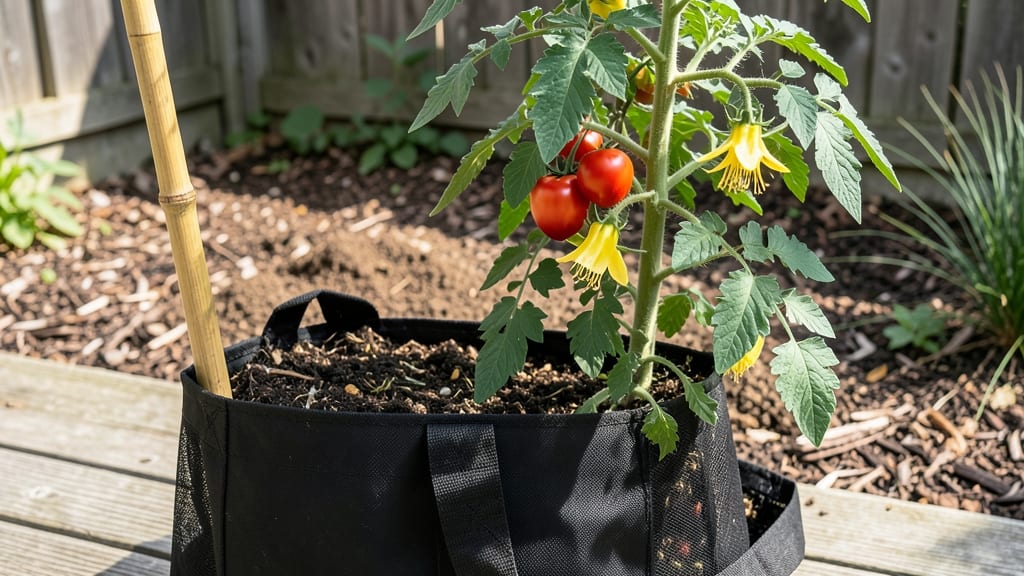
Your tomato harvest thrives when you nail the tomato grow bag dimensions—too small and vines get cramped, too big and roots waste energy. 🌱 After years of testing, I’ve found 20-gallon bags strike the perfect balance for most varieties, giving plants enough room to sprawl while keeping them manageable.
The key isn’t just capacity but how the dimensions support sturdy stems and deep root systems, which directly translate to bigger, healthier fruit.
Most 10-gallon bags work for dwarf or cherry tomatoes, but they’ll struggle with larger varieties like Big Beef or Brandywine. Meanwhile, 30-gallon bags can handle heavy producers but require more space and water.
I recommend 18–24 inches deep and 12–18 inches wide for the best root development—any shallower, and you’ll see stunted growth or early wilting.
When placing bags, leave 18–24 inches between plants to prevent crowding, which spreads disease and steals nutrients. You’ll notice vines fill the space within 4–6 weeks, with blossoms appearing by midseason. The right dimensions turn floppy, underperforming plants into sturdy, high-yielding powerhouses—no more sad, half-sized tomatoes.
For small spaces, opt for vertical trellises inside larger bags to maximize upward growth. If your bags feel too small midseason, top-dress with compost to encourage deeper roots. The goal? A bag that holds enough soil to feed your plant without becoming a waterlogged mess.
📚 In This Guide
- What you need
- Instructions
- Tips and common mistakes
- Wrapping up and next steps
What you need
- ● Grow bag: Choose a fabric or breathable plastic bag with dimensions between 10–12 gallons (18–24" deep x 18–24" wide) for determinate varieties or 15–20 gallons (24–30" deep x 24–30" wide) for indeterminate tomatoes.
- ● Quality potting mix: 6–8 cubic feet of well-draining, organic-rich mix (avoid garden soil—it compacts!). Look for blends labeled for container gardening.
- ● Tomato seedlings or seeds: 1–2 plants per bag (depending on variety). Start with healthy, disease-resistant varieties like Cherry Tomatoes, Roma, or Beefsteak.
- ● Support system: For bush tomatoes: A 5–6 ft tall stake or small tomato cage (18–24" diameter).
- ● For indeterminate vines: A 6–8 ft tall trellis or sturdy cage (24–30" diameter).
- ● Garden trowel or shovel (for planting).
- ● Watering can or hose with a gentle nozzle (avoid overwatering!).
- ● Pruning shears (for trimming suckers and dead leaves).
- ● Measuring tape (to check bag depth and spacing).
- ○ Gloves (optional but helpful for handling soil and plants).
- ● Slow-release fertilizer (like osmocote) or liquid tomato food for a nutrient boost.
- ● Mulch (straw or shredded leaves) to retain moisture and suppress weeds.
- ● Drip irrigation kit for consistent watering (great for busy gardeners!).
- ● Reflective mulch (like aluminum foil) to deter pests.
- ● Grow bag stand or elevated platform (if growing on decks or patios).
How to choose and use tomato grow bags for maximum yield
Here's the dimension and setup strategy I rely on for compact, high-producing tomato plants.
🪴 Step 1: Select the Right Bag Dimensions
For 4 plants, use 18-inch diameter grow bags that are 24-30 inches deep. This depth gives roots room to expand while maintaining stability—shallow bags topple easily in wind or when vines get heavy. I always check for thick fabric (14-16 oz) to prevent tearing as plants mature.
Look for bags with side pockets—these let you add compost or fertilizer without disturbing roots. The extra volume prevents roots from circling and becoming root-bound, which stunts growth. Place bags on raised platforms or pallets to improve drainage and prevent fabric from rotting.
☀️ Step 2: Position for Optimal Sun Exposure
Tomatoes need full sun (6-8 hours daily) for maximum fruit production. Place bags where they receive south-facing exposure—this ensures consistent light throughout the day. If your space gets afternoon shade, choose determinate varieties (like 'Roma' or 'Celebrity') that mature faster in partial sun.
Rotate bags a quarter turn weekly so plants grow upright instead of leaning toward the light. You'll see straighter stems and more even fruit development. Use reflective mulch (like white plastic) around the base to bounce extra light onto lower leaves.
🌱 Step 3: Plant at the Correct Depth and Spacing
Dig a small trench in the bag's fabric to create a 12-inch deep planting hole—this mimics natural root growth patterns. Bury the stem up to the first set of leaves (about 3 inches below soil level) to encourage stronger root development. I always use sterile potting mix (not garden soil) to prevent disease.
Space 4 plants per 18-inch bag, arranging them in a square pattern for balanced support. Leave 12 inches between each plant—crowding leads to poor air circulation, which invites fungal diseases like early blight. Water deeply after planting to settle the soil around roots.
✂️ Step 4: Support and Prune for Bushy Growth
Install individual stakes (5-6 feet tall) or a cage system immediately after planting. Tomatoes grow 1-2 feet per week in ideal conditions, so support prevents breakage. Tie vines to stakes with soft plant ties (not wire) to avoid damaging stems as they thicken.
Prune suckers (the small shoots that form in the leaf axils) weekly to direct energy into fruit production. Remove any leaves touching the ground to reduce disease risk. I also pinch off the first flower cluster on indeterminate varieties—this forces the plant to grow taller before fruiting.
💧 Step 5: Water and Fertilize for Continuous Production
Water deeply 2-3 times per week until the top 6 inches of soil feel moist—shallow watering encourages weak roots. Use a soaker hose to deliver moisture at the base without wetting foliage, which prevents fungal diseases. Mulch with 2-3 inches of straw to retain moisture and regulate soil temperature.
Fertilize every 2-3 weeks with a balanced tomato fertilizer (10-10-10 or 5-5-5) mixed at half-strength. Stop fertilizing 4-6 weeks before harvest to allow fruits to ripen fully. You'll know you're on track when vines produce new flowers weekly and existing fruit swells steadily.
Tips & tricks for perfect tomato grow bag setup
Real talk: The right grow bag dimensions make all the difference between a few sad tomatoes and a bounty of juicy, vine-ripping fruit. Here's what I've learned after years of trial and error.
Fabric Matters More Than You Think: That 14-16 oz fabric specification isn't arbitrary—it's the sweet spot for durability without being too heavy. I've torn through lighter bags when vines got heavy, and thicker ones can actually overheat roots in summer. Look for fabric with a slight texture; it drains better than smooth plastic-like materials. Pro tip: Test the bag's weight by lifting it full of water—it should feel substantial but not cumbersome.
Root Space Strategy: The 24-30 inch depth isn't just about height—it's about creating a root environment where plants can establish deep anchors while still having room to spread laterally. I've seen roots grow 18 inches deep in ideal conditions, so that extra 6 inches gives you a safety margin. For extra insurance, create those side pockets and fill them with compost during the season to encourage roots to explore new territory.
Sunlight Hack: That quarter-turn weekly rotation might seem minor, but it's a game-changer for even growth. Think of it like turning a book to read—plants grow toward the light source. I mark my bags with a permanent marker on the north side so I remember which direction they face. For shade situations, reflective mulch isn't just about extra light—it also helps regulate soil temperature, which is crucial for fruit set.
Pro Tips for Tomato Grow Bag Dimensions
- Real talk: The right grow bag dimensions make all the difference between a few sad tomatoes and a bounty of juicy, vi...
- Fabric Matters More Than You Think: That 14-16 oz fabric specification isn't arbitrary—it's the sweet spot for durabi...
- Root Space Strategy: The 24-30 inch depth isn't just about height—it's about creating a root environment where plants...
Frequently asked questions
Got questions about sizing your tomato grow bags? You’re not alone! Here are some of the most common queries—and their answers—to help you grow like a pro.
What are the ideal tomato grow bag dimensions for a single plant?
The sweet spot for a single tomato plant is a grow bag that’s 10–12 inches in diameter and 18–24 inches deep. This gives roots enough space to spread while keeping the plant stable. For indeterminate varieties (like heirlooms), opt for the larger end—they’ll climb and sprawl!
Can I use a smaller grow bag for cherry tomatoes?
Yes! Cherry tomatoes are compact, so a 7–10 inch diameter bag (12–18 inches deep) works perfectly. Just ensure the bag has drainage holes—root-bound plants = stunted growth! If you’re growing multiple cherry plants, choose a wider bag (12+ inches) to share space without competition.
How many tomato plants can fit in a 12-inch grow bag?
Stick to one plant per bag for best results. Tomato plants are heavy feeders and need room to thrive. If you’re desperate for space, you could fit two determinate (bush) varieties in a 14-inch bag, but expect smaller yields. Pro tip: Use a trellis to save space!
Do I need to adjust dimensions for heavy or sandy soil?
Yes! Heavy clay soil can compact roots, so go for deeper bags (24+ inches) to prevent suffocation. For sandy soil, wider bags (14+ inches) help retain moisture longer. Always mix in compost—it’s the secret sauce for happy roots! Drainage holes are a must in both cases.
What if my tomato plants outgrow their bags too quickly?
If vines are sprawling or wilting, it’s time to upgrade! Transplant into a larger bag (14–18 inches wide, 24+ inches deep) or a 5-gallon fabric pot with extra support. Prune suckers (side shoots) to redirect energy to roots—this buys you time! For long-term fixes, consider a raised bed or in-ground planting next season.Are there alternatives to traditional grow bags for tomatoes?
Try these space-saving options:
- Fabric pots (5–7 gallons): Lightweight, breathable, and great for balconies.
- Wooden crates or pallets: DIY-friendly and sturdy for heavy plants.
- Hanging bags (10+ gallons): Perfect for vertical gardening—ideal for cherry tomatoes!
- Straw or burlap sacks: Eco-friendly and biodegradable (replace yearly).
Wrapping up and next steps
Choosing the right tomato grow bag dimensions is your first step to a thriving harvest—whether you’re a space-saving urban gardener or a backyard enthusiast! 🌱 With the perfect size (like 10-12” deep and 18-24” wide for bush varieties), you’ll give your vines room to stretch, roots to breathe, and fruit to flourish.
Now that you’ve got the scoop, it’s time to roll up your sleeves and grab those bags—your future juicy tomatoes are waiting!
Ready to plant? Start small with 1-2 plants, experiment with your setup, and soon you’ll be sharing your bounty with neighbors (or your kitchen!). Happy growing! 🍅