
Size
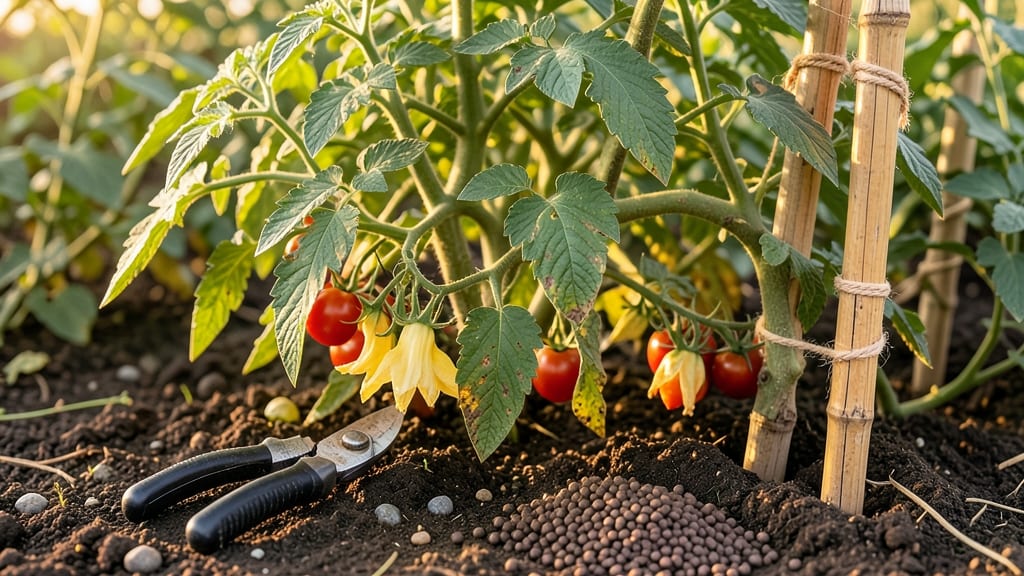
Your tomato plants are too tall—shooting up like they were racing for the sky—6 feet tall in 3 weeks—and I panicked. 🌱 The vines were top-heavy, branches were snapping, and those precious fruits were dangling out of reach.
But here's the thing: you don't need harsh chemicals or drastic measures to rein them in. Three simple tricks—pruning, support, and watering tweaks—can bring them back to a manageable height without sacrificing yield. The best part? You'll actually make your plants stronger in the process.
Overly tall tomato plants usually mean one of three things: too much nitrogen, inconsistent watering, or weak stems from poor support. I learned this the hard way after my first "jungle" of tomatoes flopped over mid-season.
The solution starts with pruning—not just cutting willy-nilly, but pinching back the suckers (those little shoots in the leaf junctions) to redirect energy to fruit production. Combine that with proper staking or trellising (I swear by 6-foot bamboo stakes for indeterminate varieties), and suddenly those lanky stems have structure.
And here's a pro tip: water deeply but less frequently—shallow watering encourages rapid, weak growth.
By the time you're done, you'll have plants that stay within reach, produce more fruit, and actually stay upright in wind or rain. My once-wild vines now hit 4-5 feet—tall enough for great airflow (which prevents disease) but short enough that I can harvest without a ladder.
The key is consistency: check your plants weekly, prune aggressively at first, then taper off as they mature. You'll end up with a neat, productive plant that doesn't look like it's about to topple over.
Works for both indeterminate (vining) and determinate (bush) varieties—just adjust the pruning style. For cherry tomatoes that keep growing all season, you'll prune more aggressively; for bush types that stop at 3 feet, minimal pruning keeps them compact.
The same rules apply whether you're in a backyard, container, or even a small balcony garden. Let's get those plants under control—without sacrificing a single tomato.
Root Causes of Towering Tomatoes
If your tomato plants are reaching for the sky like they’re auditioning for a jungle gym, don’t panic—there’s usually a logical (and fixable) reason behind it. Understanding why your plants are growing too tall helps you take targeted action.
Below, we break down the most common culprits, from genetics to growing conditions, with science-backed explanations.
Not all tomatoes are created equal—some varieties are hardwired to grow tall. Indeterminate tomatoes (like 'Sungold,' 'Cherry Roma,' or 'Brandywine') keep producing new flowers and vines until frost, which means they’ll stretch upward indefinitely if unchecked.
In contrast, determinate (or "bush") varieties like 'Roma' or 'Celebrity' grow to a set height and stop.
🔍 How to spot it: Check your seed packet or plant tag—if it says "indeterminate," expect vertical growth unless you intervene.
💡 Pro tip: Even indeterminate plants can be managed with proper pruning and support. Think of it like training a vine—guide it upward with cages or stakes instead of letting it sprawl.
Tomatoes are sun-worshippers, and when they don’t get enough light, they stretch (a phenomenon called etiolation) to reach for rays. This causes:
- Long, leggy stems (thin and weak)
- Pale, sparse leaves (chlorosis)
- Fewer flowers/fruit (energy diverted to growth)
📊 Science behind it: Low light reduces photosynthesis, so plants prioritize stem elongation to access more sunlight. Shady spots (under trees, north-facing windows, or crowded gardens) trigger this response.
🌡️ Fix it fast: Move plants to a sunny spot (6–8+ hours/day) or supplement with a grow light (12–16 hours/day). If relocating isn’t an option, prune leggy stems to encourage bushier growth.
Too much water (or soggy soil) can stunt root development, forcing plants to grow taller to stabilize themselves. Poor drainage also leads to:
- Weak, shallow roots (can’t anchor the plant)
- Fungal diseases (like blight, which stresses plants)
- Nutrient deficiencies (roots can’t absorb food efficiently)
🔥 Watch for signs: Yellowing lower leaves, wilting despite wet soil, or plants leaning precariously.
👨🍳 Action steps:
- Test your soil: Stick a finger 1–2 inches down—if it’s damp after 24 hours, you’re overwatering.
- Improve drainage: Amend soil with compost or perlite or plant in raised beds.
- Water deeply but infrequently (1–1.5 inches per week, less in rain).
Tomatoes need a balanced diet, but too much nitrogen (the first number in NPK fertilizer) promotes leafy growth over fruit—and tall, weak stems. Meanwhile, deficiencies in phosphorus (P) or potassium (K) can also trigger excessive height as plants search for stability.
📊 Common culprits:
- Over-fertilizing with lawn fertilizer (high in N, low in P/K).
- Using only compost tea (can be too "hot" with excess N).
- Old or depleted soil (lacks micronutrients like calcium or magnesium).
✨ Fix the formula: Switch to a balanced tomato fertilizer (5-10-10 or 3-4-6) and side-dress with bone meal (for P) or wood ash (for K). Avoid fresh manure—it’s too rich and can burn roots.
Tomatoes are warm-season crops (ideal: 70–85°F). When temperatures dip below 55°F or surge above 90°F, plants can:
- Grow taller rapidly to escape stress (like stretching in a crowded room).
- Drop flowers/fruit (heat stress halts pollination).
- Develop weak cell walls (leading to floppy stems).
🌡️ Extreme cases:
- Late spring frosts stunt early growth, then plants "catch up" aggressively.
- Sudden heatwaves cause "bolt" (rapid flowering/stem growth).
🎯 Climate control tips:
- Use row covers for early-season protection.
- Provide afternoon shade in hot climates (use shade cloth or plant near taller crops).
- Mulch heavily to regulate soil temp (straw or grass clippings work).
Now that you know the why, the good news is that most of these issues are reversible with simple adjustments. Next, we’ll show you 3 natural tricks to keep your tomatoes at the perfect height—without chemicals or harsh pruning!
How to Control Towering Tomato Vines
If your tomato plants are stretching toward the sky like overzealous sunflowers, don’t panic—there are simple, natural ways to rein them in. Below, we’ve matched common causes to practical fixes, plus proactive tips to keep your plants at a manageable height without sacrificing yield.
Think of it as gardening’s version of a "growth spurt intervention."
When tomato plants bake under relentless sun, they grow fast and leggy to escape the heat. The fix? Prune early and often to redirect energy into fruit production instead of vertical growth.
#### How to Do It: - 🔪 Trim the Leader: Cut the main stem (leader) just above a leaf that has a cluster of flowers or fruit. This encourages side shoots (suckers) to grow, which are stockier and produce more tomatoes. - 🍅 Prioritize Fruit Zones: Focus pruning on the top third of the plant. Remove leaves shading lower fruit to improve airflow and sunlight penetration. - ⏰ Time It Right: Prune in the morning so wounds have time to heal before evening. Avoid heavy pruning during flowering—just snip excess foliage. #### 💡 Pro Tip:Use sharp, sterilized scissors or pruners to avoid tearing the plant. If you’re squeamish about cutting, try the “pinch” method—squeeze off suckers with your thumb and forefinger instead.
When tomato plants compete for space, they’ll stretch upward to access light, leading to weak, sprawling vines. The solution? Create breathing room and structural support to guide their growth.
#### How to Do It: - 📏 Space Plants Properly: If you’re starting fresh, plant tomatoes 18–24 inches apart (for indeterminate varieties) or 12–18 inches apart (for determinate). For existing plants, gently transplant crowded ones to give them elbow room. - 🏗️ Install Cages or Trellises: Use sturdy tomato cages (5–6 feet tall) or wooden stakes with twine to train vines vertically. Secure the main stem to the support as it grows to prevent flopping. - 🌡️ Improve Airflow: Remove lower leaves touching the soil to reduce humidity and fungal risks. If plants are already sprawling, prop them up with soft ties or old pantyhose. #### 💡 Pro Tip:For indeterminate tomatoes (the vining types), prune aggressively—remove suckers (the shoots in the leaf axils) to focus energy on fewer, stronger stems. Aim for 2–3 main stems per plant.
If your plants are all leaves and no tomatoes, they’re likely getting too much nitrogen, which fuels foliage growth at the expense of fruit. The fix? Balance their diet with the right nutrients.
#### How to Do It: - 📊 Test Your Soil: Use a DIY soil test kit (available at garden centers) to check nitrogen (N), phosphorus (P), and potassium (K) levels. Ideal ratios for fruiting plants: 1-2-2 or 2-3-1 (N-P-K). - 🍄 Switch to Tomato-Specific Fertilizer: Ditch the high-nitrogen lawn fertilizer. Instead, use a balanced organic fertilizer like 5-5-5 or 3-4-6, or a tomato booster with added calcium and magnesium. - 🥗 Feed Strategically: Stop heavy nitrogen feeding once flowers appear. Switch to phosphorus-heavy fertilizers (like bone meal) to encourage blooming. #### 💡 Pro Tip:For a natural fix, mix compost or worm castings into the soil around the base of the plant. These add micronutrients without overloading nitrogen. You can also use Epsom salt (magnesium sulfate)—dissolve 1 tablespoon in a gallon of water and water the plants weekly to boost fruit production.
Want to skip the “oops, they’re too tall” moment? Plan ahead with these easy habits:
- ✅ Choose the Right Variety: Determinate tomatoes (like ‘Roma’ or ‘Celebrity’) stay compact, while indeterminate types (like ‘Sungold’) need pruning. Pick based on your space!
- ✅ Start with Strong Stakes: Bury 3-foot stakes or cages at planting time to avoid disturbing roots later.
- ✅ Mulch Generously: Use straw or grass clippings to keep soil cool and retain moisture, reducing the plant’s need to stretch.
- ✅ Monitor Light: If growing in containers, rotate pots weekly so all sides get equal sun.
- ✅ Harvest Regularly: Picking ripe tomatoes encourages more fruit to set, slowing excessive vertical growth.
With these tricks, your tomato plants will stay at a manageable height—perfect for easy harvesting and fewer backaches. Plus, you’ll end up with more tomatoes, not just taller stems. Happy gardening!
Frequently asked questions
Why are my tomato plants growing so fast vertically instead of producing fruit?
Fast vertical growth usually means your plants are prioritizing stem development over fruiting. This happens when they get too much nitrogen (leafy growth) or insufficient sunlight (etiolation). Focus on pruning leggy stems and switching to a balanced fertilizer (like 5-10-10) to redirect energy to fruit production.
Can I prune my tomato plants too much? What are the risks?
Yes, over-pruning can stress plants and reduce yields. Never remove more than one-third of the foliage at once, and avoid cutting during flowering. For indeterminate varieties, aim to keep 2-3 main stems—prune suckers (side shoots) but leave leaf clusters to support photosynthesis.
How do I tell if my tomato plant is indeterminate or determinate?
Check the plant tag or seed packet—indeterminate varieties (like 'Sungold') grow continuously and need pruning, while determinate types (like 'Roma') grow to a set height and stop. If you're unsure, observe growth: indeterminate plants produce flowers up and down the stem; determinate plants flower only at the top.
Will staking or caging my tomato plants actually help control their height?
Proper support prevents sprawling and encourages upward growth in a controlled way. Use 5-6 foot cages for indeterminate varieties or wooden stakes with twine for vining types. Secure the main stem weekly—this trains plants to grow vertically while keeping them stable and within reach.
My tomato plants are already 6 feet tall—can I still save them?
Yes, but act fast! Prune aggressively to remove weak stems and leggy growth, then install sturdy support immediately. Focus on keeping the top third of the plant (where new flowers form) and remove lower leaves touching the soil. Use soft ties to secure vines to stakes or cages—this prevents collapse and improves airflow.