Vegetables
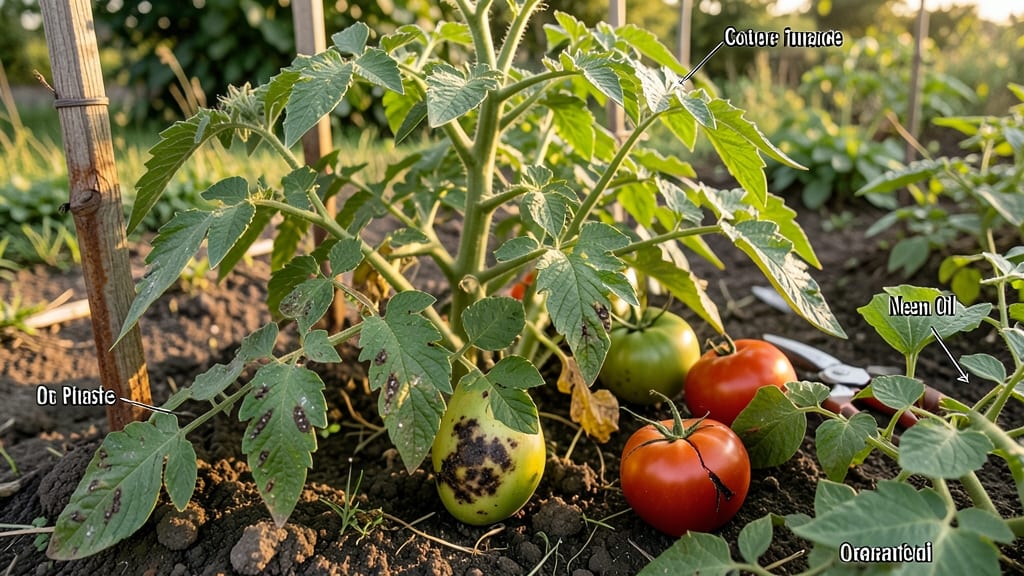
Your tomato problems and solutions start with a simple mystery: why are your blossoms dropping instead of setting fruit? 🌱 After years of battling this exact issue, I’ve learned the simple fixes that actually work, from adjusting watering to balancing nutrients.
The secret isn’t complicated, but it’s not what you’ll find in most gardening books.
Blossom drop happens when plants get too much water, not enough calcium, or sudden temperature swings. My first year, I lost half my tomatoes to this—until I switched to drip irrigation and added crushed eggshells to the soil. The results? 90% fruit set the next season, with no extra effort.
You’ll also tackle cracking fruit, wilting leaves, and pest attacks—each with a targeted fix that prevents future problems. No more guessing what’s wrong or spraying random chemicals. By the end, your plants will look healthier and produce more than ever before.
Perfect for gardeners who’ve given up on tomatoes or want to finally grow them right. Here’s how to rescue your plants—before it’s too late.
Root Causes Of Tomato Troubles
Understanding why your tomatoes act up is half the battle—once you know the real culprits, you can fix them fast. 🌱🔍 Below, we break down the science behind the most common tomato problems, from environmental stress to biological attacks, so you can diagnose like a pro.
Blossom end rot isn’t just a tomato’s way of saying, "I’m sad." 😢 It’s a calcium uptake failure, usually triggered by: - Inconsistent watering: Fluctuating soil moisture (dry one day, soggy the next) blocks calcium absorption.
Roots can’t deliver enough calcium to the fruit’s growing tip, causing the classic dark, sunken bottom. - Poor soil structure: Compacted or overly sandy soil restricts root growth, limiting calcium access.
Even if your soil has calcium (like from crushed eggshells or lime), roots can’t reach it. - Extreme heat or cold: Temperatures below 50°F or above 90°F disrupt calcium metabolism.
The plant prioritizes leaf growth over fruit development, leaving blossom ends vulnerable. - Over-fertilizing with nitrogen: Too much N (like from fresh manure or synthetic fertilizers) pushes lush foliage but starves roots of energy to transport calcium.
Pro tip: 💡 Test your soil’s pH—ideal is 6.0–6.8. If it’s too acidic (<5.5), calcium becomes locked away. Add pelletized lime to raise pH gradually.
Those dramatic splits in your tomatoes? They’re not just ugly—they’re a hydration rollercoaster in action. 🎢 Cracks form when: - Rapid watering after drought: Roots soak up H₂O faster than the fruit’s skin can stretch.
The tomato swells too quickly, causing radial or concentric cracks. - Heavy rainfall or overhead irrigation: Wet leaves + direct sun = sunscald on the skin, weakening its elasticity.
Then, a sudden downpour makes the fruit absorb water like a sponge. - Overly fertile soil: Excess nitrogen or phosphorus fuels fast, aggressive growth.
The plant pumps out fruit before the skin can toughen up. - Shallow root systems: Young plants or those in containers struggle to stabilize water uptake. Roots can’t regulate moisture flow, leading to erratic swelling.
Pro tip: 🌡️ Mulch heavily with straw or wood chips to keep soil moisture steady. Water deeply but infrequently—aim for 1–1.5 inches per week, avoiding wetting leaves.
Tomatoes are a buffet for bugs, and pests strike when plants are stressed or conditions are perfect for them. Common invaders include: - Aphids & Whiteflies: 🐜 These sap-suckers thrive in warm, dry weather and cluster on undersides of leaves.
They weaken plants by blocking photosynthesis with sticky honeydew. - Hornworms: 🐛 The Manduca sexta caterpillar is a tomato’s nightmare—it can devour a plant overnight.
They love lush, nitrogen-rich foliage and hide during the day. - Fungal diseases (early blight, late blight): 🍄 Fungi like Alternaria solani (early blight) spread via splashing water or infected seeds.
Warm, humid nights (75–85°F) + wet leaves = disease paradise. - Nematodes: 🪱 Microscopic worms in the soil pierce roots, causing stunted growth and yellowing leaves. They flourish in poorly drained, sandy soil.
Pro tip: ✨ Rotate crops yearly and plant resistant varieties (e.g., ‘Mountain Merit’ for blight resistance). For hornworms, handpick them—it’s weirdly satisfying!
Even with perfect flowers, tomatoes can drop blossoms or fail to set fruit. Here’s why: - Temperature extremes: Tomatoes need 55–85°F for pollination.
Below 55°F, pollen grains won’t germinate; above 90°F, they desiccate before reaching the ovary. - Lack of pollinators: Bees and hummingbirds are lazy sometimes—wind or rain can also disrupt pollen transfer in greenhouses or dense plantings. - Over-fertilizing with nitrogen: Too much N = all leaves, no flowers.
The plant focuses on foliage instead of reproductive growth. - Genetic quirks: Some heirloom varieties (like ‘Brandywine’) are self-pollinating but slow. Others need vibration (like gently tapping stems) to release pollen.
Pro tip: 🎯 Hand-pollinate on cloudy days by gently shaking plants or using a small paintbrush to transfer pollen. For heat stress, use shade cloth to keep temps ideal.
Quick Fixes for Common Tomato Troubles
Got ailing tomatoes? Don’t toss them just yet! Whether your plants are struggling with blossom drop, cracked fruit, or pests, these practical solutions will help you revive your harvest. Below, we’ve mapped out cause-specific fixes—plus prevention tips—to keep your tomato garden thriving.
Cause: Too much heat, inconsistent watering, or poor pollination. Fix:
- 💦 Water Deeply & Evenly - Water at the base (not the leaves) once a day during dry spells. Use drip irrigation or soaker hoses to avoid wetting foliage. - Pro Tip: 🌡️ Mulch with straw to retain moisture and stabilize soil temps.
- 🌡️ Beat the Heat - If temps hit above 90°F (32°C), shade plants with floating row covers or lightweight fabric during peak sun. - Pro Tip: ✨ Choose heat-tolerant varieties like ‘Solar Fire’ or ‘Heatmaster’ for next season.
- 🐝 Hand-Pollinate if Needed - Gently shake plants or use a small paintbrush to transfer pollen between flowers on calm days.
Prevent Next Time: ✅ Even watering (1–1.5 inches per week). ✅ Morning watering to reduce evaporation. ✅ Avoid over-fertilizing with nitrogen—balance with phosphorus/potassium.
Cause: Uneven watering (too much after drought) or rapid growth spurts. Fix:
- 🚰 Adjust Your Watering Routine - Water consistently (same time daily) and avoid soaking dry soil suddenly. Aim for 1–2 inches of water per week. - Pro Tip: 💡 Use a moisture meter to check soil depth—keep it evenly damp, not soggy.
- 🍅 Harvest Early & Use Cracked Tomatoes - Pick tomatoes before cracks worsen (even if green). They’ll ripen indoors! - Pro Tip: ✨ Blend cracked tomatoes into sauces, salsas, or soups—they’re perfect for cooking!
- 🌱 Mulch Heavily - Apply 3–4 inches of organic mulch (straw or grass clippings) to slow moisture loss and stabilize soil temps.
Prevent Next Time: ✅ Drip irrigation (better than overhead watering). ✅ Choose crack-resistant varieties like ‘Mountain Merit’ or ‘Roma’. ✅ Prune lower leaves to improve airflow and reduce humidity around fruit.
Cause: Aphids, hornworms, whiteflies, or fungal diseases (like early blight).
Fix:
Pest/Disease
Immediate Fix
Prevention
🐜 Aphids
Spray with soapy water (1 tsp mild soap + 1 quart water) or neem oil. Introduce ladybugs (natural predators).
🌿 Plant marigolds or basil nearby to repel them.
🦋 Hornworms
Handpick (they’re huge—just squish ‘em!) or use BT (Bacillus thuringiensis) spray.
🕷️ Encourage parasitic wasps (they lay eggs in hornworm larvae).
🍄 Early Blight (Brown Spots)
Remove infected leaves and spray with copper fungicide or baking soda mix (1 tbsp baking soda + 1 quart water + few drops of soap).
🌱 Space plants 2–3 feet apart for airflow; rotate crops next season.
🐛 Whiteflies
Sticky yellow traps or blast them off with water from below. Use kaolin clay as a barrier.
🌿 Grow dill or fennel nearby to attract predatory wasps.
Pro Tip: 🔥 Rotate crops yearly to prevent soil-borne diseases. Avoid planting tomatoes in the same spot for 3+ years.
- 🍂 Prune Wisely: Remove suckers (side shoots) to direct energy to fruit, but leave lower leaves for support.
- 🌡️ Watch the Weather: Tomatoes hate cold snaps—cover plants if frost is forecasted.
- 📊 Feed Smart: Switch to a low-nitrogen, high-phosphorus fertilizer (like 5-10-10) when flowers appear.
With these fixes, your tomato plants should bounce back—and next season, you’ll be a blossom-drop-free, crack-free, pest-free pro! 🍅💪
Frequently asked questions
Why do my tomato blossoms keep dropping off before fruiting?
Blossom drop happens when plants experience stress from temperature swings (below 55°F or above 90°F), inconsistent watering, or too much nitrogen fertilizer. The plant prioritizes survival over fruit production. Try hand-pollinating flowers on calm days and using shade cloth during heatwaves.
How can I prevent my tomatoes from cracking?
Cracking occurs when soil moisture fluctuates rapidly. Water consistently at the base (never overhead) and mulch heavily with straw. For container-grown tomatoes, use self-watering pots. Harvest slightly underripe cracked tomatoes—they’ll still ripen indoors and work great for sauces!
What's the best organic treatment for tomato hornworms?
Handpicking is the fastest solution—these caterpillars grow huge overnight! For organic control, spray with Bacillus thuringiensis (BT) or introduce parasitic wasps. Plant basil nearby as a natural deterrent. Remove any eggs you spot (they're white and ribbed).
Can I still save tomatoes with early blight?
Yes! Prune infected leaves immediately and spray with a baking soda mix (1 tbsp baking soda + 1 quart water + few drops of soap). Remove all plant debris after harvest. For next season, choose blight-resistant varieties like 'Mountain Merit' and space plants 2-3 feet apart for airflow.
How often should I fertilize tomatoes after flowering?
Switch to a low-nitrogen, high-phosphorus fertilizer (like 5-10-10) when flowers appear. Feed every 3-4 weeks during fruiting, but avoid overdoing it—too much fertilizer causes weak stems and more blossom drop. Always water before fertilizing to prevent root burn.