Companion Plants
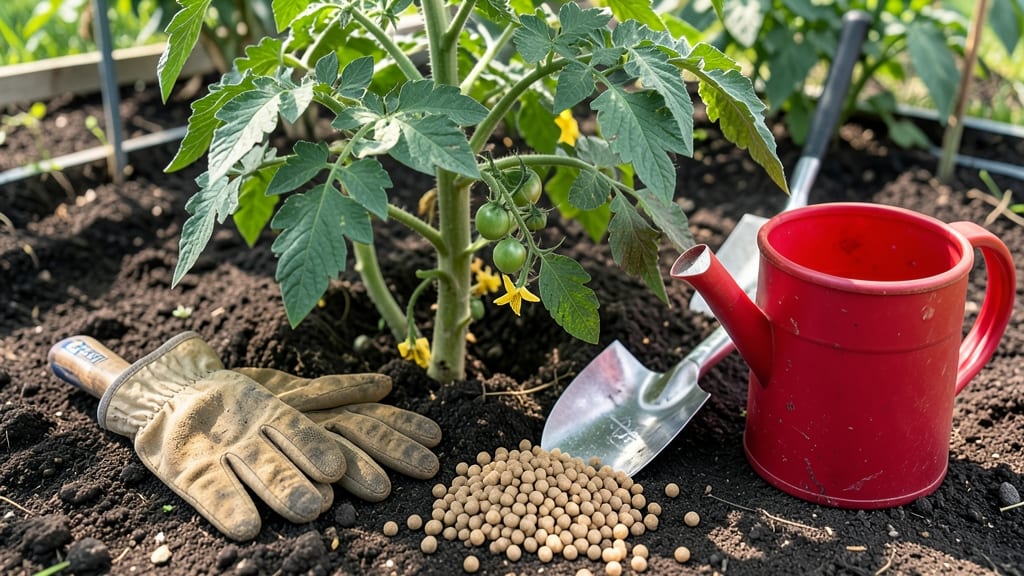
To fertilise tomato plants at the right time means feeding them when they actually need it—not before, not after, but right in the middle of their growth spurt when those 🍅 vines are racing toward the sky.
Picture this: you’ve just transplanted your seedlings, the soil smells rich, and you’re eager to give them a boost. But if you fertilise too early, you’ll end up with lush green leaves and zero tomatoes.
Timing is everything, and getting it wrong can leave you staring at a bush full of foliage and wondering where the fruit went.
Most gardeners miss the mark because they don’t account for the plant’s stages—root growth, flowering, and fruiting each demand different nutrients.
A little nitrogen early on helps those leaves pop, but once the flowers appear, you’ve got to shift to phosphorus and potassium to coax those sweet, ripe tomatoes into being.
In this guide, I’ll walk you through the exact when, what, and how of fertilising your tomatoes, from the first feed after transplanting to the final boost before harvest. No guesswork—just science-backed timing to turn your garden into a fruit factory.
Optimal fertilizing schedule for tomato plants by growth stage
Fertilizing your tomato plants at the right time is like giving them a perfectly timed energy boost—too early and they’ll grow leaves over fruit, too late and you’ll miss the harvest window. The key is matching nutrient needs to each growth stage, from tiny seedlings to heavy fruit producers.
I’ve grown heirloom tomatoes for years, and this schedule has helped me avoid blossom drop and bitter fruit while maximizing yield.
Tomatoes are heavy feeders, but they don’t need constant attention. Over-fertilizing—especially with nitrogen-rich mixes—will give you lush foliage but few tomatoes. Instead, focus on phosphorus and potassium as your plants transition from flowering to fruiting.
Let’s break it down by stage so you know exactly when to feed and what to use.
📌 Pro Tip: Always fertilize in the morning when soil is warm and plants can absorb nutrients efficiently. Avoid fertilizing when plants are stressed (like after transplant shock or extreme heat).
During the seedling stage, your tomato plants are tiny but hungry for root development. A light application of a low-nitrogen fertilizer (like a 2-3-1 NPK mix) or compost tea at planting gives them a gentle boost without overwhelming their delicate roots.
I’ve seen seedlings wilt when over-fertilized, so err on the side of caution here—think of it as planting a vitamin shot rather than a full meal.
Once your tomatoes are transplanted (typically 4-6 weeks after sowing), they’ll need a balanced fertilizer like 10-10-10 to support both foliage and root growth. This is the stage where many gardeners make the mistake of going too heavy on nitrogen, which leads to leafy monsters with no fruit.
Instead, pair your fertilizer with a side dressing of compost to improve soil structure and microbial activity.
When your plants start flowering, it’s time to shift focus to phosphorus. This nutrient helps develop strong roots and blossoms, reducing the risk of blossom end rot later.
A 5-10-10 fertilizer or a sprinkle of bone meal (high in phosphorus) applied at this stage can make a huge difference. I’ve noticed my cherry tomatoes set fruit more reliably when I switch to phosphorus-rich feeds during flowering.
The fruiting stage is where potassium becomes your best friend. Potassium helps tomatoes develop sweet, firm fruit and improves disease resistance. Switch to a fertilizer with higher potassium, like 10-10-20, or use organic options like banana peel tea (yes, really!).
This is also when I start side-dressing with compost every 2-
Signs your tomato plants need fertilizer (and when to stop)
Your tomato plants silently scream for help when they're hungry—but most gardeners miss the clues. Yellowing leaves or stunted growth aren't just random bad luck; they're your plants' way of saying, "Feed me!"
Understanding these visual and physical cues can mean the difference between a bountiful harvest and a sad, underperforming vine. The key is knowing when to act and—just as critically—when to stop fertilizing to avoid burning your plants.
Tomatoes are heavy feeders, especially during their flowering and fruiting stages. But too much fertilizer at the wrong time can lead to bitter fruit, leaf scorch, or even plant death.
The challenge is balancing their needs without overdoing it. Let's break down the tell-tale signs your tomatoes are begging for nutrients—and when to pull back.
- Transplanting: Apply light fertilizer (half-strength) 1-2 weeks after planting to encourage root growth.
- Flowering Stage: Switch to high-phosphorus fertilizer (like 5-10-10) to boost blossoms and fruit set.
- Fruiting Stage: Use balanced fertilizer (10-10-10) every 4-6 weeks to sustain growth.
- Late Season: Stop fertilizing 4-6 weeks before first frost to avoid tender new growth.
🌱 Pro Tip: Always water plants first to prevent fertilizer burn.
One of the first signs your tomato plants need fertilizer is pale or yellowing leaves, especially on the older, lower leaves. This chlorosis (lack of chlorophyll) often indicates a nitrogen deficiency, which is crucial for leafy growth.
If you notice this, grab a balanced fertilizer (like 10-10-10) and apply it lightly around the base of the plant. Avoid overdoing it—too much nitrogen can lead to excessive foliage at the expense of fruit production.
Another red flag is stunted growth or small, weak stems. If your tomato plants look like they’re struggling to stand upright or their leaves are smaller than expected, they’re likely lacking phosphorus or potassium. These nutrients are vital for root development and fruit production.
Switch to a phosphorus-rich fertilizer (like bone meal) or a high-potassium option (like kelp meal) to give them a boost. Look for darker green leaves and stronger stems within a week or two.
On the flip side, over-fertilizing can cause just as many problems as under-fertilizing. If your tomato plants develop crispy, brown leaf edges or leaf burn, you’ve likely gone overboard.
This is your plant’s way of saying, "Too much salt!" Fertilizer salts build up in the soil, leading to root damage and nutrient lockout. To fix this, flush the soil with water and hold off on fertilizing for at least 2 weeks.
Mulching can also help prevent future issues by keeping the soil moist and reducing salt buildup.
As your tomatoes enter their fruiting stage, pay close attention to the fruit itself. If your tomatoes are small, misshapen, or hollow, it could signal a potassium deficiency.
Potassium helps regulate water and nutrient movement in the plant, so a lack of it can lead to poor fruit quality. A potassium-rich fertilizer (like wood ash or greensand) can help, but apply it sparingly—too much can cause fruit cracking or blossom end rot.
Finally, the most important rule: stop fertilizing 4-6 weeks before your first frost. This gives your plants time to harden off and prepares them for dormancy. Late-season fertilization encourages tender new growth that won’t survive cold temperatures.
Instead, focus on harvesting and protecting your plants. If you’re in a mild climate, you can lightly fertilize in early spring to kickstart growth, but avoid heavy feeding as the seasons change.