
Plants
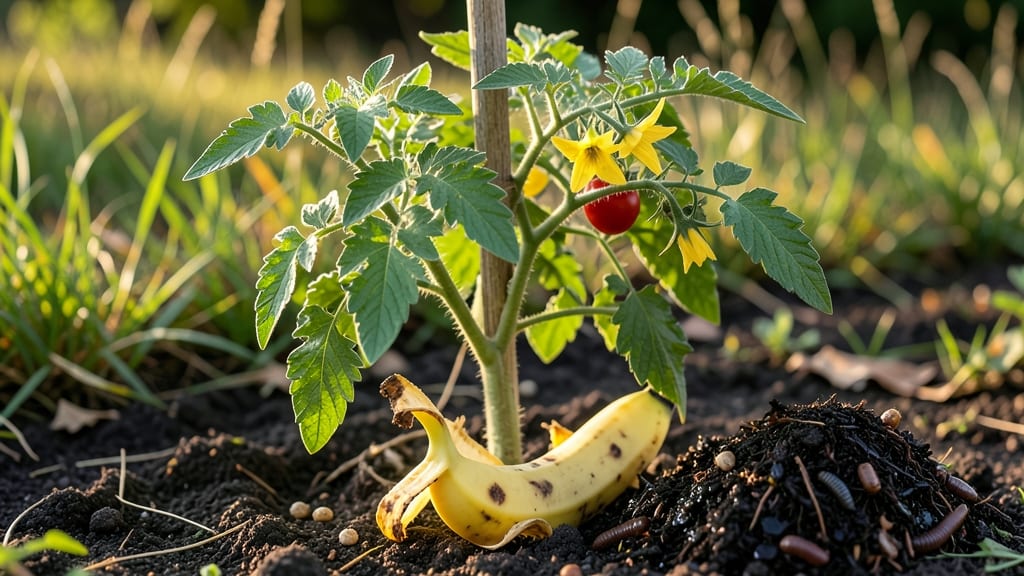
Banana peels are good for tomato plants because they provide potassium and phosphorus, but you must use them carefully to prevent fungal growth or nutrient overload. Burying them near roots or composting them first unlocks their full benefits without harming your plants.
Banana peels contain nearly 42% of the daily potassium humans need, and tomatoes thrive on this nutrient for stronger roots and sweeter fruit. 🌱 The phosphorus in peels also promotes better flowering and fruit development, but the key is preparation—raw peels can attract pests or rot.
I've had the best results by either burying chopped peels near the base of tomato plants or steeping them in water for a nutrient-rich tea. Just remember: moderation is key, as too much can disrupt the soil's natural balance.
For gardeners who want to maximize benefits without risks, composting banana peels first creates a safer, more balanced fertilizer. Tomatoes planted in compost-enriched soil show noticeable improvements in yield and disease resistance.
The Evergreen Seeds Team recommends pairing this method with regular soil testing to monitor nutrient levels—especially if you're growing tomatoes in containers where nutrient runoff is a bigger concern.
💡 In This Article
- Nutritional Breakdown: How Banana Peels Boost Tomato Growth
- Safe Ways to Use Banana Peels for Tomato Plants
Nutritional breakdown: how banana peels boost tomato growth
A single banana peel contains approximately 0.42 grams of potassium per 100 grams—that’s nearly 10% of a tomato plant’s daily potassium needs during its flowering and fruiting stages. This mineral is vital because it regulates water uptake and helps transport nutrients throughout the plant.
Without enough potassium, tomato plants develop weak stems that can’t support heavy fruit loads, leading to blossom-end rot—a common issue where the bottom of tomatoes turns mushy and discolored. 🌱
Phosphorus is another powerhouse nutrient in banana peels, making up about 0.03 grams per 100 grams. This element is crucial for energy transfer within plant cells, particularly during root development and fruit maturation. Studies show that phosphorus-deficient tomato plants produce smaller, less flavorful fruit with lower sugar content.
The peel’s magnesium (about 0.02 grams per 100 grams) also plays a supporting role by activating enzymes that help convert sunlight into energy through photosynthesis.
What makes banana peels uniquely beneficial is their slow-release nutrient profile. Unlike synthetic fertilizers that deliver a quick but short-lived boost, the organic compounds in peels break down gradually, mirroring how natural ecosystems recycle nutrients.
This process mimics the slow decomposition of fallen leaves in a forest, providing a steady supply of minerals without overwhelming the plant. The calcium content (about 0.05 grams per 100 grams) further strengthens cell walls, making tomatoes more resistant to cracking—a common problem in high-heat growing conditions.
However, the real magic happens in the soil microbiome. As banana peels decompose, they stimulate beneficial bacteria and fungi that form symbiotic relationships with tomato roots. These microorganisms help break down nutrients into forms that plants can absorb more efficiently.
For example, mycorrhizal fungi can increase a tomato plant’s access to phosphorus by up to 80%, making the peel’s phosphorus content even more effective when used properly. 💫
One common misconception is that all banana peels are equally beneficial. Ripened peels (those with brown spots) contain higher concentrations of these nutrients because the ripening process converts starches into sugars and minerals become more bioavailable.
Green peels, while still useful, require more time to decompose and may not provide the same immediate benefits. This is why many gardeners prefer to use overripe bananas—they’re essentially nature’s slow-release fertilizer waiting to happen.
For container gardeners, this nutrient breakdown becomes even more critical. Since potted tomatoes have limited soil volume, every nutrient counts. A single composted banana peel can provide enough potassium to support a medium-sized tomato plant for 4-6 weeks, making it an excellent supplement to balanced organic fertilizers.
The key is balance—too much potassium without adequate nitrogen can lead to lush foliage but poor fruit production, so pairing peels with nitrogen-rich amendments like coffee grounds creates the perfect tomato-growing environment.