
Plants
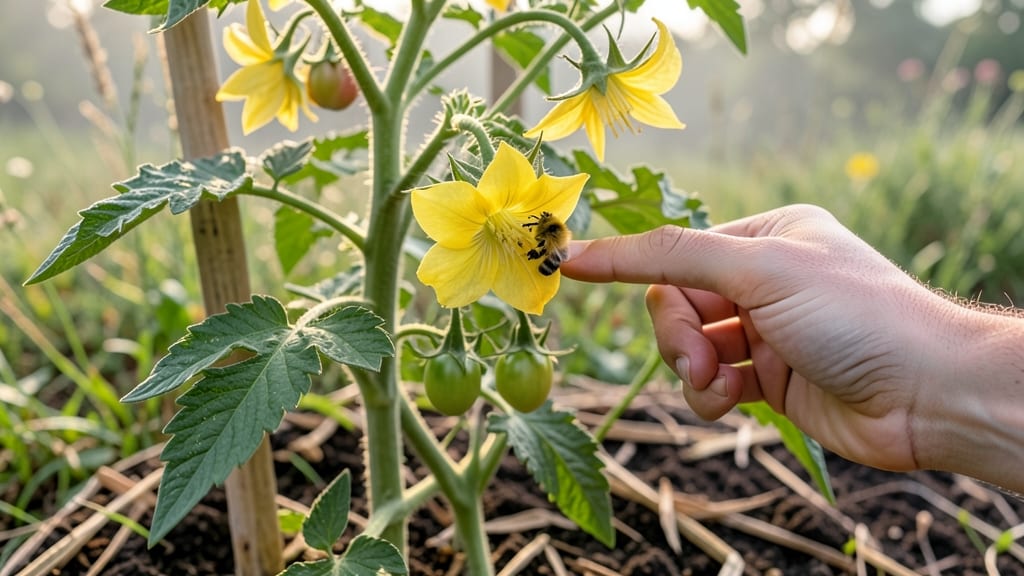
Tomato plants are self-pollinating, meaning their flowers can fertilize themselves without cross-pollination, though wind, bees, or gentle shaking often boost fruit set. Most varieties rely on natural vibrations or airflow to trigger pollen release.
Tomatoes are unique because their flowers contain both male and female reproductive parts, allowing them to self-pollinate through natural movements. 🌱 The process starts when pollen from the flower's anthers transfers to the stigma, a task often handled by wind or even the plant's own gentle swaying.
However, environmental factors like high heat or humidity can sometimes interfere with this natural process, reducing fruit production. Understanding this mechanism helps gardeners troubleshoot why their plants might not be setting fruit as expected.
While self-pollination works well in ideal conditions, many gardeners find that a little extra help can make a big difference. For instance, gently shaking the plants during flowering can increase fruit set by up to 30%, especially in greenhouses where airflow is limited.
This simple technique mimics the natural vibrations caused by wind or bees in outdoor settings.
It's also worth noting that some tomato varieties are more efficient at self-pollination than others. Determinate tomatoes, which grow to a specific height, often produce fruit more reliably because their flowers are more accessible to natural pollinators.
In contrast, indeterminate varieties may require more attention to ensure proper pollination throughout their growing season.
💡 In This Article
- How Tomato Flowers Self-Pollinate Naturally
- Boosting Tomato Fruit Set: DIY Pollination Techniques
How tomato flowers self-pollinate naturally
The self-pollination process in tomatoes begins with their unique flower anatomy. Each blossom contains both male (anthers) and female (stigma) reproductive parts, positioned perfectly for internal fertilization. When the flower opens, the anthers release pollen through tiny pores called apertures, which are sensitive to environmental triggers.
Vibrations from wind or even the plant's natural movements cause these anthers to shake, dislodging pollen grains that then land on the stigma below.
This mechanism works best under specific conditions. Ideal temperatures for self-pollination range between 70-85°F, while humidity levels between 40-60% create optimal airflow for pollen transfer. When temperatures exceed 90°F or drop below 55°F, pollen production and viability decrease significantly.
The flowers also need proper hydration—they wilt when stressed, causing pollen to dry out and fail to release. This explains why greenhouse-grown tomatoes often need manual assistance during heatwaves.
Not all tomato varieties self-pollinate with equal efficiency. Determinate varieties like 'Celebrity' or 'Roma' typically produce fruit more reliably because their compact growth habit creates better airflow around flowers, while sprawling indeterminate types like 'Sungold' may suffer from pollen starvation in still conditions.
The flower's position also matters: lower flowers often receive less wind exposure, which is why gardeners sometimes need to intervene with gentle shaking or brushing.
Here's what's happening at the cellular level: Once pollen lands on the stigma, it germinates and grows a tube down through the style to the ovary, where fertilization occurs. This process takes about 24-48 hours under optimal conditions.
The resulting fertilized ovules develop into seeds, while the ovary swells into the tomato fruit. Without proper pollination, flowers simply drop off without forming fruit—a common issue in container gardens where airflow is restricted.
Interestingly, tomatoes have evolved this self-sufficiency to reduce reliance on pollinators like bees, though they still benefit from external help. Studies show that flowers receiving both self-pollination and bee visits produce fruit 15-20% faster due to increased pollen diversity.
The plant's natural swaying—even from a gentle breeze—can trigger pollen release up to 50 times per minute during peak flowering, creating a self-sustaining cycle in ideal conditions.
Gardeners often overlook how humidity affects this process. High humidity (>70%) can cause pollen to clump together, preventing proper release, while dry conditions (<30%) make pollen too brittle.
This explains why morning pollination works best: dew provides natural moisture to pollen while humidity is typically lower, creating perfect conditions for transfer.