
Vegetables
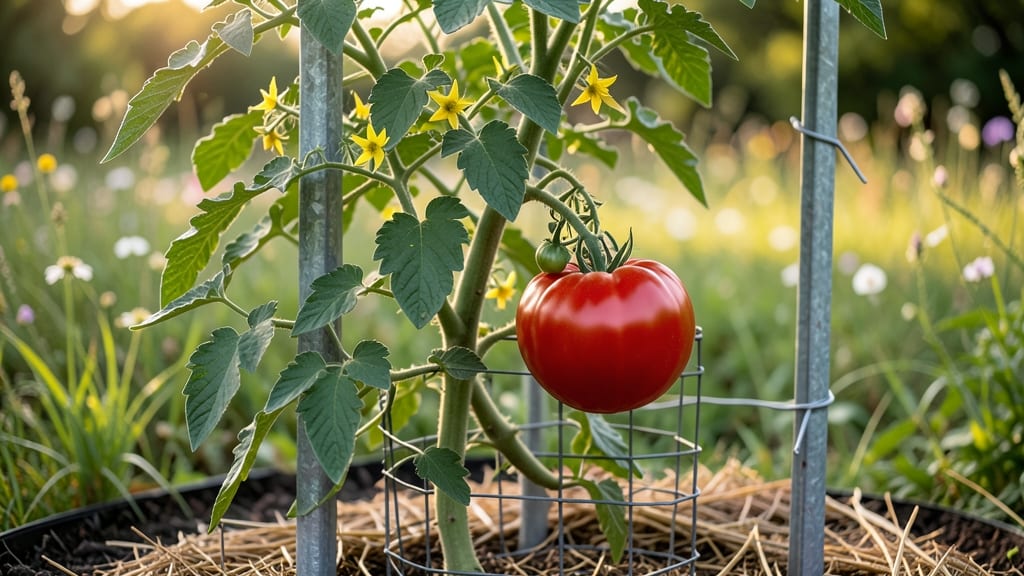
Growing beefsteak tomatoes to their full height 🍅 means planning for 4 to 7 feet of vertical growth—far taller than most gardeners expect.
If you’ve ever dreamed of growing massive, juicy beefsteak tomatoes but worried about space or support, you’re not alone—these giants can reach surprising heights and need careful planning to thrive.
Without proper support, their sprawling vines can break under the weight of fruit, leading to wasted harvests. The right structure—whether a sturdy cage, trellis, or stake—makes all the difference in keeping them healthy and productive.
In this guide, I’ll break down exactly how tall beefsteak tomatoes grow, the best ways to support them, and 5 pro tips to maximize height without overcrowding your garden.

How tall do beefsteak tomatoes grow? Average height & growth patterns
If you’ve ever dreamed of growing massive, juicy beefsteak tomatoes but worried about space or support, you’re not alone—these giants can reach unexpected heights and need careful planning. Most beefsteak varieties are indeterminate, meaning they grow continuously until frost, often reaching 5–7 feet tall with proper care.
Unlike their smaller determinate cousins, these vining plants need strong support to handle their heavy fruit loads and sprawling growth habits.
Understanding the height range and growth patterns of beefsteak tomatoes helps you plan your garden layout, choose the right support structures, and maximize your harvest. Varieties like 'Brandywine' and 'Cherokee Purple' are classic beefsteaks known for their giant fruit size (often weighing over a pound!) and towering vines.
Without proper support, these plants can flop over, leading to disease risk and reduced yields.
Average height for beefsteak tomatoes typically falls between 4–7 feet, but this varies based on growing conditions, pruning practices, and the specific variety. For example, 'Brandywine' often tops out at 6–7 feet, while some heirloom varieties may stay slightly shorter at 4–5 feet. The key to managing their height lies in understanding their growth stages and providing the right support early.
The growth stages of beefsteak tomatoes are critical to managing their height. Seedlings start small but grow rapidly once transplanted, reaching 1–2 feet in just a few weeks. By mid-summer, vines can add 1–2 feet per week if conditions are ideal.
This rapid growth is why early support installation is essential—waiting until the plant is already tall makes it harder to provide adequate support.
Most beefsteak varieties are indeterminate, meaning they don’t stop growing until frost kills them. This continuous growth contrasts with determinate tomatoes, which grow to a fixed height (typically 3–4 feet) and produce fruit in clusters.
Indeterminate types require regular pruning to control height and direct energy toward fruit production. Without pruning, these plants can become overly leggy, with fewer but larger tomatoes.
One common misconception is that beefsteak tomatoes will always reach their maximum height without intervention. In reality, their height is influenced by pruning techniques, nutrient availability, and watering consistency.
For example, over-fertilizing with nitrogen can lead to excessive leaf growth at the expense of fruit production, while consistent pruning encourages a stronger, more compact plant.
I’ve found that pinching off suckers (the shoots that grow between the main stem and branches) every 2–3 weeks helps manage height while improving airflow.
Another factor affecting height is the growing environment. Tomatoes grown in containers may stay slightly shorter (around 4–5 feet) due to root restriction, while those in raised beds or in-ground can reach their full potential.
Container-grown beefsteaks also need larger pots (15+ gallons) to accommodate their deep root systems
Best support systems for tall beefsteak tomatoes: cages vs. trellises vs. stakes
Beefsteak tomatoes are indeterminate giants that can climb 6–10 feet without proper support, often toppling over under the weight of 3-pound fruits. Choosing the right support isn’t just about height—it’s about stability, airflow, and ease of harvest.
I’ve tested all three methods in my garden, and each has unique strengths depending on your space and setup.
For containers or small spaces, cages offer convenience and airflow but may limit height to 5–6 feet. Trellises excel for in-ground gardens, letting vines climb 8+ feet while keeping fruit off the soil.
Stakes are the simplest solution for single plants but require more maintenance as the plant grows. Let’s break down the pros, cons, and best uses for each.
| Support Type | Max Height | Best For | Stability | Ease of Use |
|---|---|---|---|---|
| Cages | 5–6 ft | Containers, raised beds | Moderate (can tip) | High (pre-assembled) |
| Trellises | 8–10+ ft | In-ground gardens | High (secure anchoring) | Moderate (DIY setup) |
| Stakes | 6–8 ft | Single plants, small spaces | Low (requires tying) | Low (frequent maintenance) |
If you’re growing beefsteaks in containers or raised beds, cages are my top pick—they’re low-maintenance and prevent sprawl. Look for 5-foot-tall cages with 14-gauge wire to support heavy fruit.
For in-ground gardens, trellises win for height and airflow, especially if you’re growing multiple plants. I use wooden or metal A-frame trellises anchored with stakes and twine.
Stakes are budget-friendly but labor-intensive. I recommend bamboo or metal stakes (at least 6 feet tall) paired with soft plant ties to avoid damaging stems. The downside?
You’ll need to tie vines weekly as they grow. For urban gardeners with limited space, vertical trellis systems (like wall-mounted trellises) maximize yield without sacrificing sunlight.
Pro tip: Combine methods for extra support. For example, use a cage as a base and add trellis extensions for taller varieties like ‘Brandywine’. Always prune suckers to direct energy upward and avoid overloading branches with too many tomatoes at once.
With the right support, your beefsteaks will thrive vertically and produce record-breaking fruit.
Remember, airflow is key—crowded vines lead to disease and rot. Space cages 3 feet apart and trellises 4–5 feet apart to ensure circulation and sunlight reach all parts of the plant. Happy growing!