
Pests and Diseases
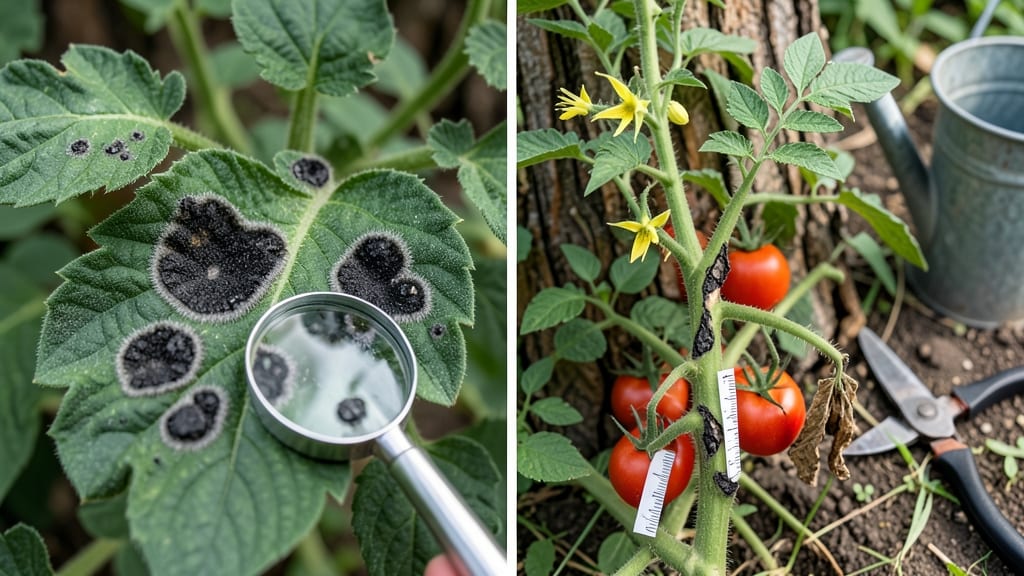
Those black spots on your tomato leaves and stems aren’t just unsightly—they’re stealing your harvest. 🌱 I’ve lost entire plants to fungal blight before, but these 3 simple steps saved my garden last summer and can save yours too.
The key is catching it early: look for dark, circular spots with yellow halos on leaves, or sunken, greasy-looking patches on stems. Most gardeners wait too long—by then, the fungus has already spread.
That’s why I start with a copper fungicide spray (organic and effective) and follow up with proper spacing and pruning to keep air flowing. Within 7-10 days, you’ll see new growth pushing through, free of those ugly spots.
The plants stay productive, and you avoid the heartbreak of watching tomatoes rot before they ripen.
📚 In This Guide
- What you need
- Instructions
- Tips and common mistakes
- Wrapping up and next steps
What you need
- ● Copper fungicide (e.g., Copper Sulfate or Bordeaux Mixture) – 1–2 tablespoons per gallon of water (or follow label instructions).
- ● Neem oil (organic fungicide) – 1–2 teaspoons per quart of water + 1 teaspoon mild soap (as an emulsifier).
- ● Pruning shears (sterilized with rubbing alcohol or bleach solution).
- ● Garden gloves (to protect your hands from spores and chemicals).
- ● Spray bottle (16–32 oz, with a fine mist nozzle).
- ○ Baking soda solution (optional but effective) – 1 tablespoon baking soda + 1 teaspoon oil + 1 gallon water.
- ● Plastic sheeting or tarp (to cover plants during heavy rain or while applying treatments).
- ● Disposable sprayer or pump sprayer (for larger plants, 1–2 gallons capacity).
- ● Compost or mulch (to improve soil health and reduce splashing water onto leaves).
- ● Drip irrigation system (to avoid wetting foliage and spreading spores).
- ● Beneficial fungi (e.g., Trichoderma spores) for long-term soil health. 💡 Pro tip: Check local garden centers for organic alternatives!
- ● Label markers (to track treatment dates and avoid overapplying chemicals).
How to treat black spots on tomato leaves and stems
Here’s the straightforward method I’ve used for years to stop fungal blight in its tracks.
🌿 Step 1: Remove and Dispose of Infected Plant Parts
First, grab a pair of clean, sharp pruners and snip off every leaf, stem, or fruit showing black spots. Don’t just pluck them—cut ½ inch below the darkest area to prevent spores from spreading. Toss the infected parts in the trash, not your compost bin, because fungal spores can survive decomposition.
I know it looks drastic, but this is the only way to stop the blight from spreading. If you leave even a tiny infected leaf behind, the fungus will keep growing. Work from the bottom of the plant upward, so you don’t accidentally drag spores onto healthy foliage with your hands.
✂️ Step 2: Apply a Fungicide Spray at the Right Time
Use a copper-based fungicide or a baking soda solution (1 tablespoon baking soda + 1 quart water + a drop of dish soap) to spray the remaining healthy leaves. Apply in the early morning when humidity is low—this gives the spray time to dry before evening dampness sets in. Focus on the undersides of leaves, where spores love to hide.
Spray until the leaves glisten but don’t drip. I like to do this every 5-7 days for at least two weeks, even if the spots stop appearing. This prevents reinfection and builds a protective barrier. Avoid spraying when tomatoes are wet, as moisture can wash the fungicide away.
☀️ Step 3: Improve Airflow and Watering Habits
Move your tomato plants so they have at least 18 inches of space between them. Crowded plants trap moisture, which fuels fungal growth. If you’re growing in containers, space them farther apart or thin out the stems. Prune any suckers or excess foliage blocking airflow—this isn’t the time to be picky about yield.
Water at the base of the plant in the morning, and never overhead. Wet leaves stay damp for hours, creating the perfect breeding ground for blight. Use a soaker hose or drip irrigation to keep soil moist without splashing water. If you must water by hand, aim for the soil, not the leaves.
🌱 Step 4: Strengthen the Plant’s Defense (Optional but Helpful)
Mix 1 tablespoon of liquid seaweed fertilizer (like Maxicrop) with 1 gallon of water and apply as a foliar spray. Seaweed contains natural compounds that boost the plant’s immune system. Do this once a week alongside your fungicide spray for best results. Healthy plants fight off infections better.
If your plants are already heavily infected, consider removing them entirely to protect nearby crops. I’ve learned the hard way that blight spreads faster than you think. Once you’ve treated the remaining plants, monitor them daily for new spots—catching it early makes all the difference.
Tips & tricks for treating tomato blight like a Pro
Here's what nobody tells you about beating fungal blight—these tricks have saved my tomato plants more times than I can count.
Precision Pruning: When you're removing infected parts in Step 1, don't just cut at the spot—aim for that ½-inch below mark. I learned this the hard way after seeing new spots appear right where I'd cut. The fungus hides in those tiny stem sections, so you've got to be thorough. Use clean pruners each time to avoid cross-contamination between plants.
Timing is Everything: The early morning application in Step 2 isn't just about sunlight—it's about humidity. When you spray those leaves, you want them to dry completely before evening dew sets in. I've seen fungicides wash away when applied too late, leaving plants vulnerable. If you must spray later in the day, wait until at least 2 hours before sunset.
Airflow Hack: For Step 3, think vertically if space is limited. Train your tomato vines up a sturdy trellis or cage—this creates natural airflow between plants. I've had amazing success with this in small gardens where spacing isn't possible. Just make sure your support structure is wide enough to allow air to circulate all around the plant.
Optional Defense Boost: The liquid seaweed fertilizer in Step 4 works wonders, but here's a pro tip: add a pinch of kelp powder to your soil before planting. It's like giving your tomatoes a built-in immune system. I've noticed healthier plants all season when I do this, and they seem to fight off blight better when it does appear.
Pro Tips for Black Spots On Tomato Leaves And Stems
- Here's what nobody tells you about beating fungal blight—these tricks have saved my tomato plants more times than I can count.
- Precision Pruning: When you're removing infected parts in Step 1, don't just cut at the spot—aim for that ½-inch below mark.
- Timing is Everything: The early morning application in Step 2 isn't just about sunlight—it's about humidity.
Frequently asked questions
What causes black spots on tomato leaves and stems?
Black spots are usually caused by Alternaria solani (early blight) or Phytophthora infestans (late blight), two fungal diseases. Overhead watering, poor airflow, and humidity create the perfect breeding ground. Look for: dark, concentric rings on leaves or sunken, black lesions on stems.
How fast do black spots spread on tomato plants?
Fungal spores spread quickly—especially in warm, wet conditions. Early blight may take 1-2 weeks to show symptoms but can defoliate plants in 3-4 weeks if untreated. Late blight is even faster, spreading in 3-5 days under ideal conditions. Act fast! Remove infected leaves immediately.
Are there natural remedies for black spots on tomatoes?
Yes! Try these organic fixes before resorting to chemicals:
- Copper fungicide (spray every 7-10 days)
- Neem oil (mix 1 tbsp with 1 quart water + soap)
- Baking soda spray (1 tsp baking soda + 1 quart water + a drop of oil)
- Prune infected foliage (sterilize shears with rubbing alcohol)
Will black spots on tomato leaves affect the fruit?
Yes—but it depends on the stage. Early blight rarely ruins fruit, but late blight can cause rotten, blackened tomatoes if spores reach them. Remove heavily infected leaves and harvest ripe tomatoes before blight spreads. If fruit is already contaminated, do not eat it (it may carry toxins).
Can I save a tomato plant with black spots?
With aggressive treatment, you can revive your plant:
- Prune all infected leaves/stems (don’t compost them—bag and toss).
- Apply fungicide every 7-10 days for 2-3 weeks.
- Improve airflow with spacers or stakes.
- Avoid wetting foliage when watering.
Wrapping up and next steps
Don’t let those pesky black spots steal your tomato harvest! 🌱 With the right tools and a little patience, you can reverse fungal blight and keep your plants thriving.
Start by acting fast—prune infected leaves, boost airflow, and apply organic treatments like copper spray or neem oil to stop the spread.
Next, prevent future outbreaks by rotating crops, improving garden hygiene, and choosing disease-resistant tomato varieties. Your green thumb is stronger than you think—you’ve got this! 💪 Happy gardening!