
Pests and Diseases
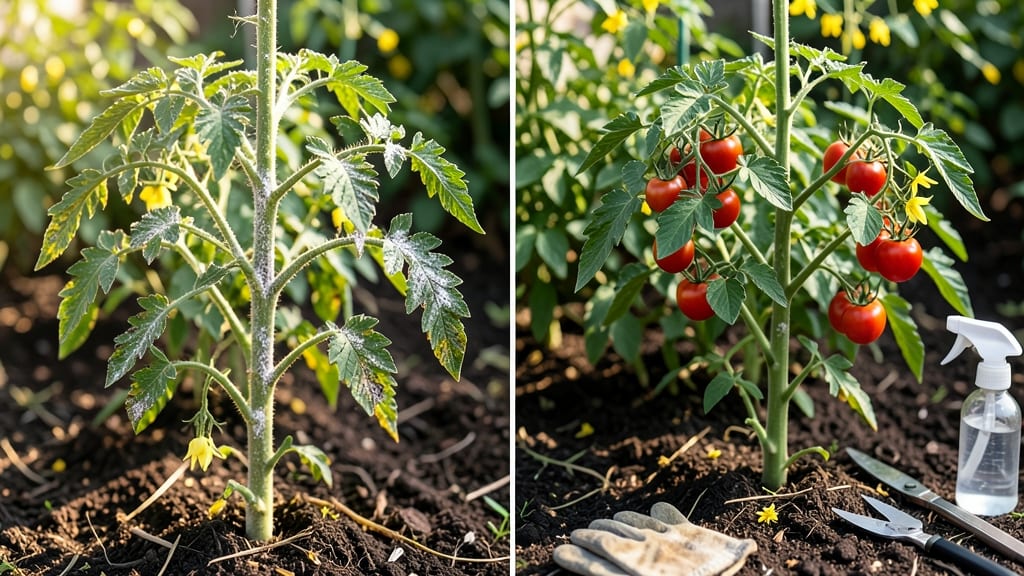
White patches on tomato stems start with a single spot and end with a plant that struggles to fruit. 🌱 I’ve seen this problem turn thriving vines into sad, powdery messes—until I learned the early signs and quick fixes that actually work.
The good news? Most cases are treatable, especially if you catch them before the leaves yellow or curl.
Those white patches are almost always powdery mildew, but sometimes they’re a different fungal infection or even a mineral buildup from hard water. The key to fixing it fast is understanding what you’re dealing with: Is it fuzzy and white?
Or does it look more like a chalky residue? Proper spacing, airflow, and watering habits (like avoiding overhead watering) can prevent it before it starts.
Once you’ve identified the issue, you’ll tackle it with organic sprays like neem oil or baking soda mix, or—if the infection is severe—targeted fungicides. The goal is to stop the spread while keeping your plants healthy enough to rebound.
With the right approach, your tomatoes can bounce back stronger than ever.
This isn’t just about saving a single plant—it’s about building a system that keeps your garden thriving year after year. Let’s get those stems clear and those fruits growing again.
Root Causes of Stem Discoloration
White patches creeping up your tomato stems? While it might look like a harmless quirk, these spots are often a silent warning from your plants. Let’s break down the real culprits behind this issue, so you can tackle the problem at its source.
Fungi are the most common cause of white patches on tomato stems, often appearing as powdery, fuzzy, or chalky residues. These pathogens thrive in warm, humid conditions and can spread rapidly if left unchecked.
Powdery Mildew: The Fluffy Threat
Powdery mildew (Erysiphe cichoracearum or Oidium neolycopersici) is a fungal disease that leaves behind white, powdery spots on stems, leaves, and even fruit.
It starts as small white specks but can expand into thick, cotton-like layers that block sunlight and weaken the plant.
- How it spreads: Spores travel via wind, water splashes, or contaminated tools.
- Why it happens: Poor air circulation, overcrowded plants, and high humidity create the perfect breeding ground.
- Actionable fix: Space plants properly, avoid overhead watering, and apply fungicidal sprays (like neem oil or sulfur-based treatments) at the first sign.
White Mold (Sclerotinia): The Creeping Shadow
White mold (Sclerotinia sclerotiorum) produces fluffy white growths that can girdle stems and kill plants quickly. It thrives in cool, damp soil and often attacks stressed or injured plants.
- How it spreads: Sclerotia (hard, survival structures) lie dormant in soil until conditions are right.
- Why it happens: Excessive moisture, poor drainage, or plant stress (like nutrient deficiency) weaken defenses.
- Actionable fix: Rotate crops, improve soil drainage, and remove infected debris immediately.
Some white patches aren’t fungal at all—they’re pest-related. Insects like aphids, mealybugs, or spider mites leave behind sticky residue (honeydew) that can attract sooty mold, creating a secondary white film.
Aphids & Mealybugs: The Sticky Invaders
These sap-sucking pests excrete honeydew, a sugary substance that hardens into a white, crusty layer. Over time, sooty mold grows on this residue, further stressing the plant.
- How it happens: Infestations thrive in warm, sheltered areas (like dense foliage).
- Actionable fix: Blast plants with water to dislodge pests, use insecticidal soap, or introduce ladybugs (natural predators).
Spider Mites: The Web Weavers
While spider mites themselves are tiny and red, their fine webbing can look like faint white patches. Severe infestations lead to stippled leaves and weakened stems.
- Why it happens: Dry conditions and dusty leaves attract mites.
- Actionable fix: Increase humidity, wipe leaves with damp cloths, and apply miticide sprays.
Sometimes, white patches aren’t caused by pathogens or pests but by environmental factors that stress the plant, making it susceptible to secondary issues.
Overwatering & Poor Drainage
Excess moisture creates anaerobic conditions, weakening stems and inviting fungal growth. White, waterlogged patches may appear where stems touch damp soil.
- Why it happens: Compacted soil, lack of mulch, or overzealous watering.
- Actionable fix: Improve drainage, water at the base (not overhead), and use well-draining potting mix.
Nutrient Deficiencies or Toxicity
Too much nitrogen or a lack of calcium or magnesium can cause white crusts or spots on stems. For example, calcium deficiency (blossom end rot’s cousin) can lead to irregular white patches.
- Why it happens: Imbalanced fertilizers or poor soil health.
- Actionable fix: Test soil pH, amend with lime (for calcium) or Epsom salt (for magnesium), and avoid over-fertilizing.
💡 Pro Tip: Always check the underside of leaves and stem junctions—this is where fungal spores and pests love to hide. Early detection = easier fixes!
Fixing White Stems Naturally
White patches on tomato stems can feel like a setback, but with the right approach, you can restore your plants to health—and even prevent future outbreaks. Below, we’ve mapped out practical solutions tailored to the most common causes, from fungal infections to environmental stressors.
Each fix is designed to be easy to implement, whether you’re a seasoned gardener or just starting out.
If white patches are fuzzy, powdery, or spreading like a blanket, you’re likely dealing with a fungal foe. Act fast—these pathogens thrive in damp conditions and can weaken your plants if left unchecked.
🔥 Remove Infected Plant Parts
- Snip and toss any stems, leaves, or fruits with white patches immediately—don’t compost them! Fungal spores can survive in soil, so bag the debris and dispose of it in the trash.
- Sterilize your pruners between cuts with rubbing alcohol or a 10% bleach solution to avoid cross-contamination.
🌡️ Adjust Moisture Levels
Fungi love humidity. Reduce overhead watering and water only at the base of the plant in the early morning.
This allows foliage to dry quickly, creating an unfavorable environment for spores. - Pro tip: 💡 Use a soaker hose or drip irrigation to keep leaves dry while delivering water directly to the roots.
🍳 Apply Fungicidal Sprays
For stubborn fungal infections, organic or chemical fungicides can help. Here’s a quick comparison:
| Option | How to Use | Best For |
|---|---|---|
| Neem Oil | Mix 1–2 tbsp neem oil + 1 tsp mild soap in 1 quart water. Spray every 7–10 days. | Early-stage powdery mildew, general prevention |
| Baking Soda Solution | 1 tbsp baking soda + 1 quart water + a few drops of soap. Spray weekly. | Powdery mildew, alkaline soil correction |
| Copper Fungicide | Follow label instructions for spraying. | Severe infections (e.g., early blight) |
| Commercial Fungicides (e.g., Myclobutanil) | Apply as directed on the package. | Advanced fungal outbreaks |
- Pro tip: ✨ Rotate treatments to prevent fungi from building resistance. Alternate between neem oil and baking soda for best results.
🌿 Boost Air Circulation
Fungi spread faster in stagnant air. Space your tomato plants 18–24 inches apart and consider pruning lower leaves to improve airflow. If growing in containers, ensure pots aren’t overcrowded.
If white patches are actually pest eggs, webs, or frass (insect droppings), you’ll need a different strategy. Common culprits include whiteflies, spider mites, or aphids.
👨🍳 Inspect and Isolate
- Shake plants over a white tray—if tiny white bugs or webbing appear, you’ve got pests.
- Quarantine affected plants until treatment is complete to prevent spread.
🔪 Blast Them Away
- Water spray: A strong jet of water from the hose can knock off whiteflies and aphids.
Do this early in the day so plants dry quickly. - Insecticidal soap: Mix 2.5 tbsp castile soap per gallon of water and spray directly on pests (avoid blooms to protect pollinators). - Neem oil (again!): This doubles as a pest deterrent—spray on both the tops and undersides of leaves.
🕷️ Introduce Beneficial Predators
- Ladybugs and lacewings eat aphids and whiteflies. Buy them online or attract them with dill or fennel plants nearby.
- Parasitic wasps target spider mites—release them at dusk for maximum effect.
Sometimes white patches aren’t a disease or pest but a reaction to stress—like salt buildup, nutrient deficiency, or extreme heat.
💦 Flush the Soil
If your soil is too salty (from tap water or fertilizers), leach it out by watering deeply for 15–20 minutes, then letting the soil drain completely. Repeat 2–3 times over a week.
🍅 Balance Nutrients
White patches can signal calcium deficiency (blossom end rot’s cousin).
Add: - Crushed eggshells (bake and grind for a slow-release calcium source). - Epsom salt (1 tbsp per gallon of water, spray foliarly) for magnesium support. - Compost or worm castings to improve soil structure and microbial activity.
🌞 Shield from Harsh Sun
If patches appear only in sun-exposed areas, your plants may be sunburned. Provide light shade with floating row covers or shade cloth (30–50%) during peak afternoon heat.
Once your tomatoes are healthy again, lock in those gains with these long-term strategies:
- 🌱 Rotate crops: Don’t plant tomatoes (or nightshades like peppers/eggplants) in the same spot for 3+ years to break fungal cycles.
- 🌿 Mulch properly: Use straw or grass clippings to keep soil moist but not soggy, and reduce splashing onto stems.
- 🌡️ Start strong: Buy disease-resistant varieties (e.g., ‘Mountain Merit,’ ‘Defiant PhR’).
- 🔄 Sterilize tools: Clean pruners, trellises, and containers with bleach or hydrogen peroxide between growing seasons.
- 🌿 Companion plant: Interplant tomatoes with basil, marigolds, or onions to deter pests and improve air circulation.
By addressing the root cause—whether it’s fungus, pests, or environmental stress—you’ll not only save your current crop but also build resilience for future harvests. 🍅✨
Frequently asked questions
Are white patches on tomato stems always a sign of disease?
Not always! While fungal infections like powdery mildew are common, white patches can also come from pest residue (like honeydew from aphids) or even mineral buildup from hard water. Always check for fuzzy texture (fungus) vs. sticky residue (pests) to diagnose correctly.
Can I save my tomato plant if white patches have already spread to the leaves?
Yes, but act fast! Prune all infected leaves and stems immediately, then treat with neem oil or baking soda spray. For severe cases, use a copper fungicide. The key is stopping the spread before it weakens the plant's ability to fruit.
Why do my tomato plants get white patches even when I water them at the base?
Even base watering can cause issues if humidity stays high or airflow is poor. Fungi thrive in stagnant air, so space plants 18-24 inches apart and prune lower leaves. Also check your water source—hard water minerals can leave white deposits on stems.
Is it safe to eat tomatoes with white patches on the stems?
Only if the patches are non-toxic mineral deposits (like calcium buildup) and haven't spread to the fruit. If the white growth is fuzzy or powdery (fungus), don't eat affected tomatoes—they may harbor spores. Always inspect fruits carefully before harvesting.
How can I prevent white patches from coming back next year?
Start with disease-resistant varieties like 'Mountain Merit'. Rotate crops, sterilize tools between seasons, and improve airflow with proper spacing. Use mulch to reduce soil splashing, and apply preventative sprays (like neem oil) every 2 weeks during humid periods.