
Vegetables
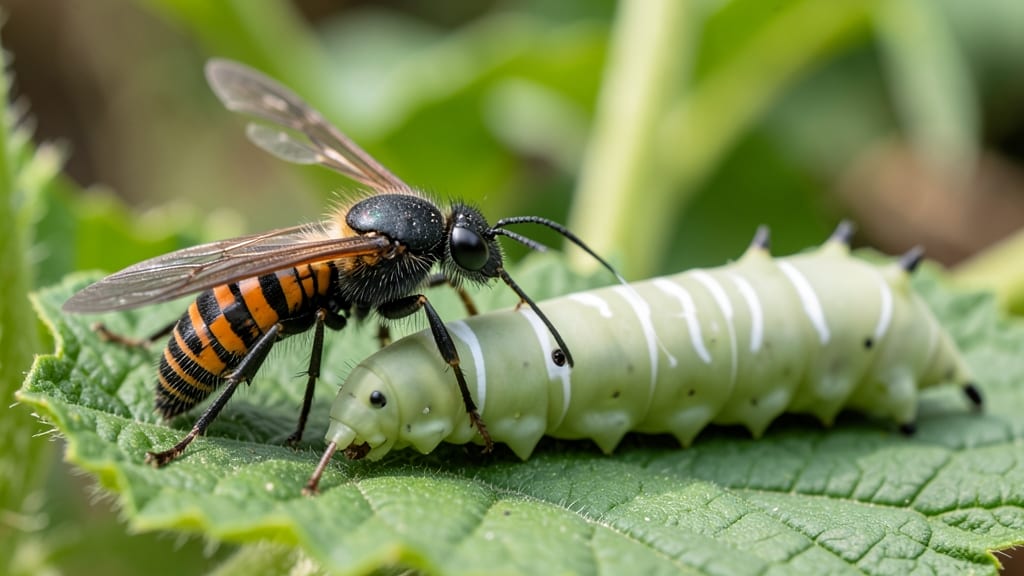
The symbiotic relationship between the braconid wasp and the tomato hornworm is your garden’s best-kept secret—it turns pests into natural pest control. 🌱 These tiny wasps lay eggs inside tomato hornworms, turning pests into allies for your plants.
I’ve watched my garden transform when I stopped fighting them and started welcoming them instead.
Here’s how it works: a single female wasp can paralyze 20-30 hornworms in a day, laying eggs inside each one. When the larvae hatch, they feed on the hornworm from the inside out, eventually forming white cocoons on its back—a sure sign nature’s pest control is at work.
No chemicals needed, just biology.
You’ll notice fewer hornworms over time, and your tomato plants will thrive without the constant battle. The wasps also pollinate flowers, making your garden even more productive. All you need to do is avoid pesticides and plant a few wasp-friendly flowers like dill or fennel nearby.
This isn’t just about saving your tomatoes—it’s about restoring balance to your garden ecosystem. Once you see those white cocoons, you’ll never spray for hornworms again. Let’s get those wasps working for you!
📚 In This Guide
- What you need
- Instructions
- Tips and common mistakes
- Wrapping up and next steps
What you need
- ● Tomato plants: Healthy, hornworm-infested plants (or a controlled environment to introduce them).
- ● Tomato hornworms: 5–10 live specimens (captured gently from plants or purchased from a reputable supplier).
- ● Braconid wasps (Cotesia congregata): 5–10 adult wasps (or pupae/eggs, if available).
- ○ Optional: A wasp net or aspirator for safe handling (if collecting from the wild).
- ● Clear plastic containers: 2–3 with lids (10–12 oz size, for observation or rearing).
- ● Fine paintbrush or soft toothbrush: For transferring wasps or eggs.
- ● Hand lens or magnifying glass (10x–40x magnification) to observe wasp eggs and larvae.
- ● Notebook and pen: To record observations (egg laying, larval development, etc.).
- ● Camera or smartphone: With macro mode for documenting the process.
- ● Potted tomato seedlings: For a contained experiment.
- ● Humidity dome or terrarium: To maintain ideal conditions (70–80% humidity).
- ● Insect-rearing cages: Mesh enclosures (18"x18"x24") for large-scale observations.
- ● Diatomaceous earth or soap spray: Only if hornworms become overpopulated (use sparingly!).
- ● Local gardening guides or entomology books: For identifying wasp species and life stages.
How to encourage braconid wasps for natural tomato hornworm control
Here's how I've successfully harnessed this predator-prey relationship in my garden—no sprays or traps needed.
🌿 Step 1: Identify and Protect Existing Hornworm Infestations
First, scout your tomato plants for hornworms—look for 3-5 inch green caterpillars with white diagonal stripes and tiny horns. I check plants every 3-4 days during warm weather, focusing on lower leaves and stems where they hide. The key is letting nature take its course: leave 1-2 hornworms per plant for braconid wasps to find.
Don't panic if you see feeding damage—braconid wasps arrive quickly when hornworms are present. I've seen them within 7-10 days of spotting the first caterpillar. If you remove all hornworms immediately, the wasps have nothing to parasitize and won't establish themselves in your garden.
☀️ Step 2: Create a Wasp-Friendly Garden Environment
Braconid wasps thrive in gardens with diverse plantings, especially those with small flowers like dill, fennel, and yarrow. I dedicate one 3-foot square plot to these plants near my tomato patch to attract wasps naturally. The wasps need nectar sources, and these flowers provide both food and shelter.
Avoid broad-spectrum insecticides completely—even "organic" sprays like neem oil can harm braconid wasps. If you must treat for other pests, use soapy water sprays or kaolin clay that target specific insects only. The wasps will still find your hornworms and continue their work.
🪴 Step 3: Introduce Wasps Through Natural Habitat Features
Add small water sources like shallow dishes with pebbles to help wasps stay hydrated. I place these 10-15 feet apart throughout the garden. The pebbles prevent wasps from drowning while providing easy access to water. Wasps are also attracted to bare soil patches where they can lay eggs—leave small areas of uncovered ground near your tomato plants.
If you live in a region where braconid wasps are rare, consider purchasing parasitized hornworms from reputable suppliers. These caterpillars already have wasp eggs inside them, and releasing them in your garden jumpstarts the population. I've done this in early summer when hornworms first appear, and within 2 weeks I see healthy wasp activity.
⏰ Step 4: Monitor and Maintain the Balance Year-Round
Check your tomato plants weekly during the growing season, but resist the urge to remove all hornworms. The wasps need a steady food source to reproduce. I mark plants with yellow flags when I see hornworms—this helps me track which areas need monitoring. You'll know the wasps are working when you see white cocoons attached to hornworm bodies.
In fall, leave some tomato plants standing (or plant fall crops like kale) to provide overwintering habitat. Braconid wasps lay dormant in leaf litter and soil, emerging in spring when hornworms reappear. I never clean up garden debris completely—this natural mulch protects the wasps through winter.
💧 Step 5: Troubleshoot Common Disruptions
If hornworm populations explode despite wasp activity, your garden might lack sufficient nectar sources. Add more annual flowers like alyssum or sweet alyssum to provide continuous blooms. I've seen wasp numbers triple within 3 weeks after adding these plants. Another sign of imbalance is seeing fewer than 5 wasps per 100 square feet—this indicates they're struggling to find food.
Don't expect immediate results—it can take 2-3 growing seasons to establish a self-sustaining wasp population. I've had years where hornworms still caused some damage, but the wasps eventually caught up. The key is patience and maintaining the habitat they need to thrive.
Tips & tricks for natural tomato hornworm control
These practical strategies will help you maximize your garden's natural pest control ecosystem.
Timing is Everything: When you spot those first hornworms in Step 1, mark the date and set a reminder for 7-10 days later. This is when braconid wasps typically arrive to claim their prey. I keep a small garden journal to track hornworm sightings and wasp appearances—it's fascinating to see the pattern emerge each season.
Visual Identification Tip: In Step 4, when looking for white cocoons on hornworm bodies, examine the caterpillars' sides and backs carefully. The cocoons often appear as tiny, translucent sacs attached to the hornworm's skin. I use a magnifying glass for close inspection, especially on larger hornworms where cocoons can be harder to spot.
Habitat Enhancement: For Step 2, consider adding a mix of annual and perennial flowers to create year-round nectar sources. I plant sweet alyssum in early spring, then transition to cosmos and zinnias as the season progresses. This continuous bloom cycle keeps wasps fed and active throughout the growing season, even when tomato plants aren't flowering.
Patience Pays Off: Remember that establishing a self-sustaining wasp population takes time—often 2-3 growing seasons. I've seen gardens where hornworms still cause some damage in the first year, but by year three, the wasps completely regulate the population. The key is consistency in maintaining the habitat rather than expecting instant results.
Pro Tips for Braconid Wasp And Tomato Hornworm Symbiotic Relationship
- These practical strategies will help you maximize your garden's natural pest control ecosystem.
- Timing is Everything: When you spot those first hornworms in Step 1, mark the date and set a reminder for 7-10 days later.
- Visual Identification Tip: In Step 4, when looking for white cocoons on hornworm bodies, examine the caterpillars' sides and backs carefully.
Frequently asked questions
How do I know if braconid wasps are already in my garden?
Look for white cocoons on tomato hornworms—these are braconid wasp pupae! You’ll also spot tiny, black wasps (about ½ inch long) crawling on leaves or hovering near hornworms. If you see mummified caterpillars (dried up with wasp cocoons), they’re already hard at work!
What’s the best time of year to introduce braconid wasps?
Release them early in the hornworm season (late spring to early summer) when tomato plants are flowering. Adult wasps need nectar sources (like marigolds or dill) to survive and reproduce. Avoid releasing them too late—if hornworms are already large, the wasps may struggle to parasitize them.
Can I use braconid wasps if I’ve already seen hornworm damage?
Yes! While wasps are most effective at preventing damage, they can still parasitize hornworms that are small to medium-sized (under 2 inches). For severe damage, handpick large hornworms (drop them in soapy water) and boost plant health with companion plants like basil or borage to attract more wasps.
Are braconid wasps safe around kids and pets?
These wasps are harmless to humans—they don’t sting and are too small to be a threat. However, avoid disturbing their cocoons (they’re delicate). Pets may be curious but won’t be harmed. Just keep an eye out for hornworms if you notice your pet snacking on "weird" caterpillars!
What if braconid wasps don’t seem to be working?
Check these fixes:
- Lack of nectar: Add flowering plants (e.g., alyssum, cosmos) to feed adult wasps.
- Too few wasps: Order more or release them in multiple batches.
- Hornworms are too large: Handpick big caterpillars and focus on younger ones.
- Pesticides nearby: Avoid sprays—wasps are sensitive to chemicals!
Wrapping up and next steps
The braconid wasp and tomato hornworm showcase nature’s brilliance in pest control—no chemicals needed! 🌱 This symbiotic relationship offers gardeners an eco-friendly, sustainable way to protect tomato plants while preserving biodiversity. By embracing these tiny allies, you’re not just fighting pests; you’re fostering a healthier ecosystem.
Ready to put this knowledge into action? Start small: introduce Cotesia congregata to your garden and observe the balance unfold. Every gardener can make a difference—one wasp at a time! 🐝✨