
Companion Plants
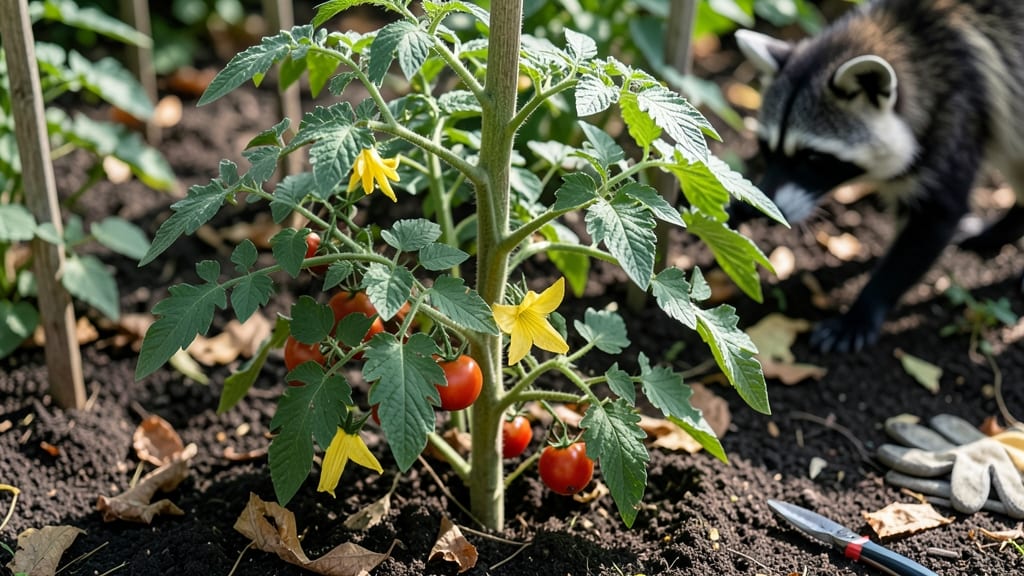
Racoons do eat tomato plants, targeting ripe fruit and foliage for their sweet, juicy flesh and high water content. They often leave behind chewed stems, scattered fruit, and muddy paw prints near garden beds.
Raccoons are drawn to tomato plants primarily because of their high moisture and sugar content, which makes them an easy, nutrient-rich snack. 🐾 These nocturnal creatures are particularly active during late summer and early fall when tomatoes are at their peak ripeness.
Their sharp claws can strip entire vines bare, leaving behind telltale signs like crushed foliage and disturbed soil around the base of plants. Unlike deer or rabbits, raccoons are highly intelligent and can even learn to bypass simple deterrents if not properly managed.
If you've noticed your tomato plants being ravaged overnight, it's likely raccoons—not just because of the damage, but also because they often leave behind scattered fruit and muddy paw prints.
The key to protecting your harvest is understanding their behavior: they're opportunistic feeders that thrive in areas with easy access to food and water. Once they discover a garden, they'll keep returning unless you implement proactive measures.
💡 In This Article
- Why Racoons Target Tomato Plants in Gardens
- Effective Raccoon Deterrents for Tomato Gardens
Why racoons target tomato plants in gardens
Raccoons are drawn to tomato plants because they offer a perfect combination of moisture, sugar, and easy access. Tomatoes contain approximately 95% water and natural sugars that make them an irresistible snack for these omnivorous animals.
In the wild, raccoons primarily eat fruits, nuts, insects, and small vertebrates, but cultivated tomatoes provide a concentrated, high-energy food source that's far more abundant than what they'd find foraging naturally.
Their sharp, dexterous front paws allow them to grip stems and pluck ripe fruit with precision, often leaving behind chewed stems that appear as if someone used shears. 🌱 Unlike deer that browse from a distance, raccoons climb vines and dig around plant bases, creating visible damage patterns.
Studies show they're particularly active during dusk and dawn, when temperatures are cooler and they can forage undetected. This nocturnal behavior explains why gardeners often wake up to find their tomato plants stripped overnight.
What makes tomatoes especially appealing is their high water content—raccoons need to hydrate frequently, and tomatoes provide both water and nutrients in one convenient package. The flesh's soft texture requires minimal chewing, making it an efficient food source.
Compare this to other garden vegetables: peppers are too spicy, carrots require digging, and lettuce lacks the moisture content. Tomatoes check all the boxes for a raccoon's ideal meal.
The damage extends beyond just the fruit—raccoons often trample surrounding foliage while foraging, creating muddy paw prints near plant bases.
Their curiosity means they'll investigate anything new in the garden, including compost piles or fallen fruit, which can attract them to tomato plants in the first place. 🐾 This is why gardeners often find raccoons near compost bins before they start targeting tomato plants specifically.
Ecologically, this behavior makes sense: raccoons are highly adaptable and thrive in human-altered landscapes. When natural food sources become scarce, they'll exploit cultivated gardens, especially during late summer and early fall when tomatoes are at peak ripeness.
Their intelligence means they can even learn to bypass simple deterrents like cheap fencing, making prevention a multi-layered challenge.
Interestingly, raccoons also have a strong sense of smell that detects the volatile organic compounds released by ripe tomatoes. These chemical signals act like an invisible beacon, drawing them directly to the most vulnerable plants.
This explains why you might see damage concentrated in specific areas of your garden rather than spread randomly.
Understanding this behavior is the first step in protecting your tomato plants. Once you recognize the signs—chewed stems, scattered fruit, and muddy paw prints—you can implement targeted deterrents that address their specific motivations for targeting your garden.