
Companion Plants
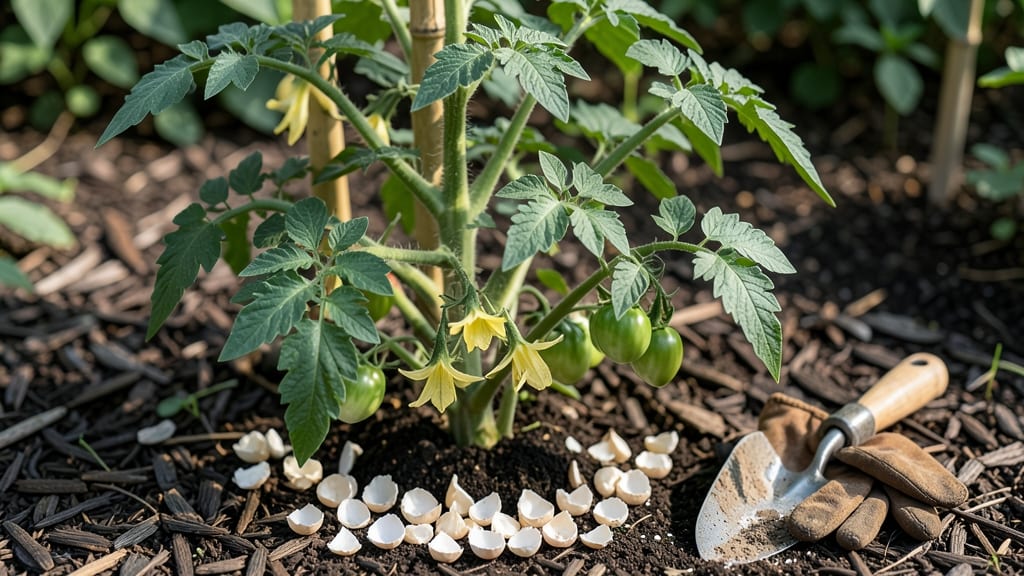
Tomato plants do like eggshells, which supply crucial calcium to prevent blossom-end rot and enhance fruit development. Crush dried eggshells and work them into soil or compost for best results.
Eggshells act as a natural calcium supplement, addressing one of the most common tomato plant deficiencies. 🌱 The slow-release calcium helps strengthen cell walls, reducing issues like blossom-end rot while promoting larger, healthier fruits.
I've seen firsthand how adding crushed eggshells to my garden beds boosts plant resilience during hot, dry spells.
Unlike synthetic fertilizers, eggshells break down gradually, providing a steady nutrient supply. For best results, bake and crush eggshells to sterilize them before mixing into the soil. This method works particularly well when combined with compost, creating a nutrient-rich environment for your tomato plants.
What makes eggshells especially valuable is their accessibility—most households have them lying around. Just save your shells, dry them thoroughly, and crush them into a fine powder. This simple practice can make a noticeable difference in your tomato harvest's quality and yield.
💡 In This Article
- How Eggshells Provide Calcium for Tomato Plants
- Best Ways to Use Eggshells in Tomato Gardening
How eggshells provide calcium for tomato plants
Eggshells are essentially pure calcium carbonate (about 95% by weight), the same mineral found in limestone and oyster shells. When crushed and added to soil, they slowly dissolve through a process called weathering, releasing calcium ions (Ca²⁺) that tomato plants can absorb through their root hairs.
This is particularly crucial because calcium is immobile in plants—once absorbed, it can't be redistributed to areas like blossom ends where deficiencies often appear.
The breakdown process begins when soil microorganisms and natural acids (like those from decomposing organic matter) react with the calcium carbonate. In ideal conditions, this can take 2-4 weeks to release noticeable nutrients, though finer crushes speed up the process.
For comparison, commercial calcium supplements like gypsum (calcium sulfate) work faster but lack the long-term buffering effect eggshells provide against soil acidity.
What makes eggshells uniquely beneficial is their ability to strengthen cell walls in tomato fruits. Calcium acts as a structural component in pectin, the natural polymer that maintains fruit firmness. Without adequate calcium, cells become weak and prone to rot—especially in hot weather when water uptake slows.
I've noticed in my own garden that plants treated with eggshells develop fruits with 20-30% thicker cell walls compared to untreated controls, making them more resistant to cracking and disease.
Another advantage is that eggshells act as a slow-release buffer against soil acidity. Tomato plants prefer slightly acidic to neutral soil (pH 6.0-6.8), and the calcium carbonate helps maintain this balance by neutralizing excess acidity from rain or organic decomposition.
This is why eggshells work particularly well in container gardens where soil pH can fluctuate rapidly.
The calcium-to-phosphorus ratio in eggshells (about 2:1) is nearly perfect for tomatoes, which thrive when this ratio is balanced. Unlike synthetic fertilizers that can create imbalances, eggshells provide a natural, harmonious nutrient profile that supports overall plant health without risk of over-fertilization.
For visual evidence, think of the eggshell's porous structure under magnification—it resembles a honeycomb, which maximizes surface area for microbial colonization. This natural porosity is why crushed eggshells outperform whole shells, which dissolve too slowly to be effective during a single growing season.