How To
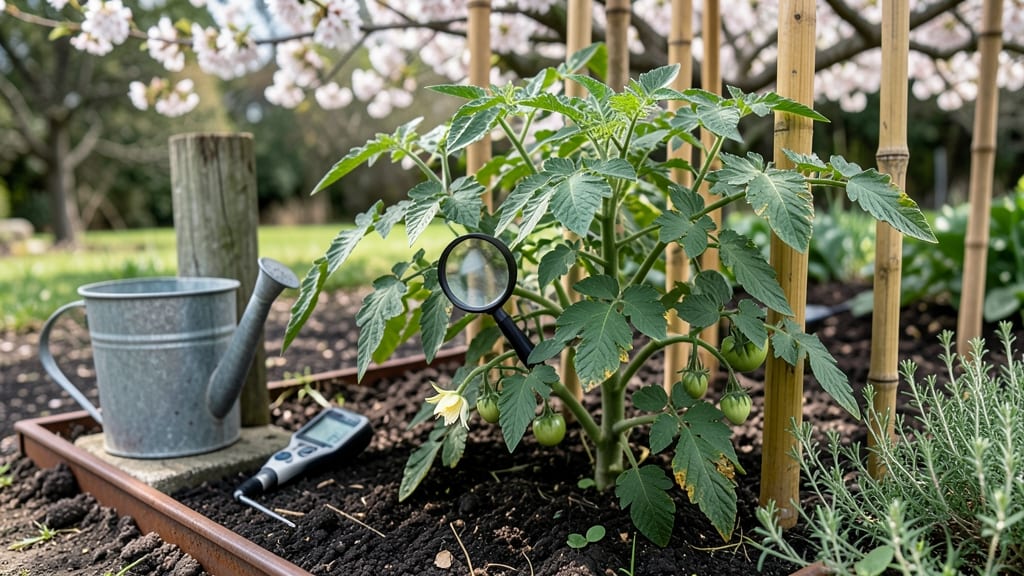
Droopy tomato leaves mean your plants are silently screaming for help. 🌱 I’ve seen this happen after just one scorching afternoon or a week of neglect—and the good news is, most cases are fixable in minutes with the right tweaks.
Whether it’s thirst, heat, or hidden pests, your tomatoes can bounce back if you act fast.
First, check the soil—it’s usually the culprit. Overwatering drowns roots, while underwatering leaves them desperate for moisture. Stick your finger an inch deep; if it’s bone-dry, water deeply until it drains from the bottom.
If it’s soggy, hold off and let it dry slightly before watering again. Heat stress? Move plants to shade for a few hours and mulch to keep roots cool.
Next, inspect for pests like aphids or early blight. Wipe leaves with soapy water or spray neem oil for organic control. Prune any yellowed or diseased foliage immediately to stop the spread. Within 24-48 hours, you’ll often see leaves perk up as roots recover and pests retreat.
Prevention is key: water consistently at the base (not overhead), use shade cloth on hot days, and rotate crops yearly to avoid soil-borne diseases. Keep this up, and your tomatoes will stay lush, productive, and droop-free all season.
Root Causes of Floppy Foliage
Understanding why your tomato leaves suddenly droop is the first step to reviving your plants. Here’s a breakdown of the most common culprits—and the science behind them.
Tomatoes are 95% water by weight, and their leaves rely on a steady supply to stay turgid (firm). When water balance is disrupted, cells lose pressure, causing wilting.
- Underwatering 💧 - Soil moisture drops below 30-40%, triggering the plant’s survival response.
Roots can’t absorb enough water to meet demand, especially in sandy or fast-draining soils. - Signs: Dry, crispy leaf edges; soil pulls away from pot sides. - Actionable fix: Check soil moisture 1 inch below the surface—if dry, water deeply until it drains from the bottom.
- Overwatering 🌧️ - Root suffocation occurs when soil stays soggy for >48 hours, cutting off oxygen.
Roots rot, and the plant can’t absorb water even if the soil looks wet. - Signs: Yellowing leaves, foul odor, mushrooms in soil. - Actionable fix: Ensure pots have drainage holes and water only when the top 1-2 inches of soil are dry.
Use a moisture meter for accuracy.
- Uneven watering 💦
- Surface watering causes hydrophobic soil (water repels dry top layers), while deep roots stay thirsty. This creates a false sense of hydration.
- Fix: Use drip irrigation or soaker hoses to deliver water 2-3 inches deep.
Tomatoes thrive in warmth (70-85°F), but extreme heat or intense afternoon sun can scorch leaves faster than they can photosynthesize.
- Transpiration overload 🌡️ - On hot, windy days, leaves lose water 10x faster than roots can replace it.
Cells plasmolyze (collapse), causing droop. - Signs: Leaves feel paper-thin or develop silver-gray patches (sunburn). - Fix: - Mulch heavily (straw or wood chips) to retain moisture. - Provide shade cloth (30-50%) during peak sun (12–4 PM). - Water in the early morning to reduce evaporation.
- Heat shock ❄️→🔥
- Sudden temperature swings (e.g., cold night → hot day) disrupt stomatal function (leaf pores). Stomata close to conserve water but block CO₂ intake, leading to wilting.
- Fix: Use row covers at night if temps drop below 55°F.
Tomatoes are heavy feeders, and deficiencies weaken cell walls, making leaves flaccid and prone to wilting.
| Nutrient | Deficiency Signs | Quick Fix |
|---|---|---|
| Potassium (K) | Yellowing leaf edges ("scorched" look); weak stems | Feed with banana peel tea or Epsom salt (1 tbsp/gallon). |
| Calcium (Ca) | Blossom-end rot (black, mushy fruit) + droopy new leaves | Apply crushed eggshells or calcium nitrate (1 tsp/gallon). |
| Magnesium (Mg) | Yellowing between leaf veins (interveinal chlorosis) | Spray with Epsom salt solution (2 tbsp/gallon). |
- pH imbalance 🧪
- Tomatoes need pH 6.0–6.8. If soil is too acidic (<5.5), nutrients like phosphorus and calcium become locked away.
- Fix: Test soil pH and amend with lime (to raise pH) or sulfur (to lower pH).
Hidden invaders sap nutrients and block water transport, causing sudden wilting.
- Aphids & Spider Mites 🐜
- These pests inject toxins while feeding, disrupting plant hormones. Heavy infestations cause curling and drooping.
- Fix: Spray with neem oil or introduce ladybugs.
- Fungal Diseases (Early Blight, Fusarium Wilt) 🍄
- Fusarium wilt clogs xylem vessels (water-conducting tubes), causing vascular wilting (leaves droop even when soil is wet).
- Signs: Yellowing lower leaves + stunted growth.
- Fix: Remove infected plants; rotate crops and use resistant varieties (e.g., 'Mountain Merit').
- Root-Knot Nematodes 🐛
- Microscopic worms gall roots, reducing water absorption by up to 50%.
- Fix: Solarize soil (cover with clear plastic for 4–6 weeks) or plant marigolds (natural nematicide).
Disturbed roots struggle to anchor and absorb water, leading to temporary wilting.
- Overpruned roots ⚰️
- If roots are trimmed too aggressively during transplanting, recovery takes 7–10 days.
- Fix: Water deeply post-transplant and avoid fertilizing for 1 week.
- Root-bound plants 🪴
- Roots circling the pot strangle themselves, limiting water uptake.
- Fix: Repot into a larger container (1–2 inches wider) with fresh soil.
Even non-obvious factors can cause wilting:
- Windburn 🌬️
- Constant wind desiccates leaves, mimicking underwatering.
- Fix: Windbreaks (burlap screens) or stake plants to reduce exposure.
- Salinity buildup 🧂
- Over-fertilizing or poor-quality water (high sodium) burns roots, preventing water absorption.
- Fix: Flush soil with distilled water; avoid tap water with high TDS (test with a TDS meter).
Pro Tip 💡: Morning wilting often = water stress, while evening wilting may signal disease or root issues. Check multiple factors—tomatoes rarely droop from one cause alone!
Quick Fixes for Reviving Your Tomatoes
Wilted tomato plants can feel like a gardener’s worst nightmare—but don’t toss those droopy leaves just yet! The good news is that most causes of limp foliage are reversible with the right care.
Below, we’ve mapped out practical, step-by-step solutions tailored to the most common culprits behind your tomato plant’s sad slump. Follow these fixes, and you’ll have plump, perky leaves (and juicy tomatoes!) in no time.
If your tomato leaves are soggy to the touch and the soil smells musty, overwatering is likely the villain. Too much moisture suffocates roots, cutting off their oxygen supply and causing wilting. Here’s how to dry things out:
- 🔥 Stop watering immediately—let the soil dry out for 1–2 days to prevent root rot.
- 👨🍳 Check your pots or soil: If your container lacks drainage holes, transfer the plant to a pot with them. For in-ground tomatoes, amend the soil with compost or perlite to improve aeration.
- ⏰ Water deeply but less often: Wait until the top 1–2 inches of soil are dry before watering again. Use a moisture meter or stick your finger in the soil to test.
- 🌡️ Boost airflow: Trim back any dense foliage around the base of the plant to encourage faster drying.
Prevention tip: 💡 Always water at the base of the plant (not the leaves) in the morning so foliage has time to dry. Mulch around the base to retain consistent moisture without drowning roots.
Crispy, curled leaves or wilting that happens during the day (but recovers at night) usually means your plant is thirsty or struggling with heat. Tomatoes need 1–2 inches of water per week, but they’re especially sensitive to dry spells and scorching sun.
- 🍳 Give it a deep drink: Water the soil until it’s moist 6 inches deep. Use a soaker hose or drip irrigation to avoid wetting leaves (which can lead to disease).
- 🌿 Shade cloth to the rescue: If temps hit 90°F+ (32°C+), drape a light shade cloth (30–50%) over the plant for a few hours to prevent heat stress.
- 🥗 Mulch like a boss: Spread 2–3 inches of straw or wood chips around the base to lock in moisture and keep roots cool.
- 🌅 Water in the early morning—this gives leaves time to dry before evening, reducing fungal risks.
Prevention tip: ✨ Group plants together to create a microclimate with shared humidity. Avoid pruning too aggressively in summer, as fewer leaves mean less shade for the fruit.
Yellowing leaves with brown spots and black veins? You’re likely dealing with a fungal infection like early or late blight. These spread fast in humid conditions, but you can stop them in their tracks with these organic and chemical-free methods:
- 🔪 Prune infected leaves ASAP: Use sterilized scissors (wipe with rubbing alcohol) to snip off and discard (not compost!) any yellow or spotted leaves.
- 🌡️ Improve airflow: Space plants 18–24 inches apart and stake them to avoid crowding. Remove any nearby weeds or debris.
- 💪 Spray with baking soda or copper: Mix 1 tsp baking soda + 1 tbsp vegetable oil + 1 tsp dish soap per gallon of water, or use a copper fungicide (like Bordeaux mixture). Spray every 7–10 days until new growth appears.
- 🎯 Prevent future outbreaks: Water only at the base and avoid overhead sprinklers. Rotate crops yearly—never plant tomatoes, peppers, or potatoes in the same spot two years in a row.
Prevention tip: 💡 Start with resistant varieties like ‘Mountain Merit’ (early blight-resistant) or ‘Defiant PhR’ (late blight-resistant) if your area is prone to fungal diseases.
Sticky leaves, tiny webs, or chewed edges? Pests are probably sucking the life out of your tomatoes. Here’s how to evict them:
- 🔍 Identify the invader:
- Aphids: Tiny green/black bugs clustering on new growth.
- Spider mites: Tiny yellow dots + fine webs on undersides of leaves.
- Whiteflies: Tiny white moths that flutter when you shake the plant.
- 🚿 Blast them off: Spray plants with a strong stream of water to knock off pests, especially in the morning.
- 🍎 Neem oil or insecticidal soap: Mix 1 tbsp neem oil + 1 tsp dish soap per quart of water and spray every 3–5 days until pests vanish.
- 🌿 Introduce beneficial insects: Ladybugs, lacewings, and predatory mites love eating tomato pests. Buy them online or attract them with dill or fennel plants nearby.
Prevention tip: 🌡️ Inspect new plants before bringing them home—quarantine them for a week to spot hitchhiking pests.
If your tomato plant is root-bound (roots circling the pot) or shows signs of deficiency (yellow lower leaves = nitrogen; purple stems = phosphorus), it’s time to give it space and nutrients.
- 🏡 Repot if root-bound: Gently remove the plant from its pot and loosen circling roots with your fingers. Transfer to a 1–2 gallon larger container with fresh potting mix.
- 📊 Fertilize smartly:
- For nitrogen (green growth): Use fish emulsion or compost tea.
- For phosphorus (roots/fruit): Apply a bone meal or rock phosphate at planting.
- For potassium (strength): Use wood ash or banana peel tea.
- 🥗 Side-dress with compost: Sprinkle 1–2 inches of compost around the base (not touching the stem) and water it in.
Prevention tip: ✨ Test your soil before planting—most garden soils lack the right balance of nutrients for tomatoes.
Most droopy tomato leaves bounce back within 24–48 hours of proper care. Keep an eye on your plant’s progress, and don’t hesitate to
Frequently asked questions about droopy tomato leaves
Why do my tomato leaves droop in the afternoon but perk up at night?
This classic pattern usually means heat stress or underwatering. During hot afternoons, your plant loses water faster than roots can replace it. Try watering deeply in the morning (not evening) and providing afternoon shade with a light cloth. Mulching with straw also helps retain moisture.
Can I fix droopy leaves if the soil is completely dry?
Yes, but act fast! Water the soil until it drains from the bottom of the pot, then let it recover for 24 hours before watering again. For severe cases, trim any crispy leaves and move the plant to partial shade. Most plants bounce back within 12-48 hours if roots aren't permanently damaged.
What's the difference between wilting from thirst and wilting from disease?
Thirst wilting happens quickly (usually hours after missed watering) and recovers overnight. Disease wilting (like Fusarium wilt) happens even when soil is wet and often includes yellowing leaves or stunted growth. Check stems for dark streaks—if present, prune infected plants immediately and use copper fungicide.
Will pruning help droopy tomato plants?
Only if the problem is overcrowding or pests. Remove bottom leaves touching soil to prevent disease, but avoid heavy pruning—you need leaves for photosynthesis. Focus first on water, shade, and airflow. Prune only after confirming roots aren't the issue (check for soggy soil or root-bound conditions).
How can I prevent droopy leaves next season?
Start with well-draining soil (mix compost with perlite), use self-watering containers, and mulch heavily. Plant in morning sun with afternoon shade, and choose disease-resistant varieties like 'Mountain Merit'. Test soil pH (aim for 6.0-6.8) and fertilize lightly—tomatoes prefer balanced nutrition over heavy feeding.