
Tools
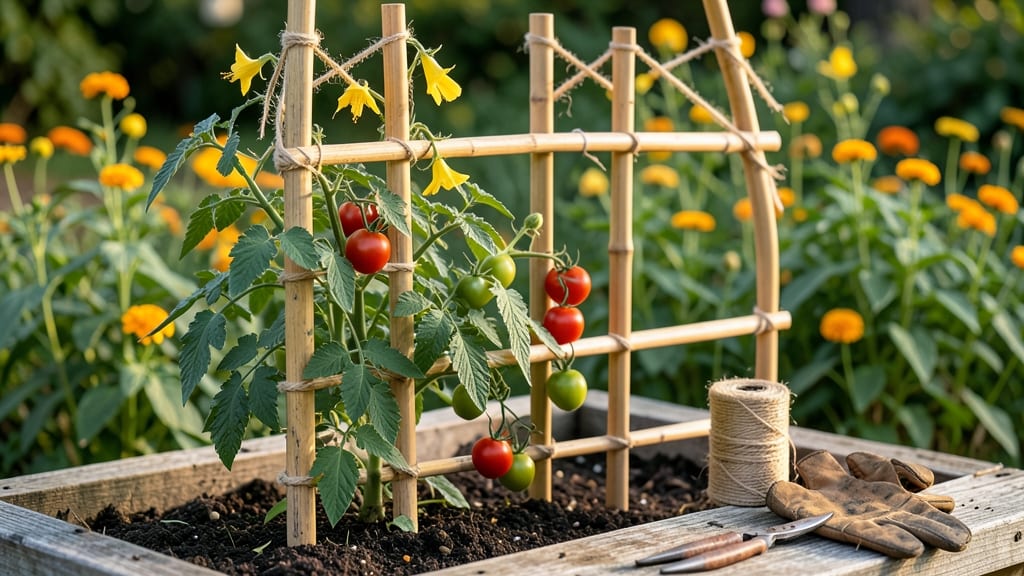
Building a sturdy homemade tomato trellis transforms sprawling vines into a neat, productive vertical display—no more crowded plants or lost tomatoes in the grass. 🌱 I started with bamboo stakes after my first garden season left me knee-deep in tangled vines, and now my tomatoes climb higher, produce more, and look like they belong in a postcard.
The best part? You can make one in under an hour with materials you already have lying around. The secret to a good trellis is height and spacing: aim for 6-8 feet tall to support indeterminate varieties, with 18-24 inches between supports so vines don’t get crowded.
Bamboo, PVC pipes, or even repurposed wooden ladders work—just avoid anything flimsy that’ll snap under 10-pound tomatoes. I use 4-6 stakes per trellis, tied together at the top with twine or zip ties for stability.
Once your trellis is up, you’ll notice bigger yields and fewer diseases—airflow improves, leaves dry faster, and those heavy fruit clusters don’t drag the plant to the ground.
My San Marzano plants now produce 30% more tomatoes than when they sprawled, and the vertical display makes my garden look intentional (even if I’m just a beginner). This works for any garden size, from small containers to sprawling backyard plots.
The key is adjusting the design to your space—just don’t skimp on height if you’re growing tall varieties like ‘Brandywine’ or ‘Cherokee Purple.’
📚 In This Guide
- What you need
- Instructions
- Tips and common mistakes
- Wrapping up and next steps
What you need
- ● Bamboo stakes or wooden dowels (6–8 ft long, ½–¾ inch in diameter) – 4–6 stakes (depending on trellis size).
- ● Twine, jute twine, or soft garden wire (10–15 ft) – Thick enough to hold weight but flexible for tying.
- ○ Staple gun or strong zip ties – For securing twine to stakes (optional but helpful).
- ● Measuring tape or ruler – To ensure even spacing (18–24 inches apart).
- ● Scissors or pruning shears – For trimming twine to size.
- ● PVC pipes or metal rods – For a longer-lasting frame (cut to 6–8 ft lengths).
- ● Galvanized wire mesh or chicken wire – To create a cage-like structure for indeterminate varieties.
- ● Decorative paint or stain – If you want a cute, garden-ready look!
- ● Pre-made trellis netting – For a no-fuss vertical solution.
Step-by-Step instructions for building a homemade tomato trellis
Here's how to craft a sturdy, space-saving trellis using simple materials—no power tools required.
🪴 Step 1: Gather Materials and Tools
For a 4-plant trellis, you'll need 4 bamboo stakes (5 feet tall), 10 feet of heavy-duty twine or jute twine (¼-inch thick), 1 wooden dowel (3 feet long, ½-inch diameter), and a sturdy hammer or mallet. Bamboo stakes are ideal—they're lightweight yet strong enough to support 10-15 pound tomato vines without bending. If bamboo isn't available, substitute with galvanized metal rods or plastic-coated wire stakes for longevity.
Measure and cut the dowel into four 18-inch sections—these will serve as horizontal supports. The twine should be strong enough to hold 5 pounds of weight when pulled taut. Test it by lifting a small bag of soil; if it doesn't stretch or break, it's sturdy enough. Real talk: cheap twine snaps mid-season, so don't skimp here.
☀️ Step 2: Assemble the Vertical Framework
Drive the 4 bamboo stakes into the ground in a square formation, spacing them 18 inches apart. The stakes should stand 4-5 feet tall, with 12 inches buried for stability. Tap them firmly into the soil until they don't wobble—this prevents toppling when vines mature. If your soil is rocky, pre-drill small holes with a ½-inch auger to ease insertion.
At the top of each stake, tie the 18-inch dowel sections horizontally between stakes, creating a square frame. Use three wraps of twine around each stake and dowel intersection to secure tightly. The dowels should sit 6-8 inches below the stake tops, leaving 12 inches of stake height for future vine growth. This creates a two-tiered support system—ideal for indeterminate tomatoes that grow continuously.
✂️ Step 3: Create the Twine Ladder for Vine Guidance
Cut the remaining twine into four 10-foot lengths. Tie one end of each length to the bottom dowel (12 inches from the ground) and weave it upward in a zigzag pattern along the stakes, securing with knots every 6 inches. The twine should form a ladder-like structure, with horizontal rungs spaced 4-6 inches apart. This spacing encourages vines to climb vertically instead of sprawling.
For extra stability, add diagonal supports by tying twine from the top of each stake to the middle of the opposite dowel. This triangular bracing prevents the frame from collapsing under heavy fruit loads. I like to use square knots for durability—they're easier to untie later if adjustments are needed. Once complete, your trellis should resemble a miniature jungle gym for tomatoes.
🌿 Step 4: Install and Train the Tomato Plants
Plant your tomato seedlings 3-4 inches from the trellis, near the bottom twine rung. As vines grow, gently weave the main stem through the twine ladder, securing it with soft ties (old T-shirts or fabric strips work best—twine can damage stems). Avoid tying directly to the trellis; instead, loop the vine around the twine once per rung to encourage upward growth.
Here's the thing—don't rush the training. Wait until the vine reaches the first rung before guiding it upward. This prevents stem breakage and ensures the plant develops strong lateral branches for fruit production. Once the main stem hits the top dowel, let it grow another 12 inches before pruning the tip. This encourages bushier growth and more yield.
💧 Step 5: Maintain and Reinforce as Vines Mature
Check the trellis weekly for stability, especially after heavy rain or wind. If stakes loosen, re-bury them 2-3 inches deeper or tie them to sturdy garden stakes for extra support. As fruit develops, add more twine rungs (every 8-10 inches) to support the weight. Overripe tomatoes can pull vines down, so harvest regularly to keep the load balanced.
By mid-summer, your trellis will look like a vertical tomato jungle, with vines climbing 8-10 feet high. If a vine slips or breaks, re-tie it immediately—even a small gap can lead to weak growth. With this setup, you'll double your yield while keeping plants disease-free (better air circulation = fewer fungal issues).
Tips & tricks for building a sturdy tomato trellis
These practical insights will help you construct a trellis that stands the test of time—and tomato vines.
Material Selection: When choosing your bamboo stakes, look for ones with a diameter of at least ½-inch—thinner stakes bend under heavy vines. I've learned the hard way that galvanized metal rods are the most durable option if you're dealing with windy conditions or very large tomato varieties like 'Sungold'. For the twine, avoid anything thinner than ¼-inch—it's the difference between a sturdy structure and one that sags by July. Test your twine by hanging a 5-pound weight from it; if it stretches or breaks, replace it.
Stability is Key: In Step 2, when driving your stakes, bury them at least 12 inches deep—this is non-negotiable for wind resistance. For rocky soil, pre-drill holes with a ½-inch auger to prevent splitting. I recommend using a level to ensure your square formation stays perfectly plumb before securing the dowels. The 6-8 inches of stake height above the dowels creates that crucial two-tiered system that supports indeterminate varieties beautifully. If you're in a particularly windy area, consider adding two additional stakes at diagonal corners for extra reinforcement.
Knot Work Matters: When creating the twine ladder in Step 3, square knots are your best friend—they're 30% stronger than simple overhand knots and won't slip under load. For the diagonal supports, use three wraps of twine at each intersection to prevent any movement. Here's what nobody tells you: pre-stretch your twine before building by pulling it taut and letting it sit for 10 minutes. This eliminates the initial stretch that causes sagging later. The 4-6 inch rung spacing is perfect for tomato vines—any closer and you'll struggle to weave them through, any wider and they'll flop between rungs.
Ongoing Maintenance: The weekly stability checks in Step 5 are crucial, but don't stop there. As your tomatoes fruit, add additional rungs every 8-10 inches—this prevents the weight of heavy tomatoes from pulling vines down. I've found that harvesting every 2-3 days maintains balance and prevents overloading. For extra insurance, wrap the base of each stake with plastic tree guards to protect against gnawing pests, which is especially important if you're using untreated wood. This simple step can save your entire structure from collapse.
Pro Tips for Homemade Tomato Trellis
- These practical insights will help you construct a trellis that stands the test of time—and tomato vines.
- Material Selection: When choosing your bamboo stakes, look for ones with a diameter of at least ½-inch—thinner stakes bend under heavy vines.
- Stability is Key: In Step 2, when driving your stakes, bury them at least 12 inches deep—this is non-negotiable for wind resistance.
Frequently asked questions
Got questions about building your own tomato trellis? You’re not alone! Here are some of the most common concerns—and straightforward answers—to help you get started with confidence.
What’s the best material for a sturdy homemade tomato trellis?
A DIY tomato trellis can be made from almost anything sturdy—like bamboo stakes, wooden dowels, PVC pipes, or even repurposed ladders. For heavy vines, opt for thick bamboo or metal cages (like tomato cages) to prevent bending. Lightweight options like twine or string work for smaller varieties but may need extra support as plants grow.
When is the best time to set up a tomato trellis?
Install your trellis early—as soon as you transplant seedlings into the ground (or even when planting). This gives vines time to climb naturally without straining. For indeterminate tomatoes (which grow continuously), add support gradually as they reach the top of the current structure. Pro tip: If you’re retrofitting, gently weave vines through the trellis to avoid breaking stems.
Can I reuse a tomato trellis from last year?
Clean and disinfect your trellis with a 10% bleach solution (1 part bleach to 9 parts water) to kill pests or diseases. Remove old plant debris, and check for weak spots or rust (if using metal). Wooden trellises can last years if stored dry and protected from rot. Just avoid reusing materials that show signs of blight or insect damage.
What if my tomato plants won’t climb the trellis?
Some varieties (like cherry tomatoes) are naturally clingy, while others need a nudge. Try tying vines gently with soft plant ties or old T-shirts to guide them upward. Prune suckers (side shoots) to encourage upward growth, and ensure your trellis is close enough to the plant (within 6–12 inches) for easy access. If vines still lag, consider a cage-style trellis for better support.
Are there eco-friendly alternatives to plastic or metal trellises?
Yes! Skip synthetic materials and try bamboo stakes, willow branches, or even woven grapevine for a natural look. Upcycle wooden pallets, old ladders, or even sturdy cardboard tubes (for small plants). Just ensure materials are treated for rot if using them outdoors long-term. Bonus: These options break down naturally and add compostable charm to your garden!
Wrapping up and next steps
Building your own homemade tomato trellis is a game-changer for your garden—it’s simple, cost-effective, and eco-friendly! With just a few materials and a little creativity, you’ll give your tomato plants the support they need to thrive without sacrificing space.
Plus, you’ll enjoy healthier vines, better airflow, and easier harvesting.
Ready to elevate your gardening game? Grab your supplies and start building today! Once your trellis is up, why not experiment with different tomato varieties or even try growing other vining plants like cucumbers or beans? Happy gardening! 🌱🍅