How To
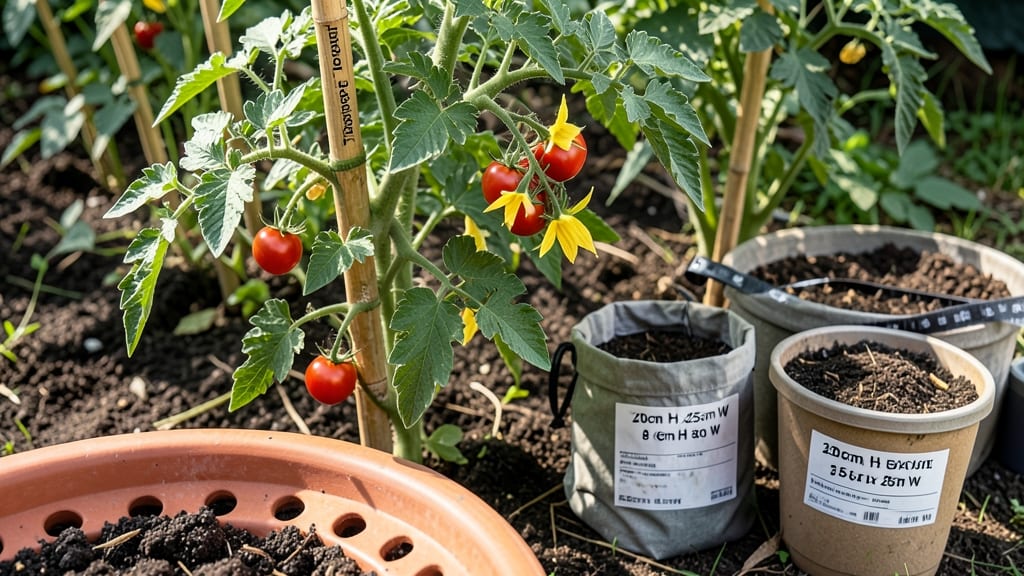
A tomato plant needs a pot that matches its growth habit—indeterminate varieties demand 5-gallon containers or larger to support their sprawling vines, while bush types thrive in 3- to 5-gallon pots.
Skimp on space, and you’ll watch your 🍅 struggle to produce fruit—or worse, collapse under its own weight. I’ve seen 6-foot vines in 1-gallon pots, and let’s just say the results were not pretty.
But here’s the good news: with the right pot size, even small balconies can grow bountiful harvests. Below, I break down the science of root space, material choices, and how to troubleshoot common mistakes before they stunt your plant’s potential.
You’ll learn how to pick the perfect pot for your variety, avoid overcrowding, and keep your tomatoes happy from seedling to harvest—no guesswork required.

Tomato pot size requirements by variety: root space rules for maximum yield
Choosing the right pot size for your tomato plants isn't just about fitting them in—it's about giving their roots room to grow while ensuring optimal nutrient uptake. Tomato varieties fall into two main categories: determinate (bush types) and indeterminate (vining types), each with unique space needs.
A pot that's too small will lead to stunted growth and poor fruit production, while one that's too large can cause moisture retention issues and root rot.
The key to container tomato success lies in understanding root space-to-yield ratios. A general rule is that 5 gallons of soil supports about 1 square foot of root zone, but this varies by variety.
For example, a dwarf cherry tomato might thrive in a 3-gallon pot, while a large indeterminate heirloom needs at least 15 gallons to produce heavy yields. Let’s break down the science and variety-specific recommendations.
Root growth science shows that tomatoes need 12-24 inches of depth to develop properly, with lateral roots spreading outward. In containers, this means wide, deep pots outperform narrow ones. For instance, a 5-gallon pot (12" diameter) works for bush varieties, but a 7-gallon pot (14" diameter) is better for medium vining types. The extra width allows roots to explore more soil volume, improving stability and water retention.
| Variety Type | Pot Size (Gallons) | Diameter (Inches) | Depth (Inches) | Best For |
|---|---|---|---|---|
| Dwarf/Compact (e.g., 'Tiny Tim', 'Patio Princess') | 3-5 gallons | 10-12" | 12-14" | Cherry tomatoes, balconies |
| Determinate (e.g., 'Roma', 'Celebrity') | 5-7 gallons | 12-14" | 14-16" | Bush types, sauces |
| Indeterminate (e.g., 'Sungold', 'Brandywine') | 10-15+ gallons | 16-20" | 18-24" | Vining types, heavy yields |
| Semi-Dwarf (e.g., 'Patio', 'Balcony Red') | 7-10 gallons | 14-16" | 16-18" | Medium vining, containers |
For determinate tomatoes, which grow to a fixed height and produce fruit in clusters, a 5-7 gallon pot is ideal. These varieties, like 'Roma' or 'Celebrity', focus their energy on fruit production rather than vertical growth, so they don’t need as much depth.
However, ensure the pot has drainage holes to prevent root suffocation from overwatering.
Indeterminate tomatoes, like 'Sungold' or 'Brandywine', are the heavyweights of container gardening. These vining varieties grow continuously and produce fruit all season long, requiring 10-15+ gallons of soil to support their extensive root systems and heavy fruit loads. A 15-gallon fabric pot or whirlpool planter (which allows roots to spread outward) is perfect for these types, as it mimics the root expansion they’d get in the ground.
If you're growing multiple tomato plants in a single container, space them according to their mature size. For example, two dwarf cherry tomatoes can share a 7-gallon pot (12" apart), while one indeterminate plant should have its own 15-gallon container.
Overcrowding leads to competition for nutrients, increased disease risk, and reduced yields
Common mistakes in tomato pot sizing and how to avoid them
Choosing the wrong pot size is one of the most common tomato gardening mistakes. Overcrowded roots lead to stunted growth, while pots that are too large waste space and cause moisture issues.
Many gardeners also overlook drainage requirements, which can drown roots and invite pests. Even the material of your pot—plastic versus terracotta—plays a surprising role in root health and temperature regulation.
I’ve seen tomato plants thriving in perfect 5-gallon pots next to sad, yellowing ones in oversized containers. The difference? Root space, drainage, and material all work together to create the ideal growing conditions.
Let’s break down the most critical mistakes and how to fix them before your plants show signs of distress.
⚠️ Tomato Pot Size Warning Signs
Root-bound plants show these symptoms:
- Circling roots peeking through drainage holes
- Stunted growth despite proper care
- Yellowing leaves from nutrient competition
- Slow wilting even with consistent watering
Fix it: Repot into a container 2-3 inches larger with fresh well-draining soil and prune circled roots before transplanting.
One of the biggest oversights is ignoring pot depth. Shallow containers force roots to compete for space, while deep pots encourage stronger root systems.
For indeterminate varieties, like 'Sungold' or 'Brandywine', aim for at least 18 inches deep—these vining plants need room to establish roots for heavy fruit loads. Determinate types, like 'Roma' or 'Celebrity', can thrive in 12-inch-deep pots, but don’t skimp on width.
Material matters more than you think. Terracotta pots dry faster and breathe better, reducing root rot risks but requiring more frequent watering. Plastic pots retain moisture longer, which can suffocate roots if drainage isn’t perfect. My go-to? Fabric grow bags—they mimic soil conditions while preventing root circling. If using plastic, add extra drainage holes and a layer of gravel at the bottom.
Watch for overwatering signs in poorly draining pots: soggy soil, moldy mulch, or leaves turning brown at the edges. Underwatering shows as crispy leaf edges or wilting by noon. The fix? Check soil moisture by sticking your finger 2 inches deep—water when it’s dry.
For heavy feeders like tomatoes, always water deeply to encourage roots to grow downward, not just spread shallowly.
Pro tip: Upgrade your pot size gradually if your plant outgrows its container. Start with a 5-gallon pot for small varieties, then move to 7 gallons for medium types, and 10+ gallons for large indeterminate varieties.
And always space multiple plants at least 18 inches apart—crowding stresses roots and invites disease. With the right pot, your tomatoes will reward you with bigger yields and healthier plants all season long. 🌱