Container Gardens
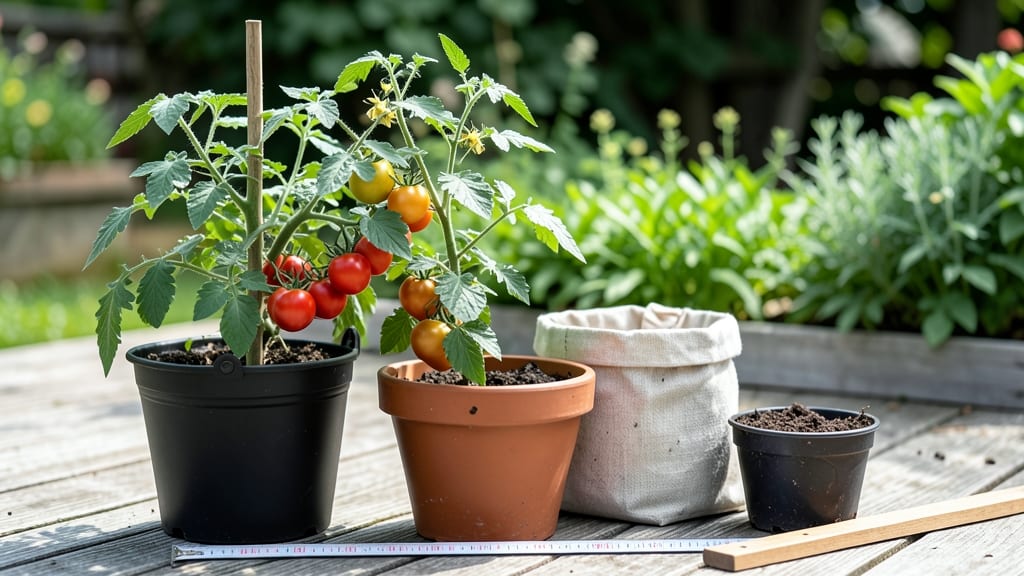
The size container for tomato plants should be at least 12-18 inches deep and 12 inches wide for dwarf varieties, while indeterminate types need 18-24 inches deep and 18+ inches wide to support robust root systems and maximize yield.
Choosing the right container size directly impacts how well your tomato plants thrive. 🌱 Determinate varieties—like bush tomatoes—need less space because they grow to a fixed height, but indeterminate types (think vining heirlooms) demand deeper containers to accommodate sprawling roots.
I’ve found that larger pots also help stabilize plants during windy conditions and prevent them from toppling over as they grow heavier with fruit. For multi-plant arrangements, consider spacing containers at least 18 inches apart to prevent competition for nutrients and water.
Material matters too—fabric grow bags offer excellent drainage but may require staking, while heavy ceramic pots provide stability but can dry out faster. Plastic containers strike a balance, but always prioritize depth over width when selecting a pot.
The key is mimicking the natural soil conditions tomatoes crave: room to stretch roots downward and outward for maximum nutrient uptake.
💡 In This Article
- How Container Size Affects Tomato Root Development
- Best Container Types and Sizing for Different Tomato Varieties
How container size affects tomato root development
Tomato roots thrive when they have space to explore both vertically and horizontally. The root system of a mature tomato plant can spread 2-3 feet wide and grow 12-18 inches deep in ideal conditions.
In containers, this translates to needing enough volume to prevent root binding—a condition where roots circle the pot and become compacted, stunting growth. 🌱 When roots are confined, they struggle to absorb water and nutrients efficiently, leading to stunted plants and lower yields.
The deeper the container, the better the roots can anchor themselves and access moisture from lower soil layers, which is especially critical during hot, dry periods.
Determinate varieties, like 'Roma' or 'Celebrity,' have a more compact growth habit, so they typically need containers that are 12-18 inches deep and 12-15 inches wide. These plants focus their energy on producing fruit within a fixed height, so their roots don’t need as much vertical space.
Indeterminate varieties, such as 'Brandywine' or 'Sungold,' on the other hand, grow continuously and can reach heights of 6-10 feet or more. Their root systems require 18-24 inches of depth to support the plant’s weight and maintain stability.
Without adequate depth, these vining plants may become top-heavy, leading to snapped stems or poor fruit production.
Width matters just as much as depth because tomato roots spread outward to access nutrients. A container that’s too narrow forces roots to compete for resources, which can weaken the plant.
For example, a 5-gallon bucket (about 12 inches wide) might work for a single dwarf tomato plant, but the same size would be far too restrictive for an indeterminate variety. Wider containers also improve soil aeration, which is crucial because tomato roots need oxygen to thrive.
Poor aeration can lead to root rot, especially in heavier soils or containers without proper drainage.
Another critical factor is how quickly the soil dries out. Smaller containers dry faster, forcing you to water more frequently and risking uneven moisture distribution.
A 10-gallon container (roughly 18 inches wide and 18 inches deep) can hold enough soil to retain moisture longer, reducing the stress on the plant. This is particularly important in hot climates, where containers can lose water up to 3 times faster than in-ground soil.
Adding organic matter like compost to the potting mix helps retain moisture while improving nutrient availability, giving roots the best chance to flourish.
Finally, consider how the container’s material affects root development. Fabric grow bags, for instance, allow roots to breathe better than rigid plastic or ceramic pots because they don’t restrict expansion as much.
However, they may require additional support, like stakes or cages, to prevent the plant from toppling over as it grows. Plastic pots are lightweight and affordable but can overheat in direct sunlight, which may stress the roots.
Wooden barrels or half-barrels offer a rustic look and good insulation but need to be lined with landscape fabric to prevent root damage from the wood. Choosing the right material alongside the correct size ensures your tomato’s root system stays healthy and productive.