
How To
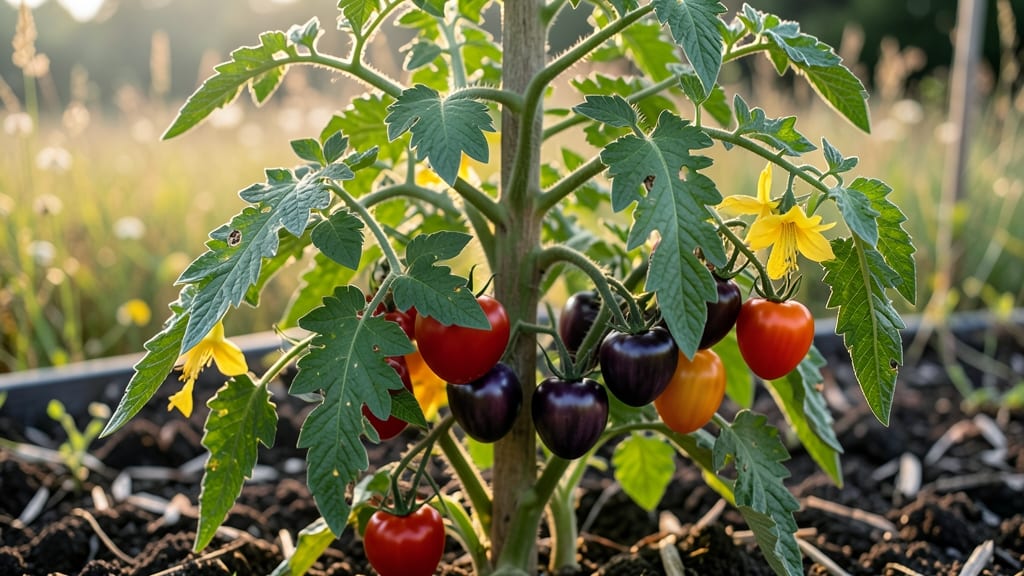
Growing heirloom tomato plants from seed gives you varieties you won't find in stores—each bite tastes like summer in your own backyard. 🌱 I learned the hard way that heirlooms need extra care, but the payoff is worth it: juicy, flavorful tomatoes that make grocery store tomatoes taste bland.
The secret starts with the right soil mix, careful watering, and knowing when to prune for maximum fruit production.
Heirloom tomatoes thrive in full sun and warm soil, so timing is everything. Plant seeds indoors 6-8 weeks before your last frost date, then transplant seedlings after nighttime temperatures stay above 55°F. Use a sturdy cage or trellis—they grow heavy!—and mulch to keep roots cool and moisture consistent.
I’ve killed more tomato plants than I’d like to admit, but this method keeps them thriving all season.
By mid-summer, you’ll be harvesting tomatoes that burst with flavor—some sweet, some smoky, all packed with the kind of taste you can’t buy. The key is balancing water, sun, and nutrients while keeping pests at bay.
With the right care, your plants will produce pounds of fruit and maybe even enough seeds to save for next year.
Whether you’re growing in a backyard garden, containers, or raised beds, heirlooms adapt well to different spaces. The only real challenge is patience—these plants take time to mature, but the reward is worth every extra day in the sun.
Why it happens
Heirloom tomato plants are resilient, but even the hardiest varieties can struggle when faced with specific growing challenges. Understanding why problems arise is the first step to fixing them—and preventing future disasters.
Below, we break down the most common culprits behind poor growth, blight, or disappointing yields, with clear science-backed explanations.
🌡️ Extreme Temperature Swings
Heirloom tomatoes thrive in consistent warmth (70–85°F during the day, 60–70°F at night). When temperatures spike above 90°F or drop below 50°F, plants go into survival mode, stunting growth and reducing fruit set.
- Heat stress: High temperatures disrupt pollination—tomato flowers may drop before setting fruit. The plant also struggles to photosynthesize efficiently, leading to weak vines and small leaves.
- Cold shock: Below 55°F, tomato enzymes slow down, halting nutrient uptake. Young seedlings may develop blackened stems or purple tinges (a sign of phosphorus deficiency triggered by stress).
- Frost damage: Even a light freeze can kill cells in leaves and stems, causing brown, mushy spots and halting growth entirely.
Actionable fix: Use row covers for early-season protection, mulch to regulate soil temp, and choose heat-tolerant varieties (like 'Solar Fire' or 'Heatmaster') if your climate runs hot.
💧 Watering Woes: Too Much or Too Little
Heirloom tomatoes are thirsty but hate soggy feet. Watering issues—whether drought or overwatering—trigger a cascade of problems, from cracked fruit to fungal infections.
- Underwatering: Shallow roots seek moisture desperately, leading to wilting leaves (even when soil feels damp) and blossom end rot (calcium deficiency caused by irregular water uptake).
- Overwatering: Poor drainage creates anaerobic soil, where roots suffocate. This invites root rot (caused by Phytophthora fungi) and blossom drop due to hormonal imbalances.
- Inconsistent moisture: Fluctuating water levels stress the plant, causing cracked tomatoes (as fruit expands rapidly after drought relief) and bitter-tasting produce.
Actionable fix: Water deeply 1–2 times per week (1–2 inches per session), using drip irrigation to keep soil evenly moist. Mulch with straw to retain humidity and prevent evaporation.
🐛 Pest & Disease Pressure
Heirloom tomatoes are magnets for pests and pathogens due to their thin skins and genetic diversity (which makes them less resistant than hybrid varieties). Here’s the science behind the chaos:
- Fungal diseases (early blight, late blight):
- Alternaria solani (early blight) thrives in humid, stagnant air (80%+ humidity). It enters through leaf wounds or stomata, creating concentric brown spots that spread to fruit.
- Phytophthora infestans (late blight) loves cool, wet conditions (50–77°F and high moisture). It releases zoospores that swim to healthy tissue, causing oily, greasy lesions that turn black.
- Insect attacks (hornworms, aphids, whiteflies):
- Manduca sexta (tomato hornworms) devour leaves and fruit in 24 hours if unchecked. Their frass (poop) spreads bacterial wilt.
- Aphids inject toxic saliva while feeding, causing curled leaves and sooty mold (a black fungus that grows on their honeydew).
- Viral infections (tobacco mosaic virus): Spread by aphids or contaminated tools, this virus rewires plant DNA, causing mosaic patterns, stunted growth, and deformed fruit.
Actionable fix:
- Rotate crops yearly to break disease cycles.
- Use neem oil or kaolin clay as a protective barrier against pests.
- Remove infected leaves immediately (don’t compost them!) and sterilize pruners with rubbing alcohol.
- Encourage beneficial insects like ladybugs and lacewings to control aphids naturally.
🌱 Poor Soil Health & Nutrient Deficiencies
Heirloom tomatoes are heavy feeders and demand a balanced diet of macronutrients and micronutrients. When soil lacks key elements, plants show distinct visual clues:
| Symptom | Likely Cause | Scientific Explanation |
|---|---|---|
| Yellow lower leaves (older leaves first) | Nitrogen (N) deficiency | Nitrogen is critical for chlorophyll production. Without it, leaves can’t photosynthesize, starting with the oldest (senescent) leaves. |
| Purple stems/leaves | Phosphorus (P) deficiency | Phosphorus helps energy transfer in cells. Under stress (like cold or drought), the plant redirects anthocyanins (purple pigments) to survive. |
| Brown spots on fruit (blossom end rot) | Calcium (Ca) deficiency | Calcium is immobile in plants—it can’t be relocated. New growth (like fruit) suffers first when roots can’t absorb enough Ca, often due to dry soil or high potassium. |
| Stunted growth, small leaves | Potassium (K) deficiency | Potassium regulates enzyme activity and water balance. Without it, cells can’t maintain turgor pressure, leading to weak stems and poor disease resistance. |
Actionable fix:
- Test soil with a home kit or send a sample to a lab for a full analysis.
- Amend soil with compost, worm castings, or balanced organic fertilizer (like 5-5-5).
- For calcium issues, apply crushed eggshells or calcium nitrate at the base of the plant.
- Avoid over-fertilizing with nitrogen—it leads to leafy growth but few tomatoes.
Quick Fixes for Common Tomato Troubles
Heirloom tomatoes are a gardener’s pride—until something goes wrong! 🌱💥 Whether your plants are wilting, pests are attacking, or your tomatoes aren’t ripening, these practical solutions will get your vines back on track.
Below, we’ve mapped out the most common problems and their fixes, plus prevention tips to keep your garden thriving all season.
Cause: Stress from temperature swings, overwatering, or nutrient imbalances.
How to Fix It: ✅ Stabilize temperatures – Keep soil warm (70–85°F) and protect plants from cold drafts or heatwaves. Use row covers if nights dip below 55°F. ✅ Water wisely – Deep water once a week (1–1.5 inches) instead of daily shallow watering. Avoid wetting leaves to prevent disease. ✅ Boost calcium – Apply crushed eggshells or a calcium nitrate spray (1 tsp per gallon of water) to strengthen cell walls.
💡 Prevention Tip: Plant heirlooms in late spring after the last frost, and choose heat-tolerant varieties like ‘Solar Fire’ or ‘Heatmaster.’
Cause: Aphids, hornworms, or spider mites love tender tomato foliage.
How to Fix It: 🔥 Handpick hornworms – Check leaves daily (they’re huge and green with white stripes!). Drop them in soapy water. 🍳 Spray neem oil – Mix 1 tbsp neem oil + 1 tsp mild soap per quart of water and spray undersides of leaves every 5–7 days. 👨🍳 Encourage predator bugs – Plant basil, marigolds, or dill nearby to attract ladybugs and lacewings.
💡 Prevention Tip: Rotate crops yearly to disrupt pest life cycles, and mulch heavily to deter crawling insects.
Cause: Inconsistent watering (too much after drought stress) or over-fertilizing with nitrogen.
How to Fix It: 💧 Water consistently – Aim for 1–1.5 inches per week, splitting doses between morning and evening to avoid stress. ⏰ Harvest early – Pick tomatoes when 70% ripe (they’ll finish ripening indoors) to prevent overgrowth. 🎯 Balance fertilizer – Switch to a low-nitrogen, high-phosphorus feed (like 5-10-10) when flowers appear.
💡 Prevention Tip: Prune lower leaves to improve airflow and reduce water stress on the fruit.
Cause: Overwatering, fungal disease (early blight), or nutrient deficiency.
How to Fix It: 🔪 Prune diseased foliage – Remove yellow or spotted leaves immediately with sterilized scissors (rubbing alcohol works). 🌡️ Improve drainage – Amend soil with compost or perlite and ensure pots/containers have drainage holes. 📊 Test soil pH – Aim for 6.0–6.8. Add lime if too acidic or sulfur if too alkaline.
💡 Prevention Tip: Space plants 18–24 inches apart for airflow, and avoid overhead watering at night.
Cause: Lack of sunlight, cool temps, or poor pollination.
How to Fix It: ☀️ Move plants to full sun – Heirlooms need 6–8+ hours of direct sunlight daily. Use a sun calculator to check your garden’s light. 🍳 Hand-pollinate – Gently shake plants in the morning or use a paintbrush to transfer pollen between flowers. ✨ Use black plastic mulch – Warms soil faster in spring, speeding up ripening.
💡 Prevention Tip: Choose early-maturing varieties like ‘Stupice’ or ‘Cherokee Purple’ for cooler climates.
Final Pro Tip: Keep a gardening journal to track issues and solutions—next season, you’ll be a tomato-growing pro! 🌿📖
(Need more help? Drop your specific problem below—we’ve got fixes!)
Frequently asked questions about growing heirloom tomatoes
How long does it take for heirloom tomato plants to produce fruit?
Most heirloom varieties take 70-90 days from transplanting to first harvest, depending on the specific variety and growing conditions. Early producers like 'Stupice' can yield in 60 days, while larger varieties like 'Brandywine' may take 85-90 days. Planting in warm soil and providing consistent water helps speed up maturation.
Can I grow heirloom tomatoes in containers?
Choose compact varieties like 'Tiny Tim' or 'Patio Princess' that thrive in 5-gallon containers or larger. Use a high-quality potting mix with added compost, and ensure containers have drainage holes. Place pots in full sun (6+ hours daily) and water consistently—container-grown tomatoes dry out faster than in-ground plants.
Why are my heirloom tomato flowers falling off?
This usually happens due to temperature stress (below 55°F or above 90°F) or poor pollination. Try hand-pollinating flowers with a small paintbrush in the morning, and protect plants from extreme heat with shade cloth. Consistent watering and proper fertilization also help prevent flower drop.
How do I save seeds from my heirloom tomatoes?
Let a fully ripe tomato ferment in a jar of water for 3-5 days until mold forms on top. Scoop out the seeds with the moldy gel, rinse them thoroughly, then spread them on a paper towel to dry for 1-2 weeks. Store dried seeds in a cool, dark place for up to 4 years. This preserves the unique traits of your heirloom variety!
What's the best way to support tall heirloom tomato plants?
Use a sturdy cage (5-6 feet tall), trellis, or bamboo stakes to prevent sprawling. For indeterminate varieties, tie stems to supports every 12-18 inches with soft plant ties. This improves airflow, reduces disease risk, and makes harvesting easier. Avoid over-pruning—leave some leaves to support fruit production.