
Watering
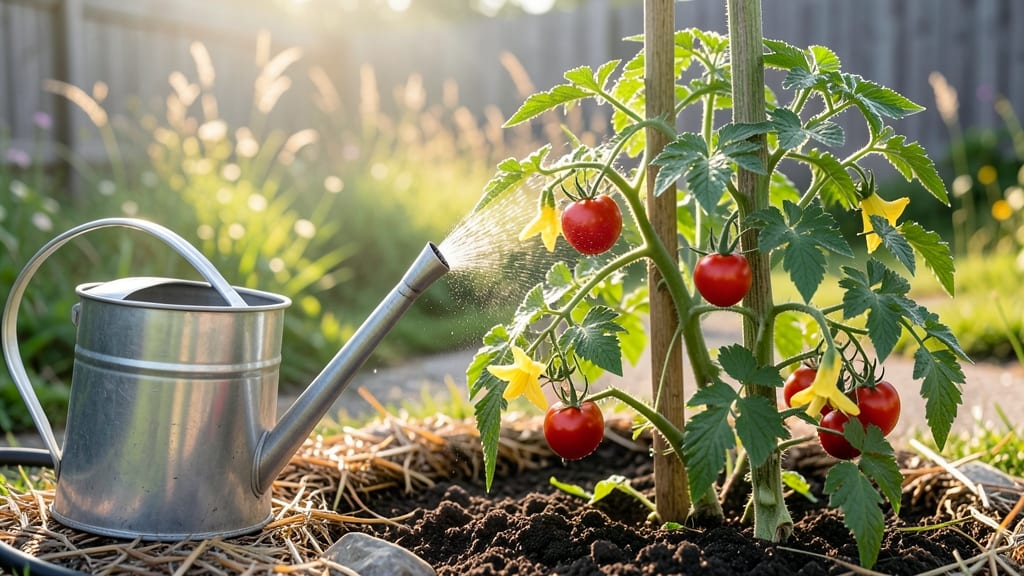
To water tomato plants properly, focus on deep, consistent soaks that reach the roots—this is the key to juicy fruit and strong vines 🍅.
Most gardeners overlook how watering habits directly impact yield. Too little, and your plants wilt or develop blossom end rot. Too much, and fungal diseases take over. The solution isn’t just timing—it’s technique. Below, I’ll show you the exact method that keeps my plants thriving, even in Zone 6a summers.
Whether you’re growing in containers or in-ground, the rules change slightly. Containers dry out faster, while in-ground plants need deeper roots. I’ll break down the schedule by growth stage—from seedlings to heavy fruit—so you know exactly when and how much to water for maximum results.
Ready to stop guessing and start growing like a pro? You’ll learn how to spot thirsty plants, fix common mistakes, and adjust for heat waves or drought. Let’s turn your watering routine into a game-changer for your harvest.
The deep soak watering method: why shallow watering ruins tomato plants
Every time I see gardeners sprinkling water lightly over their tomato plants, I cringe a little—because those poor plants are missing out on the root-deep hydration they desperately need. Tomatoes aren’t just thirsty; they’re built for deep soil exploration.
When we water shallowly, we’re essentially starving their roots, forcing them to compete for moisture in the top inch of soil where fungal diseases thrive. This is why your cherry tomatoes might look lush but produce small, cracked fruit—their roots aren’t getting the consistent moisture they crave.
The problem starts with how tomato plants grow. Their roots naturally spread 12-18 inches deep when given the right conditions, but shallow watering keeps them confined to the top 2 inches of soil. This creates a stress response where the plant prioritizes survival over fruit production.
Worse yet, those surface roots become sitting ducks for blossom end rot (caused by calcium deficiency from inconsistent moisture) and early blight fungus, which loves damp foliage from light sprinkling.
Here’s the science: When you water deeply, you trigger a hydraulic lift effect. Moisture moves up from lower soil layers, encouraging roots to grow downward where they can access nutrient-rich subsoil.
This isn’t just theory—studies from the University of California Cooperative Extension show that deeply watered tomato plants develop 30% more root mass and produce 25% larger fruit compared to shallow-watered counterparts. The difference? One method feeds the plant; the other just wets the leaves.
| Watering Method | Root Development | Nutrient Uptake | Disease Risk | Fruit Quality |
|---|---|---|---|---|
| Deep Soak | Encourages 12-18" deep roots 🌱 | Maximizes access to subsoil nutrients 🌿 | Low risk (dry foliage) ✅ | Juicy, large fruit 🍅 |
| Shallow Sprinkling | Surface roots only (0-2") 🌱💀 | Limited to topsoil nutrients 🌿🚫 | High risk (fungal diseases) ❌ | Small, cracked fruit 🍅💔 |
Source: UC Cooperative Extension Tomato Research
Let me show you what happens when you get it wrong. Blossom end rot—that telltale black scab on the bottom of tomatoes—isn’t just about calcium. It’s a moisture stress symptom.
When soil dries out unevenly (like after a light sprinkle), the plant can’t transport calcium to developing fruit fast enough. The result? 50% of your harvest might be ruined if you’re not careful.
Then there’s wilting in the heat—not because the plant is thirsty, but because its roots can’t reach water deep enough to sustain it during the day.
Fixing these issues starts with your watering routine. If you’ve already seen leaf curl or yellowing between veins (signs of underwatering), don’t panic. First, water deeply for 10-15 minutes until water runs out of the drainage holes in containers or appears 6 inches below the surface in garden beds.
Then, mulch heavily with straw or wood chips to retain moisture. For blossom end rot, add a 1 tbsp of Epsom salt per gallon of water once a week to boost magnesium and calcium uptake.
One of my biggest mistakes early on was assuming that more frequent watering meant better care. I’d sprinkle my tomatoes every morning, only to watch them develop powdery mildew on their leaves. The lesson? Deep soaks less often beat light sprinkles daily.
Aim for 1-1.5 gallons per plant every 3-5 days, adjusting for your climate. In hot, dry summers, you might need daily deep watering, while cooler months can stretch that to weekly.
Here’s a pro tip: Use a moisture meter or the finger test to check soil depth. Stick your finger 2-3 inches down—if it feels dry, it’s time to water. If it’s damp, wait another day.
This simple habit saved my heirloom tomatoes last summer when a heatwave hit. The key is consistency: Your tomato plants should never experience dry-wet-dry cycles, as this stresses them and reduces yields.
Remember, tomatoes aren’t just growing fruit—they’re building a root system for next year’s harvest. Every deep soak you give them today is an investment in bigger, healthier plants tomorrow.
And trust me, when you see your first pound-per-plant tomatoes instead of golf-ball-sized ones, you’ll never go back to shallow watering again. The effort is worth it—for juicier tomatoes, fewer diseases, and a garden that actually feeds your roots (literally!).
Tomato plant watering schedule by growth stage: morning vs. evening timing
Watering tomatoes isn’t a one-size-fits-all task—it changes dramatically as your plants grow. Seedlings need gentle moisture to prevent rot, while flowering plants demand consistent hydration for fruit set. The timing matters too: morning watering reduces fungal risks, while evening sessions can invite disease.
Let’s break down the perfect schedule by growth stage so you never over- or under-water again.
Your tomato’s watering needs shift with each growth phase. Seedlings (first 4-6 weeks) only need ½ inch of water weekly, while mature plants during fruiting may need 1-1.5 gallons per week. The key is deep, infrequent watering—never letting the soil dry out completely but avoiding soggy roots.
Here’s how to tailor your approach at every stage, plus the best times to water for maximum absorption and disease prevention.
🌱 Visual Guide: Tomato Watering by Stage
| Growth Stage | Watering Time | Frequency | Amount per Session | Key Tips |
|---|---|---|---|---|
| Seedling (0-4 weeks) | Morning (7-9 AM) | Every 2-3 days | ¼ inch (light mist) | Keep soil consistently moist, not soggy. Use a spray bottle for seedlings. |
| Vegetative (4-6 weeks) | Morning (8-10 AM) | Every 3-4 days | ½ inch (deep soak) | Encourage root growth with deeper watering. Avoid wetting leaves. |
| Flowering (6-8 weeks) | Morning (9-11 AM) | Every 2-3 days | ¾ inch (consistent moisture) | Critical for fruit set. Mulch to retain moisture and prevent stress. |
| Fruiting (8+ weeks) | Morning (10 AM or earlier) | Daily (hot weather) or every other day (mild) | 1-1.5 gallons (deep soak) | Prioritize root zone hydration. Drip irrigation works best here. |
Morning watering is non-negotiable for tomatoes, especially during flowering and fruiting stages. Watering in the evening leaves foliage damp overnight, creating the perfect conditions for fungal diseases like blight. Aim to finish watering by 10 AM—this gives leaves time to dry before humidity peaks.
For drought-prone areas, water deeply in the early morning and mulch heavily to lock in moisture.
Container-grown tomatoes dry out faster than in-ground plants, so check soil moisture daily during summer. Stick your finger 2 inches deep—if it’s dry, water thoroughly. For heavy clay soils, reduce frequency but increase volume to prevent waterlogging.
Pro tip: Use a moisture meter for accuracy, especially in unpredictable climates where rainfall varies wildly.
Adjust your schedule based on weather and plant signals. If leaves curl or tomatoes develop blossom end rot, you’re likely underwatering. Yellowing leaves? You might be overdoing it.
Always water at the base of the plant and avoid overhead sprinklers to keep foliage dry. With this stage-by-stage approach, you’ll harvest juicier, healthier tomatoes with minimal disease pressure.