
How To
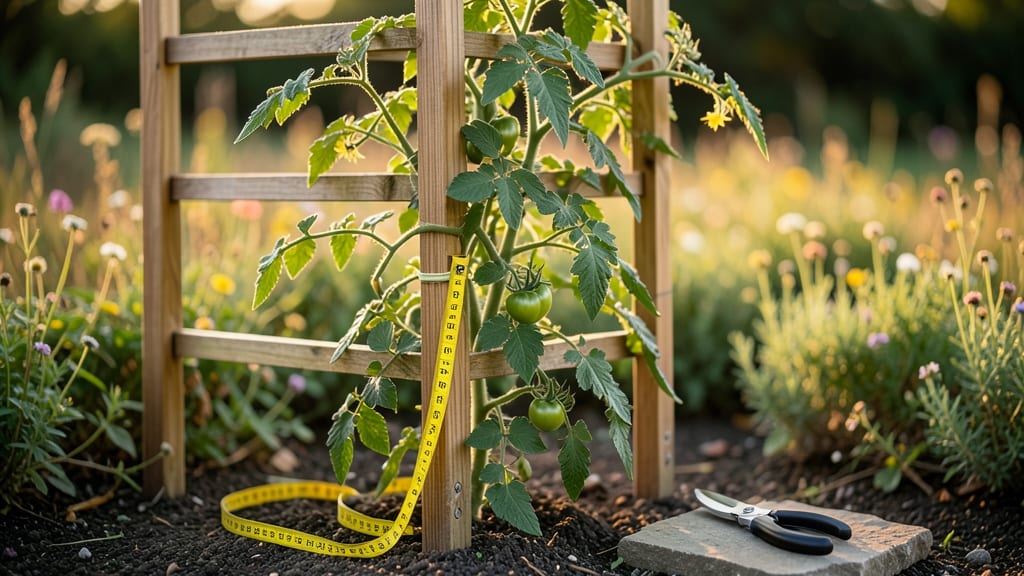
Letting tomato plants grow too tall means fewer tomatoes, not more. 🌱 Determinate varieties top out at 3-5 feet, while indeterminate types can climb to 6-10 feet—but only if you prune and trellis properly.
The key isn’t just height; it’s balancing airflow, sunlight, and support to keep plants productive.
Most gardeners stop indeterminate plants at 6-8 feet to prevent disease and overcrowding. Prune suckers regularly and use sturdy cages or stakes to redirect energy into fruit, not just vines.
Determinate plants need minimal support—their bushy shape naturally contains growth, but they still benefit from a 4-foot-tall cage to keep stems upright.
📚 In This Guide
- What you need
- Instructions
- Tips and common mistakes
- Wrapping up and next steps
What you need
- ● Tomato seeds or seedlings: Choose varieties suited to your climate (e.g., determinate for compact growth or indeterminate for vining). Start with 3–6 plants for a small garden.
- ● Containers or garden bed: For determinate varieties: 5-gallon pots or a 12-inch-deep garden bed (they stay 3–4 ft tall).
- ● For indeterminate varieties: 10–20-gallon pots or a deep garden bed (18+ inches) (they can grow 6–10+ ft!).
- ● Well-draining potting mix: 1–2 bags (2–3 cubic feet) of organic mix (e.g., Miracle-Gro Garden Soil or homemade compost blend).
- ● Support structures: For determinate plants: Cages (4–5 ft tall) or stakes (3–4 ft).
- ● For indeterminate plants: Trellises (6–10+ ft tall), tomato towers, or strong bamboo stakes (5–6 ft).
- ● Fertilizer: Balanced organic fertilizer (10-10-10) or compost (1 cup per plant every 3–4 weeks).
- ● Watering can or hose: With a gentle spray nozzle to avoid damaging stems.
- ● Pruning shears: Bypass pruners (for clean cuts without crushing stems).
- ● Mulch: Straw or shredded leaves (2–3 inches) to retain moisture and suppress weeds.
- ● Plant ties: Soft velcro or cloth strips to secure vines to supports.
- ● Drip irrigation system: For consistent watering (especially for large plants).
- ● Shade cloth: 30–50% coverage for hot climates to protect young plants.
- ● Growth regulator (e.g., B-Nine): For indeterminate varieties to control height (use sparingly!).
- ● Soil pH test kit: To ensure pH is between 6.0–6.8 (tomatoes thrive here!).
How to determine the ideal height for your tomato varieties
Tomato height matters more than you think—get it wrong and you’ll sacrifice yield, health, or even harvest access.
🌱 Step 1: Identify Your Tomato Variety’s Natural Growth Habit
First, check your seed packet or plant tag for the variety name—this tells you everything. Determinate varieties (like 'Roma' or 'Celebrity') grow to a predictable height, often 3-5 feet, and stop when fruit sets. Indeterminate types (such as 'Sungold' or 'Beefsteak') keep growing until frost, reaching 6-10+ feet if unchecked. I always mark my plants with a flag at the base to track height weekly—it’s the only way to catch overgrowth early.
Here’s the thing: determinate tomatoes are like clockwork—they’ll produce a single flush of fruit, then call it quits. Indeterminates, though, are marathon runners, fruiting all season long if you give them space. If you’re unsure, look for terms like "bush" (determinate) or "vining" (indeterminate) in descriptions.
☀️ Step 2: Adjust Support Based on Expected Height
For 3-5 foot determinate varieties, a 4-foot cage or 2-3 stakes spaced 18 inches apart works perfectly. I drive stakes into the ground at planting, then weave twine in a spiral as the plant grows—this prevents stem damage when tying. For 6-8 foot indeterminates, opt for a 6-foot cage or tall bamboo stakes (at least 8 feet) with strong twine. Pro tip: bury stakes half their length for stability, especially in windy areas.
If you’re growing in containers, indeterminate tomatoes need at least a 5-gallon pot—root-bound plants struggle to support their own weight. I’ve seen heavy fruit loads snap stems clean off when plants are crowded. For determinates, a 3-gallon pot suffices, but add a small cage upfront to avoid mid-season scrambling.
✂️ Step 3: Prune Strategically to Control Height and Boost Yield
For determinate tomatoes, minimal pruning is key—just remove suckers (the small shoots in the leaf axils) to improve airflow. These plants focus energy on fruit, not vertical growth, so pruning too much reduces yield. I pinch off suckers when they’re no bigger than a pencil eraser—any larger and you risk stressing the plant.
Indeterminate varieties, though, thrive with aggressive pruning. Remove all suckers below the first flower cluster, then prune one-third of the lowest leaves when the plant hits 3 feet. This redirects energy upward and prevents disease by improving airflow. I also top indeterminates at 6-7 feet unless they’re in a greenhouse—otherwise, the weight of fruit can snap stems. Watch for new growth above the top flower cluster—this is your signal to stop pruning.
💧 Step 4: Monitor Height and Adjust Watering/Nutrition
Tall, leggy growth? You’re likely overwatering or underfeeding. Indeterminate tomatoes need deep watering 2-3 times weekly (check soil 2 inches down—it should feel like a damp sponge). Add a balanced fertilizer (10-10-10) every 2-3 weeks once flowers appear. I’ve seen plants stretch 12+ feet when nitrogen-heavy fertilizers dominate, but the fruit stays small and bland.
For determinates, reduce water slightly as fruit sets to concentrate sugars. Let the top inch of soil dry between waterings, or you’ll dilute flavor and encourage disease. I always mulch with straw to retain moisture without smothering the base—this keeps stems sturdy and prevents soil-borne pathogens from splashing up.
⏰ Step 5: Harvest at Peak Height for Variety-Specific Success
Determinate tomatoes stop growing when fruit ripens, so harvest within 2-3 weeks of their peak height to avoid overripe mess. I pick every other day once clusters start coloring—this prevents sunscald and encourages new fruit. For indeterminates, harvest continuously until frost, but watch for height over 8 feet—this is your cue to trim the top growth to redirect energy to existing fruit.
Here’s the golden rule: Never let indeterminates exceed 10 feet unless they’re in a trellis system. The weight of a 2-pound beefsteak tomato at the top of a 10-foot stem will snap it like a twig. I’ve lost entire harvests this way—don’t make my mistake. If your plant tops out at 7 feet but keeps producing, you’re golden. If it’s 9 feet and still climbing, it’s time to prune.
Tips & tricks for perfect tomato plant growth management
Let me share the hard-won lessons that'll help you avoid the common pitfalls of tomato gardening.
Variety-Specific Support: When selecting support structures, match them precisely to your tomato type. For determinate varieties reaching their 3-5 foot peak, a 4-foot cage provides just enough room without encouraging excessive height. I've seen gardeners use 5-foot cages for determinates, but this creates unnecessary space that can lead to sprawling growth and poor air circulation. For indeterminates, the 6-foot cage recommendation is your baseline—anything shorter risks stem breakage from heavy fruit loads, while taller cages (up to 8 feet) give you that extra buffer for vigorous growers.
Pruning Precision: The "pinch suckers when they're no bigger than a pencil eraser" rule is non-negotiable for determinates, but indeterminates need a more nuanced approach. I've learned that pruning one-third of the lowest leaves at the 3-foot mark creates that perfect balance—too much too soon stresses the plant, while too little defeats the purpose of improved airflow. For indeterminates, watch for new growth above the top flower cluster as your natural stopping point; this is where the plant naturally redirects its energy to fruit production rather than vertical growth.
Container Considerations: The 5-gallon pot minimum for indeterminates isn't just about root space—it's about structural integrity. I once grew a Sungold in a 3-gallon pot, and by mid-summer, the plant was toppling over under its own fruit weight. The key is burying stakes halfway (3 feet deep) to create that stable anchor. For container determinates, that 3-gallon pot works perfectly when paired with a small cage installed at planting time—this prevents the mid-season scramble to add support when the plant is already laden with fruit.
Height Monitoring System: I've developed a simple flag system that works wonders—plant a small colored flag at the base when you transplant, then mark the stem weekly with a different colored flag at each foot of growth. This visual timeline helps you track exactly when your indeterminate hits the crucial 6-7 foot pruning point. For determinates, the flags help you monitor when growth slows as fruit sets, signaling it's time to reduce water slightly to concentrate sugars in the developing tomatoes.
Pro Tips for How Tall Should You Let Tomato Plants Grow
- Let me share the hard-won lessons that'll help you avoid the common pitfalls of tomato gardening.
- Variety-Specific Support: When selecting support structures, match them precisely to your tomato type.
- Pruning Precision: The "pinch suckers when they're no bigger than a pencil eraser" rule is non-negotiable for determinates, but indeterminates need a more nuanced approach.
Frequently asked questions
Got questions about managing your tomato plant height? You’re not alone! Here are answers to the most common concerns—whether you're a first-time gardener or a seasoned pro fine-tuning your technique.
How do I know when my tomato plant is too tall?
If your indeterminate varieties (like Sungold or Better Boy) exceed 6–8 feet without support, they risk toppling or producing smaller fruit. For determinate types (e.g., Roma or Celebrity), heights over 4–5 feet may signal overgrowth—prune to encourage bushier growth and better air circulation.
Should I prune tomato plants to control height?
Yes! Pruning indeterminate varieties (remove suckers from the stem’s "V" junctions) keeps them manageable and directs energy to fruit production. For determinates, light pruning (removing lower leaves) improves airflow and reduces disease risk. Pro tip: Use clean shears and prune in the morning to avoid stressing the plant.
Will cutting back tomato plants reduce my harvest?
Not if done correctly! Pruning indeterminate plants actually boosts yield by focusing resources on fewer, larger fruit. For determinate types, minimal pruning (just lower leaves) prevents overcrowding. Avoid heavy pruning late in the season—it can stunt remaining fruit development.
Can I grow tall tomato plants in containers?
Use large pots (at least 5 gallons) with sturdy stakes or cages. Indeterminate varieties may need trellising to climb vertically, saving space. Ensure containers have drainage holes and fertilize regularly—root-bound plants struggle to support their own weight.
What if my tomato plant grows too fast and collapses?
Act quickly! Prop up the stem with a bamboo stake or tomato cage immediately. For severe cases, trim the top leaves to reduce weight, then gradually prune suckers. Add mulch to stabilize soil and prevent wind damage. Warning: Overwatering or sudden growth spurts (from too much nitrogen) can weaken stems—balance is key!
Does temperature affect how tall tomato plants grow?
Yes! Cool nights (<50°F) slow growth, while hot spells (>90°F) can stunt plants or cause blossom drop. Use shade cloth for indeterminate varieties in peak summer. For determinates, consistent warmth (60–85°F) promotes steady, manageable growth. Monitor soil moisture—stress from heat or drought weakens stems.
Wrapping up and next steps
Finding the perfect height for your tomato plants isn’t just about space—it’s about harvesting happiness! 🌱 Whether you’re growing cherry tomatoes at 2 feet or indeterminate giants soaring to 10 feet, the key is balancing support, pruning, and your garden’s layout.
With the right approach, you’ll enjoy bountiful, healthy fruit—and maybe even a few surprises along the way.
Ready to put your new knowledge into action? Grab those pruners and start experimenting! Try a mix of varieties in your next planting, and don’t forget to share your tallest (or tastiest!) harvests with fellow gardeners. Happy growing! 🍅✨