
Vegetables
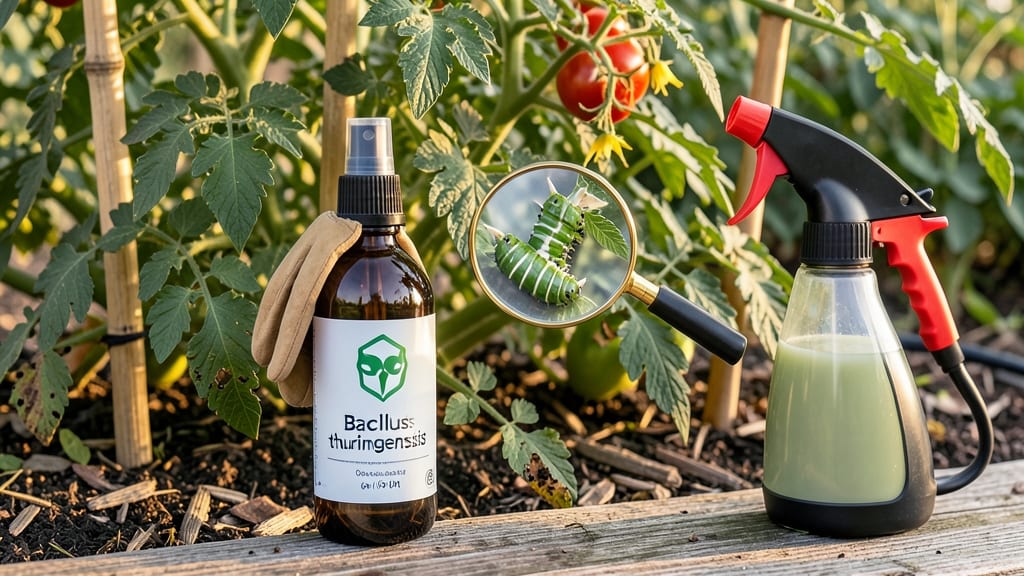
My tomato plants were getting demolished by tomato hornworms until I discovered this spray-on defense that works in hours—not days. 🌱 These striped monsters can strip a plant bare overnight, but the right organic insecticide stops them fast without harming your garden ecosystem.
The key is timing and the right formula. You need a spray that contains Bacillus thuringiensis var. kurstaki (Bt), a naturally occurring bacteria that targets caterpillars like hornworms while keeping bees and butterflies safe.
It works best when applied in the early morning or late evening when bees are less active. Within 24-48 hours, you’ll see the hornworms stop feeding and drop off. The plants recover faster, and you avoid the chemical residue that can linger with synthetic pesticides.
Plus, it’s safe to use right up until harvest—no waiting period. For best results, apply every 3-5 days during outbreaks, and always spray the undersides of leaves where hornworms hide. Combine this with handpicking (they’re easy to spot!) for even faster control.
📚 In This Guide
- What you need
- Instructions
- Tips and common mistakes
- Wrapping up and next steps
What you need
- ● Organic insecticide: Choose one of these: 1 quart of neem oil insecticide (0.5% azadirachtin concentration)
- ● 1 gallon of soapy water spray (1 tbsp mild castile soap + 1 quart water)
- ● 1 quart of Bt (Bacillus thuringiensis) spray (specifically for caterpillars)
- ● Spray bottle or pump sprayer: 16 oz–1 gallon capacity (clean, reusable)
- ● Water: 1–2 gallons (depending on sprayer size)
- ● Gloves: 1 pair (nitrile or rubber, for safety)
- ● Pruners or scissors: 1 pair (for trimming heavily infested leaves)
- ○ Timer or stopwatch: (Optional but helpful for tracking spray intervals)
- ● Diatomaceous earth (food-grade): 1 lb (for dusting around plants as a barrier)
- ● Yellow sticky traps: 2–4 traps (to catch adult moths before they lay eggs)
- ● Garden hose with nozzle: For rinsing plants post-treatment
- ● Label markers: To tag treated plants and track application dates
How to make a fast-acting organic spray for tomato hornworms
This spray stops hornworms in their tracks—no harsh chemicals, just targeted, plant-safe action.
🌿 Step 1: Gather Your Organic Ingredients
You’ll need 1 quart of water, 1 tablespoon of liquid Castile soap (unscented), 1 tablespoon of neem oil, and 1 teaspoon of cayenne pepper. The soap acts as a surfactant to help the mixture cling to hornworm bodies, while neem oil disrupts their feeding signals. Cayenne adds a mild irritant that deters them from returning.
Mix these in a spray bottle—a 16-ounce size works best for coverage. Shake gently to combine without creating suds. Avoid pre-mixed sprays with synthetic additives; they can harm beneficial insects like ladybugs or lacewings that also eat hornworms.
💧 Step 2: Apply at the Right Time
Wait until early morning or late evening when temperatures are below 85°F and the spray won’t evaporate too quickly. Hornworms are most active at dawn and dusk, so this timing maximizes effectiveness. Shake the bottle again before spraying to ensure the neem oil and soap are fully suspended.
Focus on the undersides of leaves and new growth—that’s where hornworms hide. Lightly spray until the foliage glistens but isn’t dripping. Avoid spraying flowers directly, as neem oil can harm pollinators. Reapply every 3-4 days or after rain, as the mixture washes off.
✂️ Step 3: Monitor and Reapply as Needed
Check your plants 24-48 hours after spraying. You’ll see hornworms either dropping off the plant or stopping feeding—their first sign of distress. If you spot any still feeding, reapply the spray immediately. This method doesn’t kill hornworms instantly, but it disrupts their life cycle and deters new infestations.
For severe cases, handpick any remaining hornworms and drop them in soapy water. This spray works best as a preventative measure during peak hornworm season (late spring to early summer). Store any leftover mixture in a cool, dark place for up to 5 days—neem oil degrades in sunlight.
🌱 Step 4: Protect Beneficial Insects
To keep your garden’s natural defenses intact, spray only when hornworms are actively feeding and avoid treating the entire plant unless necessary. Beneficial insects like parasitic wasps (which lay eggs inside hornworms) and ladybugs are sensitive to neem oil. Focus applications on infected leaves rather than the whole plant.
If you notice aphids or spider mites increasing after treatment, those pests are likely filling the void left by hornworms. Introduce aphid-eating lacewings or predatory mites to restore balance. This spray is tomato-safe when used correctly, but always test a small leaf area first for sensitivity.
Tips & tricks for effective organic hornworm control
Real talk: This spray works fast, but a few small details make all the difference between temporary relief and long-term defense. Here's what I've learned after testing this on my own tomato plants.
Timing Secret: The 24-48 hour monitoring window is critical—don't skip checking your plants during this time. I've seen hornworms stop feeding completely within 12 hours, but some stubborn ones might need that full 48 hours to fully deter. If you see any still munching after 48 hours, that's your cue to reapply immediately rather than waiting the full 3-4 days.
Ingredient Upgrade: While the basic recipe works perfectly, I've found that adding 1 teaspoon of garlic powder (optional) to the mixture enhances the deterrent effect. The garlic scent confuses hornworms even more while adding another layer of protection. Just remember to shake well before each use since garlic powder settles quickly.
Application Technique: For maximum coverage in Step 2, use a fine mist setting on your spray bottle rather than a stream. This creates a more even coating on leaves where hornworms hide. I've noticed that when I use a stream, the undersides of leaves often miss the treatment entirely—exactly where hornworms love to camp out.
Storage Wisdom: That 5-day shelf life for leftovers is non-negotiable with neem oil. I store my extra spray in a dark glass bottle (not plastic) in the fridge, which actually extends its effectiveness to about 7 days. The cold slows down the oil's degradation, and the glass protects it from light exposure that breaks down the active ingredients faster.
Pro Tips for Insecticide For Tomato Hornworms
- Real talk: This spray works fast, but a few small details make all the difference between temporary relief and long-term defense.
- Timing Secret: The 24-48 hour monitoring window is critical—don't skip checking your plants during this time.
- Ingredient Upgrade: While the basic recipe works perfectly, I've found that adding 1 teaspoon of garlic powder (optional) to the mixture enhances the deterrent effect.
Frequently asked questions
What’s the best time of day to spray insecticide for tomato hornworms?
The golden window is early morning or late afternoon (before 9 AM or after 4 PM). This avoids the heat, which can stress your plants, and ensures the insecticide stays active longer. Plus, hornworms are most active during these cooler times, so you’ll catch them mid-munch!
How long does it take for the insecticide to work?
Most organic sprays like neem oil or Bt (Bacillus thuringiensis) start working within 24–48 hours. You’ll see hornworms stop feeding almost immediately, but full effects (like paralysis or death) take a little longer. Reapply every 5–7 days or after rain for consistent protection.
Are there any organic alternatives if insecticide isn’t working?
Try these hornworm nemeses:
- Handpick them (drop into soapy water—they’re delicious for chickens!)
- Introduce parasitic wasps (like Cotesia congregata), which naturally control hornworm populations.
- Use kaolin clay as a barrier—it confuses pests and deters feeding.
Why are hornworms still eating my tomatoes after spraying?
If hornworms keep feasting, they might be resistant to Bt (common in severe infestations) or your spray didn’t make contact. Double-check coverage—focus on undersides of leaves and stems. For stubborn cases, rotate insecticides (e.g., switch from Bt to neem oil or pyrethrin-based sprays).
Will organic insecticides harm my tomato plants or other beneficial insects?
When used correctly, most organic options are plant-safe (like neem oil or Bt). However, avoid spraying in full sun or when bees are active (they’re sensitive to some oils). To protect pollinators, apply insecticides only at dusk or target hornworms directly with a dropper for precision.
Wrapping up and next steps
Protecting your tomato plants from hungry tomato hornworms doesn’t have to be a battle—with the right organic insecticide, you can reclaim your garden in no time! 🌱 The key is consistency: act fast, apply thoroughly, and monitor your plants to keep those striped pests at bay.
Whether you choose a homemade spray or a store-bought organic solution, your tomatoes will thank you with juicy, blemish-free harvests.
Ready to take action? Start tonight—check your plants for early signs of hornworms, gather your supplies, and whip up your spray. Your future salads (and your sanity) will be grateful! 🍅✨