
Vegetables
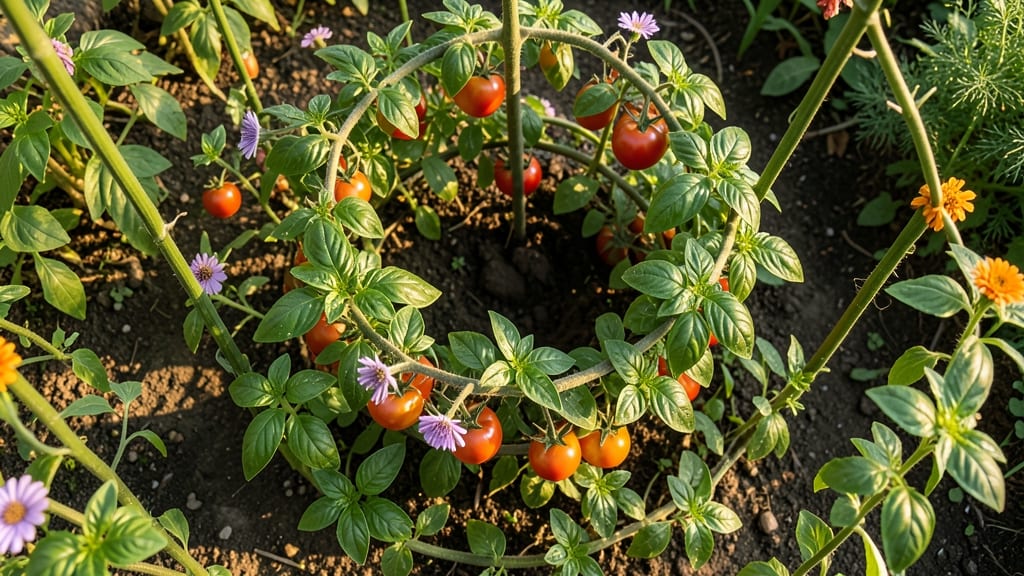
Maximize your tomato harvest without expanding your garden footprint. These 10 space-saving tomato garden layouts prove you don't need acres to grow a bounty—just smart planning and vertical thinking.
Vertical Trellis Tower System
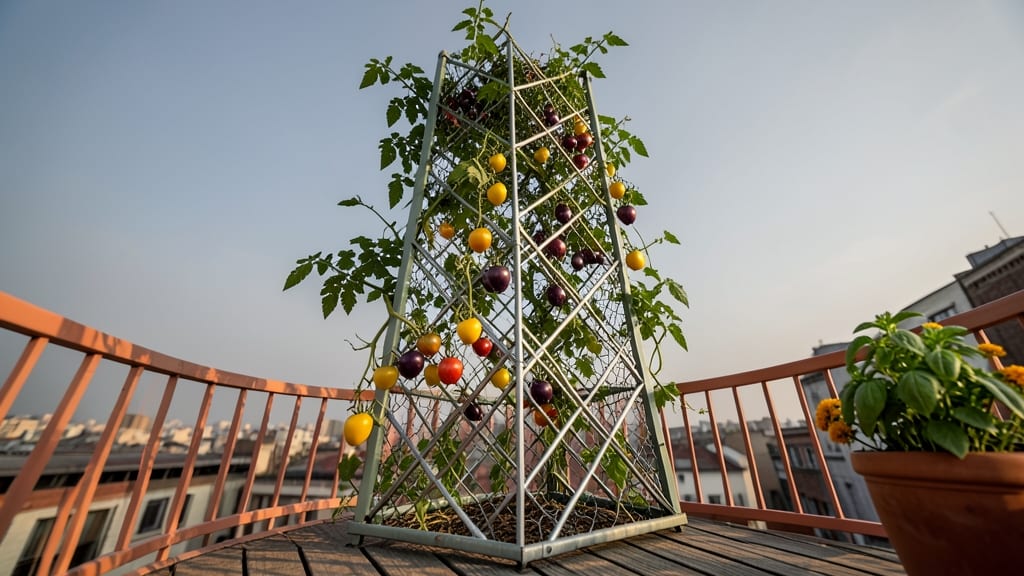
Turn your tiny balcony or patio into a tomato powerhouse with a 6-foot vertical trellis tower—the ultimate space-saver for city gardeners. This freestanding structure lets indeterminate varieties (like Sungold or Cherokee Purple) grow upward instead of sprawling, giving you double the yield in half the footprint.
Install the trellis in a sunny corner where it gets 6+ hours of direct sun daily, and train vines with soft plant ties to prevent damage. The open lattice design encourages airflow, reducing disease risk while keeping fruit accessible. For best results, fertilize with a balanced organic mix every 3-4 weeks and prune suckers regularly to focus energy on fruit production.
This system is perfect for renters or urbanites with limited space—no permanent installations required! Just add potting soil, plant, and watch your tomatoes cascade down the sides while keeping your floor clear. 🌱
Hanging Basket Tomato Planters
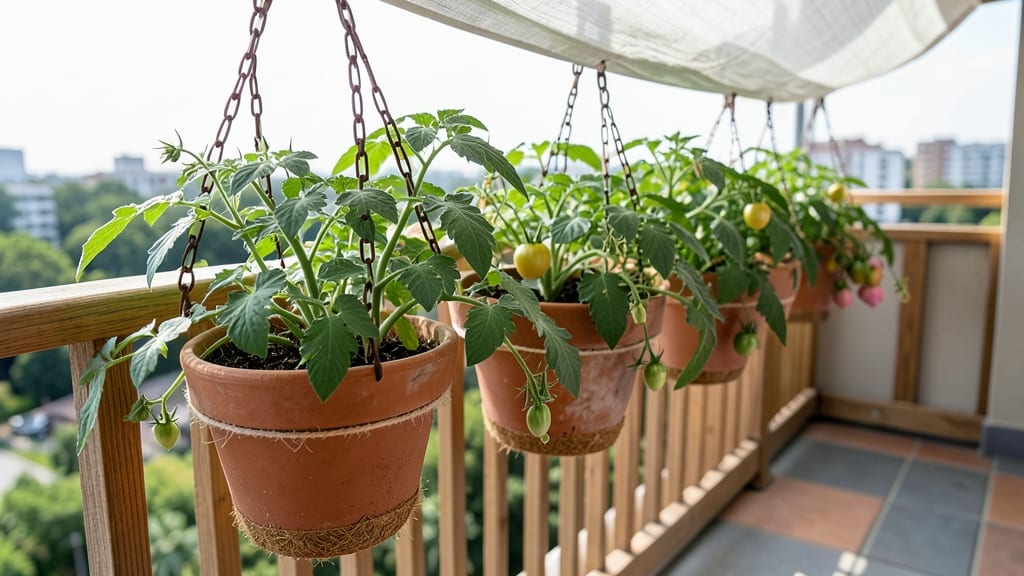
If you're a renter, balcony gardener, or simply short on ground space, hanging basket tomato planters turn your deck, patio, or porch into a productive tomato haven. These clever systems let you grow 4-6 plants in a single unit while keeping foliage elevated—reducing disease risk from soil-borne pathogens.
Look for self-watering baskets with deep pockets (12+ inches) to support determinate varieties like 'Cherry Roma' or 'Tiny Tim.' Hang them where they receive 6-8 hours of sun daily, and water through the reservoir to maintain consistent moisture. The elevated design also makes harvesting easier and deters slugs and pests that lurk at ground level.
Perfect for urban dwellers or anyone with limited space, these baskets prove you don’t need a traditional garden bed to grow a bountiful tomato harvest. Plus, the cascading vines add a charming, productive focal point to any outdoor area. 🌱
Square Foot Tomato Grid
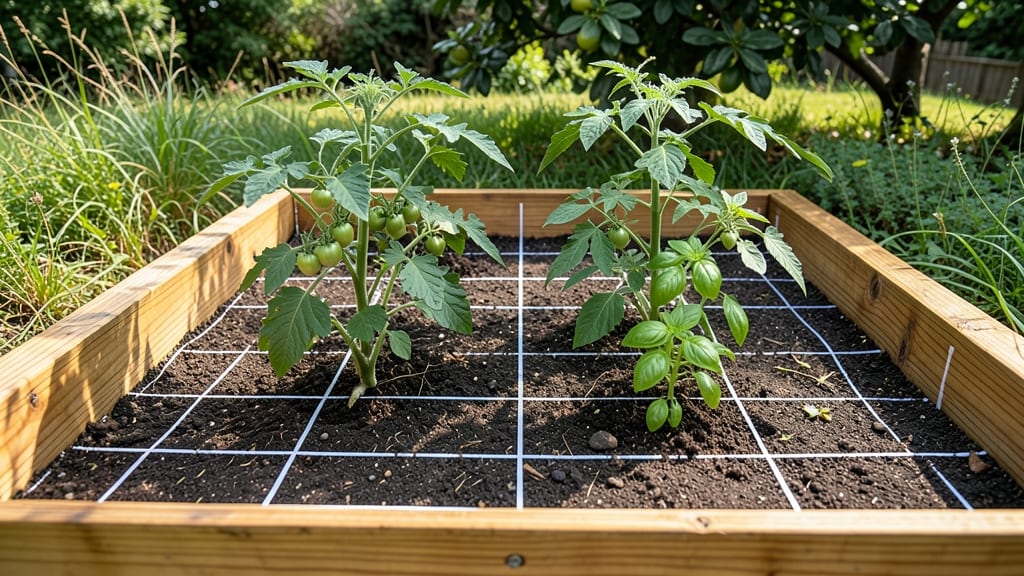
If you’ve ever struggled with tomato plants crowding each other or wondering how to maximize every inch of your garden, Mel Bartholomew’s square foot grid is the answer. This method transforms raised beds into a precise, high-yielding system where you can fit 1-4 tomato plants per square foot, making it perfect for dwarf varieties like ‘Tiny Tim’ or ‘Patio Princess’.
The key? Divide your raised bed into 1-foot squares using string or wooden dividers, then plant 1-4 seedlings per square based on their mature size. This prevents overcrowding, reduces disease risk, and ensures each plant gets optimal sunlight and nutrients. For indeterminate varieties, use cages or stakes within each square to keep vines contained. Watering is simpler too—just focus on each square individually.
This method is a game-changer for small-space gardeners, urban farmers, or anyone tired of wasted bed space. It’s especially great for beginners who want structure without the guesswork of traditional planting. 🌱
Pallet Wood Tomato Planters
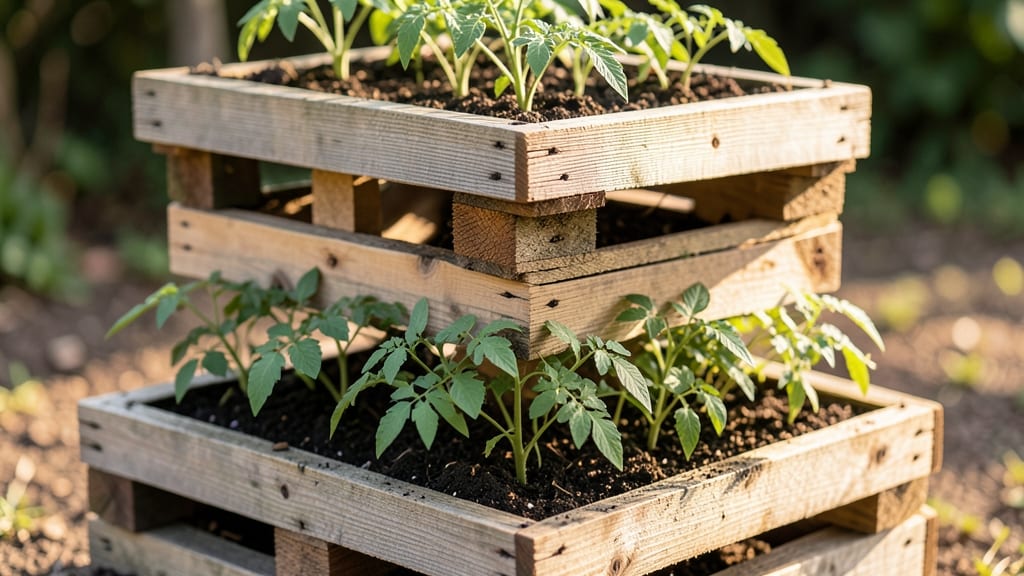
Turn discarded wooden pallets into a high-yield tomato garden without spending a dime on materials. This zero-waste solution transforms a single structure into a three-tiered growing system that fits 12+ plants in a footprint smaller than a standard raised bed.
Start by sanding and treating pallets with food-safe sealant to prevent splinters. Create vertical tiers by stacking pallets at different heights, then line them with landscape fabric to retain moisture. Plant determinate varieties like Roma or cherry tomatoes in the top tier and indeterminate types like Sungold in lower levels for continuous harvests. The rustic wood adds charm while providing excellent drainage.
This method is ideal for beginner gardeners with limited space or budget—just add soil, water, and sunlight for a productive, eye-catching display. 🌱
Espaliered Tomato Fences
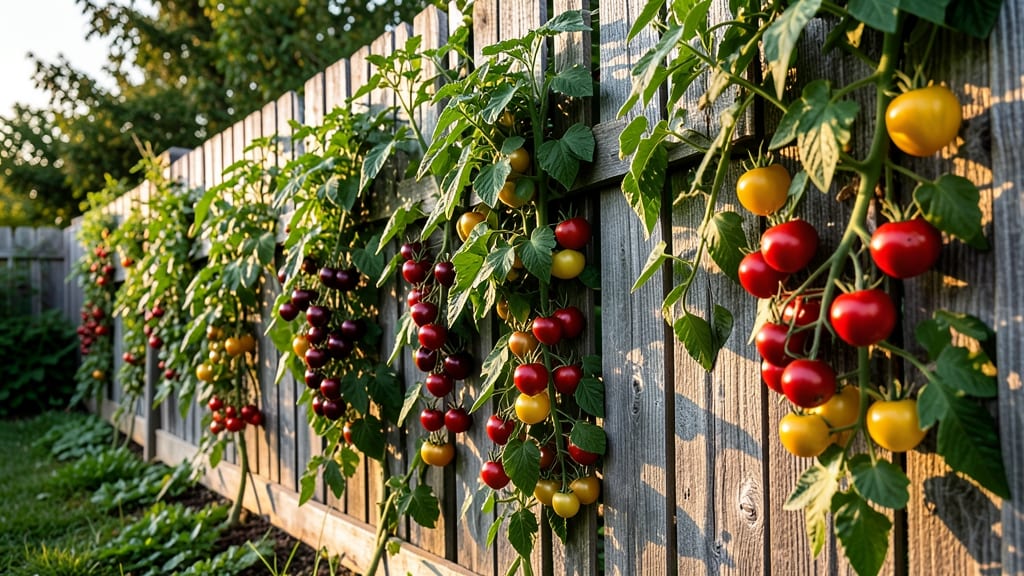
Turn your plain fence into a fruit-bearing privacy screen with espaliered tomatoes—a clever twist on traditional vertical gardening. Instead of growing upward, you train indeterminate varieties like 'Brandywine' or 'Sungold' to grow flat against a fence or wall, creating a lush, living barrier that produces tomatoes all season long.
Start by selecting a sturdy fence or trellis and prune young plants to encourage horizontal growth. Use soft ties or plant clips to gently guide vines along the structure, spacing new shoots about 12-18 inches apart for optimal airflow. This method works especially well in narrow spaces, like between a house and fence, where you’d otherwise struggle to fit tomato plants. Plus, the horizontal growth habit reduces the risk of disease by improving air circulation around the foliage.
This design is perfect for gardeners with limited ground space or those wanting to add a functional and decorative element to their property. The result? A year-round harvest and a stunning garden feature that doubles as a natural screen. 🌟
Stacked Pot Tomato Pyramid
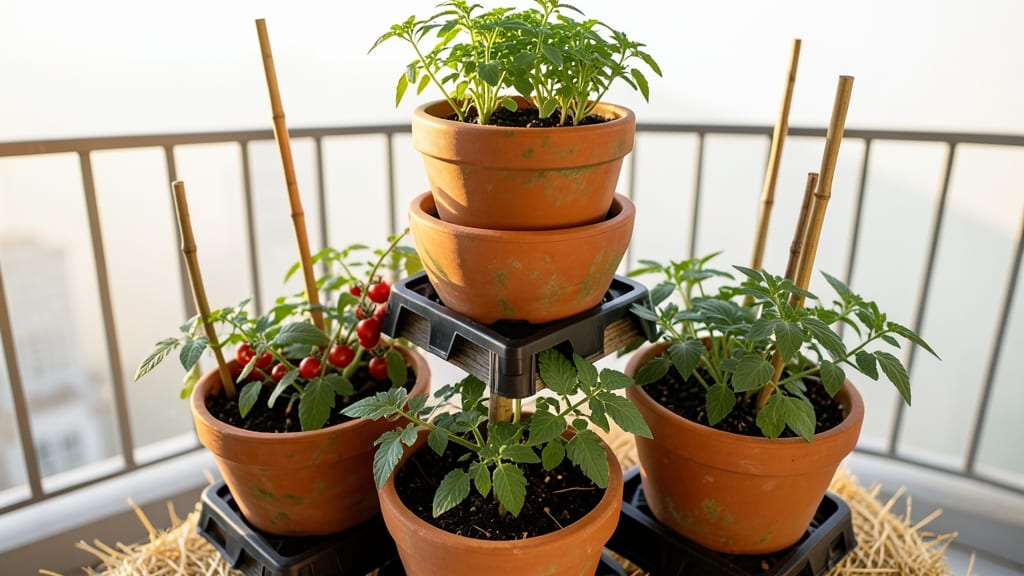
Turn your tiny balcony or apartment patio into a tomato powerhouse with a stacked pot pyramid—a vertical wonder that crams nine plants into the space of one! This modular system lets you grow cherry tomatoes, dwarf varieties, or even small indeterminate plants without sacrificing your precious floor space.
Start with a three-tiered pot stack (available in plastic or fabric) and plant three tomato seedlings per level, spacing them evenly. Use lightweight potting mix to avoid overloading the top tier, and add small stakes to support vines as they grow. Water from the top to ensure even moisture distribution, and rotate the pyramid weekly to guarantee all plants get 6 hours of sun—critical for fruit production.
This setup is ideal for urban gardeners with limited square footage or anyone who wants to experiment with multiple varieties without the commitment of a full garden bed. Plus, the cascading foliage adds a lush, productive focal point to any small space. 🌱
Window Box Tomato Train
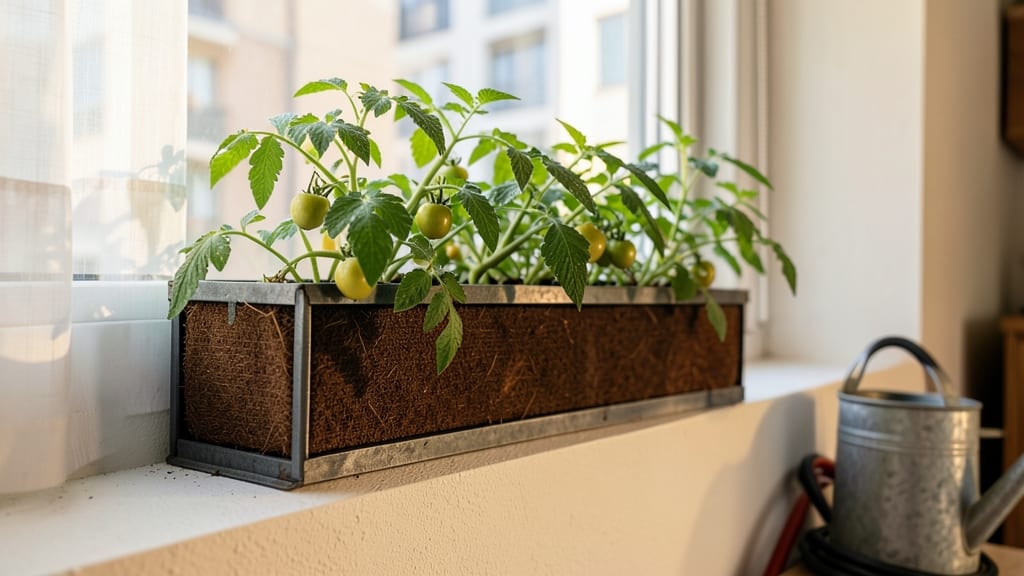
Turn your city apartment into a mini tomato paradise with window box tomato trains—a clever way to grow fresh fruit without sacrificing precious square footage. These narrow, deep boxes fit snugly under windowsills, turning overlooked spaces into productive growing zones perfect for determinate tomato varieties like 'Roma' or 'Patio Princess'.
Choose boxes at least 12 inches deep to accommodate roots and support 2-3 plants per window, spacing them 12-18 inches apart. Fill with well-draining potting mix and place where they receive 6+ hours of sun daily. For extra stability, secure boxes with brackets and add a trellis or cage to support heavy fruit. This method works especially well for urban dwellers with limited outdoor space but plenty of windows.
You’ll love the fresh tomatoes within arm’s reach—literally! This setup is ideal for beginners or anyone who wants to grow food without committing to a full garden. 🌱
Trench Tomato Planting
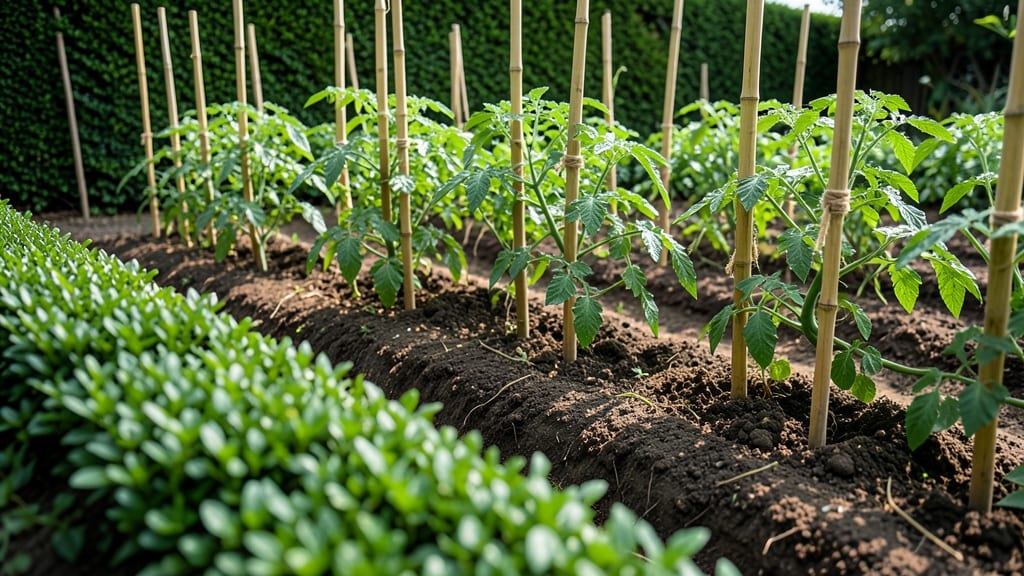
Struggling to fit more indeterminate tomato varieties into tight garden strips? Try trench planting—a hidden technique that lets roots sprawl horizontally while keeping vines upright, packing twice the yield into the same space.
Dig a shallow trench (6–8 inches deep) along your garden's edge, spacing plants every 12–18 inches along the length. The roots spread naturally in the trench while stakes or cages keep vines vertical, maximizing sunlight exposure. This method works especially well for heirloom varieties like 'Brandywine' or 'Cherokee Purple', which thrive when given extra room to explore underground.
Perfect for narrow beds or urban gardeners with limited width, trench planting turns wasted space into productive real estate—no trellises or complex setups required. 🌱
Greenhouse Corner Tomato Cage
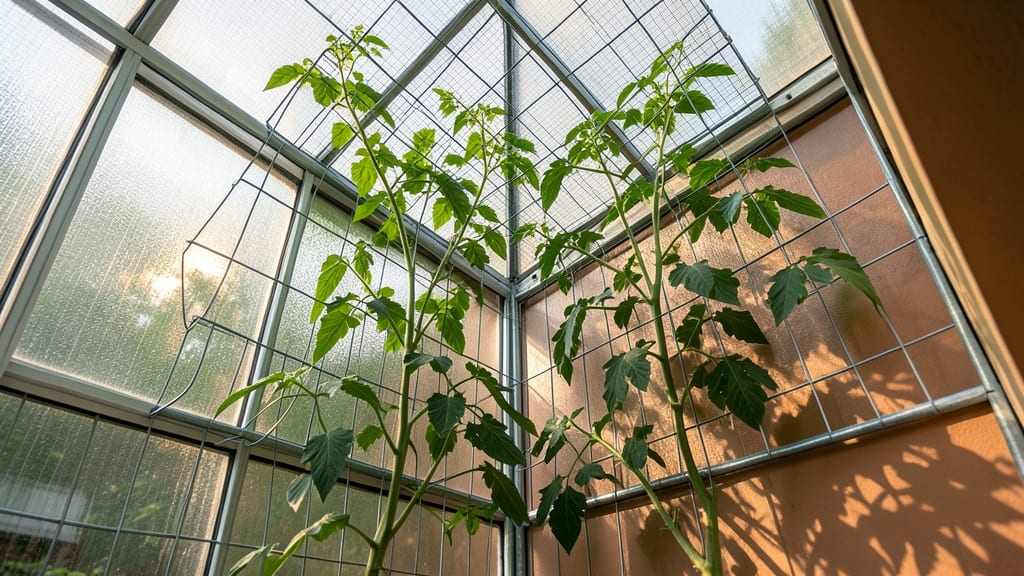
Turn your small greenhouse or sunroom into a year-round tomato haven without sacrificing square footage. A greenhouse corner tomato cage lets you grow 4-6 plants in just one corner, using specialized cages that support vines while keeping the space organized and pest-free.
Choose compact indeterminate varieties like 'Tiny Tim' or 'Micro Tom' to thrive in these cages, and place them near the brightest corner of your greenhouse. The cages provide structured support while allowing airflow to reduce disease risk. For extended growing seasons, start seeds indoors in early spring and transition them to the cages once they're 6-8 inches tall. This method is perfect for gardeners with limited outdoor space who still want a bountiful harvest. 🌱
Intercropped Tomato Basil Spiral

Transform your smallest garden corner into a fragrant, pest-resistant tomato powerhouse with an intercropped tomato basil spiral. This innovative design weaves tomatoes with basil and other herbs in concentric circles, creating a living ecosystem that maximizes vertical growth while naturally deterring pests like whiteflies and aphids.
Start by creating a raised bed mound about 18 inches high and 3 feet wide. Plant tomato seedlings at the center, then spiral outward with basil and other companion herbs like marigolds or thyme. Use cattle panels bent into a spiral shape to support vines vertically, saving space while encouraging airflow. The basil’s scent confuses pests, while its shallow roots won’t compete with tomatoes for nutrients.
This method is perfect for urban gardeners with limited space or anyone who loves the idea of a self-sustaining, aromatic garden. Plus, you’ll harvest fresh basil for cooking while your tomatoes thrive—double the reward in the same footprint! 🌱