
Vegetables
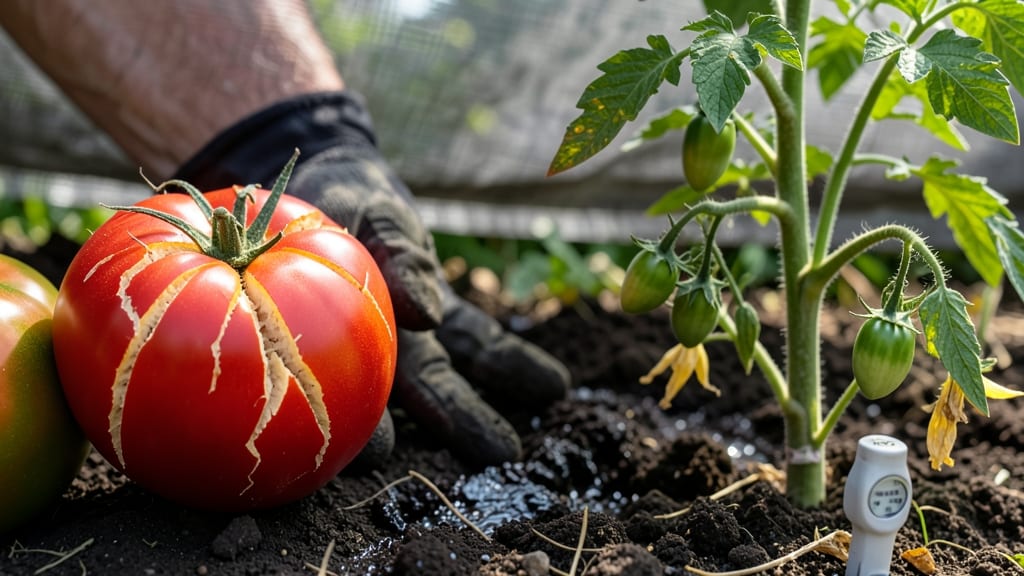
Tomato growth cracks turn your prize-winning fruits into sad, split messes—unless you catch them early. 🌱 I’ve watched my heirloom tomatoes go from perfect to ruined in a single afternoon because of one overlooked factor.
The good news? These three fixes stop cracks before they start, and they’re easier than you’d think.
Uneven watering, sudden growth spurts, and too much nitrogen are the usual culprits. My biggest mistake? Ignoring the soil moisture until the cracks appeared. A consistent watering schedule—deep soakings every 2-3 days—keeps tomatoes growing steadily, preventing that painful split.
And pruning excess foliage ensures the plant focuses energy on fruit, not leaves.
Once you adjust your routine, you’ll see the difference in just a few weeks. Fruits stay firm, flavorful, and crack-free from first harvest to last. The secret is patience: slow growth means fewer surprises. Trust me, your tomatoes will thank you.
Works for cherry tomatoes, beefsteaks, and everything in between. No fancy tools or complicated steps—just smarter care. Here’s how to make it happen without losing a single fruit.
Root Causes Of Split Tomatoes
When your tomatoes develop unsightly cracks—whether shallow or deep—it’s rarely just bad luck. These splits, often called growth cracks or checks, happen due to a mix of environmental and physiological stress.
Understanding the why behind them is the first step to stopping them. Below, we break down the most common culprits, backed by science, so you can take action before your next harvest.
Tomatoes are 95% water, and their skin stretches to accommodate growth. However, when they absorb water too quickly—especially after a dry spell—their cells expand faster than the skin can keep up. This mismatch causes the fruit to split.
- Heavy rainfall or overwatering after a drought forces cells to swell rapidly.
- Inconsistent soil moisture (e.g., dry soil followed by sudden watering) triggers uneven growth.
- Poor drainage in containers or clay-heavy soils can lead to waterlogging, stressing roots and causing erratic water uptake.
🔬 The science: The tomato’s exocarp (outer skin) contains pectin fibers that provide structure. When water floods the fruit too fast, these fibers can’t reinforce quickly enough, leading to cracks. Studies show splits are 3x more likely in tomatoes with rapid water absorption (Journal of Horticultural Science, 2018).
Tomatoes thrive in stable warmth (70–85°F / 21–29°C). But when temperatures swing drastically—especially between hot days and cool nights—their growth patterns go haywire.
- Heat stress (above 90°F / 32°C) speeds up water loss through transpiration, while roots struggle to keep up.
- Cold snaps (below 50°F / 10°C) slow metabolism, causing uneven cell expansion.
- Frost or hail damage can physically rupture the skin, mimicking growth cracks.
🔬 The science: Temperature fluctuations disrupt the balance of auxin (a plant hormone regulating growth) and ethylene (which softens cell walls). This imbalance leads to uneven cell division, where some areas grow faster than others, creating weak points that crack (HortTechnology, 2020).
While tomatoes need nutrients to grow, too much of the wrong kind can cause splits. The most common offenders?
- Excess nitrogen (N): Promotes leafy growth at the expense of fruit development, leading to weak skin.
- Deficiency in calcium (Ca): Calcium strengthens cell walls. Without enough, tomatoes become prone to splitting and blossom-end rot.
- Uneven phosphorus (P) or potassium (K): These minerals regulate water and sugar transport; imbalances cause erratic growth spurts.
🔬 The science: Calcium binds to pectin in cell walls, providing rigidity. Low calcium levels (<50 ppm in fruit tissue) reduce this binding, making the skin 20% more flexible and prone to splitting (University of Florida IFAS Extension). Over-fertilizing with synthetic NPK (especially high-N formulas) can also burn roots, reducing water and nutrient uptake.
Not all tomato varieties are crack-prone, but some are genetically more susceptible due to:
- Fast-growing hybrids (e.g., beefsteak or heirloom types like ‘Brandywine’) outpace their skin’s ability to stretch.
- Large fruit size: Bigger tomatoes have more surface area to crack. For example, a 12-oz tomato is 5x more likely to split than a 2-oz cherry tomato.
- Thin-skinned varieties: Some heirlooms have naturally weaker exocarps compared to thicker-skinned hybrids.
🔬 The science: Research shows that fruit load (number of tomatoes per plant) and growth rate are the top genetic factors. Plants with more than 6–8 tomatoes per truss often split because the remaining resources are divided unevenly (Journal of the American Society for Horticultural Science, 2019).
Next up: Learn how to prevent these cracks with 3 science-backed fixes—before your next harvest!
Quick fixes for split tomato fruits
If your tomatoes are splitting open like overripe watermelons, don’t panic—there’s a way to salvage your harvest and prevent future cracks. The key is understanding the root cause and applying targeted solutions.
Below, we’ve mapped out practical fixes for each common trigger, along with prevention tips to keep your tomatoes intact and delicious.
Fix: Adjust your watering routine to mimic natural rainfall.
- Step 1: Water deeply once or twice a week (depending on climate) instead of daily shallow sprinkles. Aim for 1–1.5 inches of water per week, including rainfall.
- Step 2: Use drip irrigation or soaker hoses to deliver water directly to the roots, avoiding wetting the foliage (which can spread disease).
- Step 3: Check soil moisture by sticking your finger 1–2 inches deep—if it’s dry, water; if it’s soggy, wait.
- Step 4: For container-grown tomatoes, ensure pots have drainage holes and use well-draining soil mixes (add perlite or compost for aeration).
💡 Prevention Tip:
- Mulch heavily (2–3 inches of straw or wood chips) to retain moisture and regulate soil temperature. This reduces the risk of rapid water absorption after dry spells.
Fix: Provide afternoon shade and optimize growing conditions.
- Step 1: Install shade cloth (30–50%) over plants during peak sun (11 AM–4 PM), especially in hot climates (above 90°F/32°C).
- Step 2: Use light-colored mulch (like white plastic or straw) to reflect heat away from the soil.
- Step 3: Prune lower leaves to improve airflow and reduce heat buildup near the fruit.
- Step 4: If growing in containers, move pots to a partially shaded spot during extreme heat.
🌡️ Prevention Tip:
- Choose heat-tolerant varieties like ‘Solar Fire,’ ‘Heatmaster,’ or ‘Arkansas Traveler’ if you live in a hot zone.
- Avoid fertilizing during heatwaves—too much nitrogen can stress plants further.
Fix: Test your soil and adjust nutrients to prevent uneven growth.
- Step 1: Conduct a soil test (kits are cheap and available at garden centers). Ideal pH for tomatoes: 6.0–6.8.
- Step 2: If soil is low in potassium or calcium, amend with:
- Crushed eggshells (for calcium—bury near roots or blend into compost).
- Banana peels (for potassium—chop and compost or brew into tea).
- Balanced fertilizer (like 5-5-5 or 10-10-10) applied every 3–4 weeks during fruiting.
- Step 3: Avoid high-nitrogen fertilizers (like blood meal) once flowers appear—this promotes leafy growth at the expense of fruit.
📊 Prevention Tip:
- Side-dress plants with compost or worm castings mid-season to provide slow-release nutrients without shocking the roots.
Fix: Thin out plants and improve airflow.
- Step 1: Space tomato plants 18–24 inches apart (for indeterminate varieties) or 12–18 inches (for determinate).
- Step 2: Prune suckers (the small shoots in the leaf axils) to redirect energy to fruit production.
- Step 3: Remove lower leaves up to the first flower cluster to prevent humidity buildup and disease.
- Step 4: If growing in containers, limit to 1–2 plants per 5-gallon pot to avoid root competition.
✨ Prevention Tip:
- Train vines on a trellis or cage early to prevent sprawling and improve air circulation.
Fix: Monitor fruit and harvest before cracks worsen.
- Step 1: Check tomatoes every 2–3 days in the final weeks of growth. Look for:
- Color change (from green to pink/red, depending on variety).
- Gentle give when squeezed (like a ripe avocado).
- Step 2: Harvest promptly—even slightly underripe tomatoes will ripen off the vine (place in a paper bag with a banana for ethylene gas).
- Step 3: If cracks are minor, use cracked tomatoes in sauces, salsas, or roasted dishes—they’re still flavorful!
🎯 Prevention Tip:
- Pick in the morning when temps are cooler to reduce stress on the plant.
Final Thought: Split tomatoes are a sign your plants are working hard—but with these fixes, you’ll keep them strong, healthy, and crack-free! Start with water consistency, shade adjustments, and nutrient balance, and watch your harvest stay intact. 🍅✨
Frequently asked questions about tomato growth cracks
Why do my tomatoes develop cracks even with consistent watering?
Even with regular watering, sudden growth spurts or rapid water absorption after dry periods can cause cracks. Tomatoes absorb water faster than their skin can stretch, especially after a drought or when soil nutrients are uneven. Try mulching to stabilize moisture levels and avoid heavy watering after dry spells.
Can I still use tomatoes that have cracked?
Cracked tomatoes are perfectly safe to eat and often make great sauces, salsas, or roasted dishes. The cracks don’t affect flavor or safety—just harvest them promptly to prevent further splitting. For fresh eating, pick them slightly underripe and let them ripen indoors.
Are some tomato varieties more prone to cracking than others?
Yes, larger heirloom varieties like beefsteaks or Brandywine tomatoes are more prone to cracking due to their rapid growth and thin skin. Smaller varieties, such as cherry tomatoes, tend to crack less often. If you love big tomatoes, opt for crack-resistant hybrids like ‘Mountain Merit’ or ‘Celebrity.’
How does temperature affect tomato cracking?
Extreme heat or cold disrupts the tomato’s growth rhythm, causing uneven cell expansion. Heat above 90°F (32°C) speeds up water loss, while cold snaps slow growth. Use shade cloth in hot climates and protect plants from frost. Consistent temperatures between 70–85°F (21–29°C) help prevent cracks.
Will fertilizing my tomatoes more help prevent cracks?
Not necessarily—too much nitrogen (especially high-N fertilizers) can actually worsen cracking by promoting leafy growth over fruit development. Instead, focus on balanced fertilizers (like 5-5-5) and add calcium-rich amendments (crushed eggshells) to strengthen cell walls. Test your soil first!