Planting
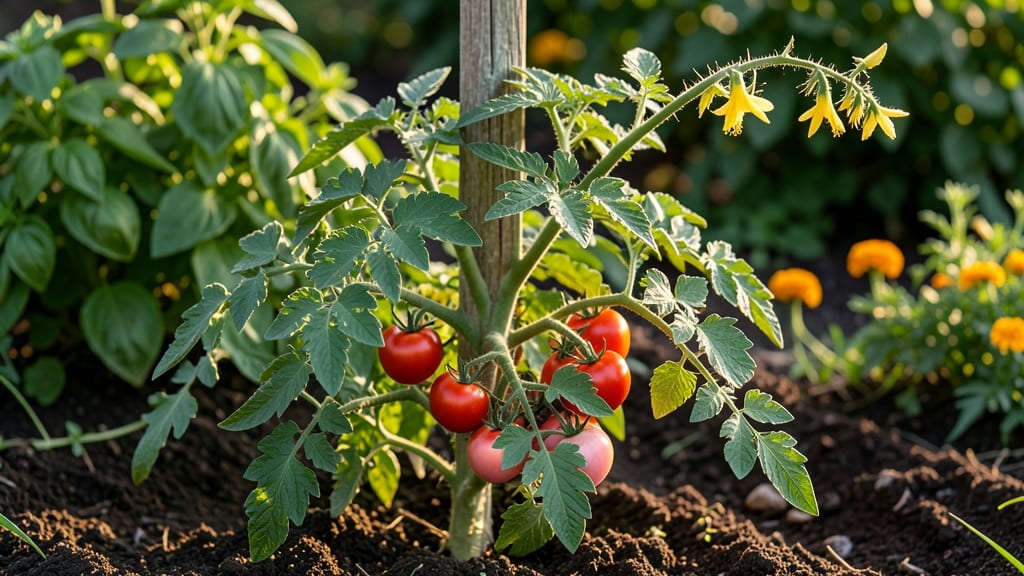
Staring at a tomato plant identifier with no name tag? 🌱 I've spent years squinting at leaf shapes and stalk patterns to finally put a name to my mystery plants—and now I'm sharing the foolproof method that works every time.
The secret lies in three key features: leaf shape (lobed vs. serrated), stem hairiness (fuzzy vs. smooth), and growth habit (bushy vs. sprawling). Cherry tomatoes have tiny, rounded leaves, while beefsteaks grow massive, deeply lobed ones. Even the flowers give clues—some varieties bloom in clusters, others send out single stems.
You'll spot the differences in minutes, not hours, and stop guessing whether that plant is a Roma or a Brandywine. This works for seedlings, mature plants, and even those random volunteers sprouting in your garden bed. No apps or fancy tools needed—just your eyes and a little practice.
Let's decode those plants once and for all.
Hidden Clues in Your Tomato Leaves
Tomato plants may look similar at first glance, but their leaves, stems, and growth patterns hold tell-tale secrets about their variety—and why they might be struggling. Misidentifying a tomato plant can lead to poor care, missed harvests, or even plant death.
Below, we break down the scientific reasons behind common leaf and stalk issues that confuse gardeners (and how to decode them).
---
Tomato plants exhibit distinct leaf shapes, serrations, and growth habits due to their genetics. Some varieties, like heirloom tomatoes, have lobed, deeply serrated leaves, while modern hybrids may have smoother, more uniform edges.
If your plant’s leaves don’t match what you expected, you might be dealing with: - Hybrid crossbreeding: Some tomatoes self-pollinate unpredictably, creating offspring with mixed traits (e.g., a beefsteak tomato growing with cherry-like leaves). - Seed-saving mistakes: If you grew seeds from a store-bought tomato, the resulting plant may not match the parent due to genetic recombination. - Grafting failures: Grafted tomatoes (where two plants are fused) can reject, causing stunted growth or abnormal leaf patterns if the graft union weakens.
💡 Pro Tip: Compare your plant’s leaves to a tomato variety database (like the [USDA Tomato Germplasm Collection](https://npgsweb.ars-grin.gov/gringlobal/taxon/taxonomysimple.aspx?nom=Solanum%20lycopersicum)) to spot discrepancies.
---
Tomato plants react physically to their environment. If leaves look yellow, curled, or spotted, it’s often a stress signal—not just a variety trait. Common triggers include:
| Stress Factor | Leaf Symptom | Why It Happens | |-------------------------|------------------------------------------|----------------------------------------------------------------------------------| | Over/Underwatering | Wilting, brown edges, or crispy leaves | Cells plasmolyze (shrink) from water imbalance, disrupting chlorophyll. | | Temperature Swings | Purple stems, stunted growth | Cold stress blocks nutrient uptake; heat stress causes protein denaturation. | | Pests (Aphids, Spider Mites) | Sticky residue, white webbing, holes | Pests pierce cells, injecting toxins that trigger leaf curling or discoloration. | | Fungal/Bacterial Infections | Spots, mold, or blackened veins | Pathogens like early blight (Alternaria solani) clog stomata, starving leaves. |
✨ Key Difference: Variety-specific leaves are consistent; stress-related changes worsen over time and often appear on new growth first.
---
Some tomato diseases mimic natural leaf patterns, leading to misidentification.
For example: - Tomato Mosaic Virus (ToMV): Causes mottled, puckered leaves—similar to some heirloom varieties like ‘Brandywine’ but progresses rapidly. - Leaf Curl (Tomato Yellow Leaf Curl Virus): Leaves cup upward and thicken, resembling heat stress but spreading via aphids. - **Bacterial Spot (Xanthomonas perforans): Irregular brown spots with yellow halos—unlike the uniform serrations of a ‘Sungold’ tomato.
🔥 Quick Test: Snap a photo and compare it to disease databases like the [UC IPM Tomato Pest Guide](https://ipm.ucanr.edu/PMG/PESTNOTES/pn7416.html). If symptoms spread aggressively, it’s likely a pathogen—not a variety trait.
--- Improper pruning or pollination can alter a tomato plant’s appearance: - Over-pruning: Removing too many leaves reduces photosynthesis, causing smaller, darker leaves (not a variety change). - Poor pollination: If flowers don’t set fruit, the plant may redirect energy to leaf growth, making them larger but thinner. - Root-bound stress: If roots circle in a pot, leaf edges scorch (like a ‘Black Krim’ but with necrotic tips).
🎯 Actionable Fix: If leaves look unnaturally stunted, check: - Pruning cuts (are they too aggressive?). - Pollination (shake plants gently or hand-pollinate). - Root space** (transplant if pot-bound).
Fixing Common Tomato Plant Issues
Once you’ve identified your tomato plant using leaf shapes, stalk types, or other clues, the next step is addressing any problems it might face. Below are practical solutions for the most common tomato plant issues, organized by cause—and how to prevent them from happening again.
---
Cause: Too much water, lack of nitrogen, or poor drainage. Fix: - 💧 Check soil moisture – Stick your finger 1-2 inches deep. If damp, reduce watering. If dry, water deeply but infrequently. - 🌱 Boost nitrogen – Add compost, fish emulsion, or a balanced fertilizer (10-10-10) to revive growth. - ⚡ Improve drainage – Mix in perlite or sand if your soil is clay-heavy.
Prevention: ✔ Water at the base (not leaves) in the morning to allow foliage to dry. ✔ Use mulch to retain moisture without waterlogging roots.
---
Cause: Pests thrive in crowded, stressed plants. Fix: - 🔥 Manual removal – Pick off hornworms by hand (they’re huge and easy to spot!). - 🍳 Neem oil spray – Mix 1 tbsp neem oil + 1 tsp dish soap in 1 quart water. Spray early morning/evening for aphids & mites. - 🌿 Companion planting – Interplant with basil, marigolds, or nasturtiums to deter pests naturally.
Prevention: ✔ Inspect leaves weekly – Catch infestations early before they spread. ✔ Prune crowded foliage – Better airflow = fewer hiding spots for bugs.
---
Cause: Fluctuating moisture or calcium shortage. Fix: - 🥛 Add calcium – Sprinkle crushed eggshells or use a calcium supplement (like gypsum) into the soil. - 💧 Water consistently – Aim for 1-1.5 inches per week, keeping soil evenly moist (not soggy). - 🌡️ Mulch heavily – Helps maintain steady soil temps and moisture.
Prevention: ✔ Test soil pH – Ideal range: 6.0–6.8. Adjust with lime if needed. ✔ Use drip irrigation – Avoids surface evaporation and uneven watering.
---
Cause: Humid conditions, poor airflow, or contaminated tools. Fix: - 🌿 Prune infected leaves – Remove yellow/brown spots immediately and sterilize pruners with rubbing alcohol. - 🔪 Copper fungicide – Apply preventatively at first signs of spots (follow label instructions). - 🌬️ Space plants wider – 18–24 inches apart for better airflow.
Prevention: ✔ Water at soil level – Avoid wetting leaves to reduce fungal spores. ✔ Rotate crops – Don’t plant tomatoes in the same spot yearly.
--- Cause: Compacted soil, lack of nutrients, or overcrowding. Fix: - 🔄 Transplant if needed – If roots circle the pot, move to a larger container or garden bed. - 🌱 Amend soil – Mix in compost, worm castings, or aged manure for nutrients. - ☀️ Ensure 6+ hours of sun – Tomatoes need full sunlight to thrive.
Prevention: ✔ Start with loose, fertile soil – Avoid heavy clay or sandy soil without amendments. ✔ Use trellises – Supports vertical growth and prevents root stress.
--- Pro Tip: 💡 When in doubt, observe! Many issues (like yellowing) can stem from multiple causes—combine fixes (e.g., water + nutrients) for best results.
--- Need a quick ID? Use a tomato plant identifier app (like PlantNet or PictureThis) to confirm symptoms before treating. Happy growing! 🌱🍅
Frequently asked questions
How can I tell the difference between a tomato plant and a potato plant?
Look at the leaves and stems! Tomato leaves are deeply serrated with pointed lobes, while potato leaves are shallowly lobed or smooth-edged. Tomatoes also have hairy stems and grow flowers/fruit above the leaves, whereas potatoes produce underground tubers and have smooth stems.
Can I use a phone app to identify my tomato plant?
Yes! Apps like PictureThis or PlantNet use photo recognition to match your plant to known varieties. Just snap clear images of the leaves, stems, and flowers—avoid blurry shots or partial views. For best results, photograph in natural light during the day.
Why does my tomato plant have leaves that look like eggplant leaves?
That’s likely a hybrid mix-up or grafting failure. Eggplants have large, glossy, heart-shaped leaves, while tomatoes have rougher, more jagged edges. If your plant has purple flowers or spiky fruit, it’s probably an eggplant. Check the stem texture—tomato stems are hairy, eggplant stems are smooth.
How do I identify a tomato plant from just the fruit?
Examine the fruit shape, color, and stem attachment! Cherry tomatoes have tiny, round fruits on long stems, while beefsteaks are large and flat with deep ribs. Roma tomatoes are plum-shaped and pointed. Also check the stem scar—tomatoes have a raised, circular scar where the fruit detached.
What if my tomato plant’s leaves don’t match any variety I know?
It could be a new hybrid, seed-saving mix-up, or disease stress. Compare your plant to a tomato variety database (like the USDA’s collection) or take photos to a gardening forum (e.g., GardenWeb). If leaves are mottled or curled, check for viral infections like mosaic disease.