Watering
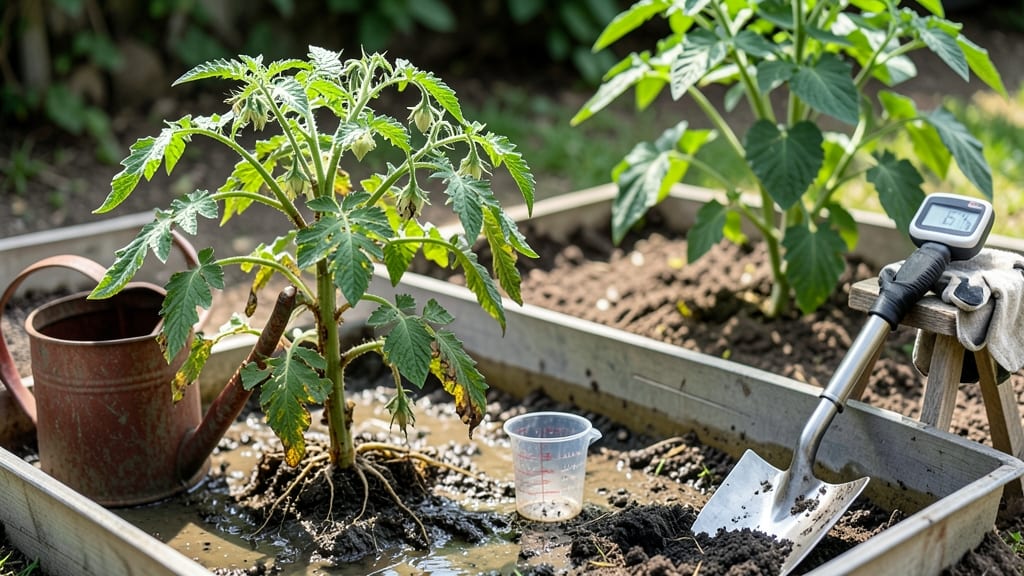
Your tomato plants are telling you something—just look at the leaves. 🌱 Overwatered and underwatered tomatoes send very different signals, and knowing the difference means the gap between a bountiful harvest and sad, wilted vines.
I’ve seen both up close, and the fix starts with recognizing the subtle (and not-so-subtle) signs.
Overwatered plants have yellowing leaves that start at the bottom, mushy stems, and soil that smells sour or stays soggy for days. Underwatered ones, on the other hand, show crispy edges, drooping leaves that don’t bounce back, and dry soil that pulls away from the pot.
Both problems share wilting, but the recovery steps couldn’t be more opposite.
The good news? You can turn things around fast—drain excess water or give thirsty roots a deep drink, then adjust your routine. Overwatered plants need better drainage (like raised beds or containers with holes), while underwatered ones crave consistent moisture (mulch helps!).
Prevention is easier: stick your finger in the soil—if it’s damp past 2 inches, hold off.
Once you master these cues, your tomatoes will thrive—no more guesswork, no more wasted harvests. The key is paying attention to the leaves before the problem becomes permanent. Trust me, your future self will thank you when those red fruits start ripening instead of your plants rotting.
The first option explained
Option A: The "Soggy Sigh" Test 🌧️🍅
If your tomato plant is looking more like a swamp than a sun-loving superstar, it might be overwatered. This method helps you diagnose the classic signs of too much love (in the form of water) and how to nurse your plant back to health.
🔍 Key Characteristics of an Overwatered Tomato Plant
- Yellowing leaves (especially lower leaves) that feel soggy or mushy to the touch.
- Wilting despite the soil being wet—roots can’t breathe if they’re drowning!
- Foul odor from the soil (a red flag for root rot).
- Stunted growth or slow recovery after watering.
🌱 Benefits of Identifying Overwatering Early
- Prevents root rot, a silent killer that can destroy your plant in weeks.
- Saves your harvest—healthy roots = happier tomatoes!
- Adjusts your watering routine to avoid future mistakes.
🍅 Typical Use Cases
This method is perfect for:
- New gardeners who tend to overwater out of caution.
- Plants in containers (soil dries faster, but overwatering is still a risk).
- Tomatoes in shady or humid climates (where water evaporates slower).
- Any plant showing sudden wilting after watering.
Pro Tip: 💡 Stick your finger 1-2 inches into the soil—if it’s damp, hold off on watering! Overwatering is often just a habit, not a death sentence.
The second option explained
If you’ve ever wondered why your tomato plants look thirsty but refuse to drink—even when you’re drowning them in water—it’s time to explore Option B: Underwatered Tomato Plants. 🌱💦 Unlike their overwatered cousins, underwatered tomatoes send clear distress signals that are often easier to spot (and fix!).
Let’s break down the key traits, perks, and when this scenario might be your plant’s reality.
🌡️ Key Characteristics of Underwatered Tomatoes
Underwatered tomato plants typically exhibit these unmistakable signs:
- Dry, crispy leaf edges: Leaves may curl inward or develop brown, brittle edges—like they’ve been left in a desert. 🏜️
- Wilting (even when watered): Unlike temporary wilting from heat, underwatered plants stay droopy hours after watering.
- Yellowing leaves (bottom-up): Older leaves turn yellow or brown, signaling the plant is pulling nutrients from its roots to survive.
- Slow or stunted growth: New leaves appear small, or the plant stops growing entirely.
- Soil pulls away from the pot: Tap the pot—if the soil feels bone-dry or separates from the edges, it’s a red flag. 🚩
✨ Benefits of Recognizing Underwatering Early
Catching underwatering early isn’t just about saving your plant—it’s about boosting productivity:
- Prevents root rot’s evil twin: While overwatering causes rot, underwatering stresses the plant, making it vulnerable to pests and disease.
- Faster recovery: Once you adjust watering, underwatered plants often bounce back in 24–48 hours with proper hydration.
- Better fruit quality: Consistent moisture leads to juicier, sweeter tomatoes—no one wants mealy, bland produce! 🍅
- Long-term resilience: Teaching your plant (and yourself!) proper watering habits builds a hardier, more productive tomato garden.
🌿 Typical Use Cases: When Does This Happen?
Underwatering isn’t just about forgetfulness—it’s often a mix of environmental factors and human habits. Here’s when you’re likely dealing with Option B:
- Hot, dry climates: Areas with low humidity (like deserts or summer heatwaves) evaporate moisture faster than you can water.
- New or inexperienced gardeners: Overestimating a plant’s water needs or assuming “more is better” can backfire. 😅
- Poor soil drainage: While overwatering causes drainage issues, sandy or rocky soil drains too quickly, leaving roots parched.
- Container gardening: Potted tomatoes dry out 2–3x faster than in-ground plants—check soil moisture daily in peak heat.
- Irregular watering schedules: Skipping watering days (or relying on rain that never comes) leaves plants high and dry.
Pro Tip: 💡 Use the finger test—stick your index finger 1–2 inches into the soil. If it feels dry, it’s time to water! For containers, lift the pot: if it’s light as a feather, soak it thoroughly.
Key differences
🌱 Leaf Appearance & Color
When it comes to leaves, overwatered and underwatered tomato plants send very different signals. Overwatered plants often have yellowing leaves (a condition called chlorosis) that start at the bottom and spread upward.
The leaves may also feel soft or mushy to the touch, and you might notice fungal growth (like mold or mildew) on the soil or stems. On the flip side, underwatered plants show crispy, brown edges or wilted, dry leaves that curl inward—especially in hot weather.
The yellowing here is usually brownish or papery, not the pale green/yellow of overwatering.
💧 Soil & Root Condition
Digging into the soil (or gently checking the roots) reveals another key difference. Overwatered plants often have soggy, waterlogged soil that smells musty or rotten. Roots may appear grayish, mushy, or decayed, and you might see root rot spreading.
In contrast, underwatered soil is dry, crumbly, or pulling away from the pot.
Roots look brown and brittle, almost like straw, and may be shriveled from lack of moisture. Pro tip: Stick your finger 1–2 inches into the soil—if it’s damp (not soaked), your plant is likely thirsty! 💡
🍅 Growth & Fruit Development
Your tomato plant’s growth habits also tip the scales. Overwatered plants may grow slowly or stop flowering entirely, as their energy goes into surviving water stress. Leaves might drop prematurely, and any fruit that forms could be watery, bland, or prone to cracking.
Meanwhile, underwatered plants may produce fewer flowers or fruit, but the existing tomatoes often concentrate flavor (thanks to stress!). However, severe underwatering can lead to blossom drop (flowers falling off) or stunted growth, leaving you with tiny, underdeveloped tomatoes.
🕰️ Recovery Potential
Finally, consider how quickly your plant can bounce back. Overwatered plants are in critical condition if root rot has set in—they may never fully recover and could die even with adjustments.
However, if caught early, trimming affected roots and improving drainage can help. Underwatered plants, on the other hand, often rebound faster once watered properly.
They may perk up within hours, though severe damage (like dried-out stems) can take longer to reverse. Key takeaway: Act fast for overwatering, but don’t panic with underwatering—consistency is your best friend! ✨
When to choose which
Knowing when to adjust your watering game is key to keeping your tomato plants thriving! Here’s when to lean toward overwatering prevention (or not) and when to boost hydration—based on your plant’s needs and environment. 🌱
💧 When to Avoid Overwatering (Stick to Moderate Watering)
- Hot, dry climates: If your area is scorching, your soil dries out faster. Overwatering here can drown roots instead of hydrating them.
- Well-draining soil: Sandy or loamy soil drains quickly—too much water just runs away, leaving roots thirsty.
- Newly planted tomatoes: Freshly transplanted seedlings need time to establish roots. Overwatering can suffocate them.
- Signs of soggy soil: Yellowing leaves, mushy stems, or a foul smell mean you’re overdoing it. 🚨
🌊 When to Water More (Prevent Underwatering)
- Cool, humid weather: Cloudy days or high humidity slow evaporation, but roots still need moisture.
- Heavy clay soil: Compacted soil holds water poorly—check moisture levels often.
- Flowering/fruiting stage: Tomatoes need consistent hydration to support heavy fruit loads.
- Wilted or crispy leaves: Drooping or curling leaves (especially in the heat) scream for water. 💦
Pro Tip: 💡 Use your finger to test soil moisture—stick it 1-2 inches deep. If it’s dry, water; if damp, wait. Consistency is key!
The bottom line
Mastering the balance between overwatered and underwatered tomato plants is key to a thriving harvest! 🌱 By now, you’ve spotted the yellowing leaves (overwatered), wilted stems (underwatered), or cracked soil (both extremes). Remember: soil moisture should feel like a damp sponge—not soggy or bone-dry.
Still unsure? Stick your finger 1-2 inches deep—if it’s wet, pause watering; if dry, hydrate gently. Consistency wins! Adjust based on your climate, pot size, and plant age. With these cues, you’ll keep your tomatoes happy, healthy, and ready for the table.