Planting
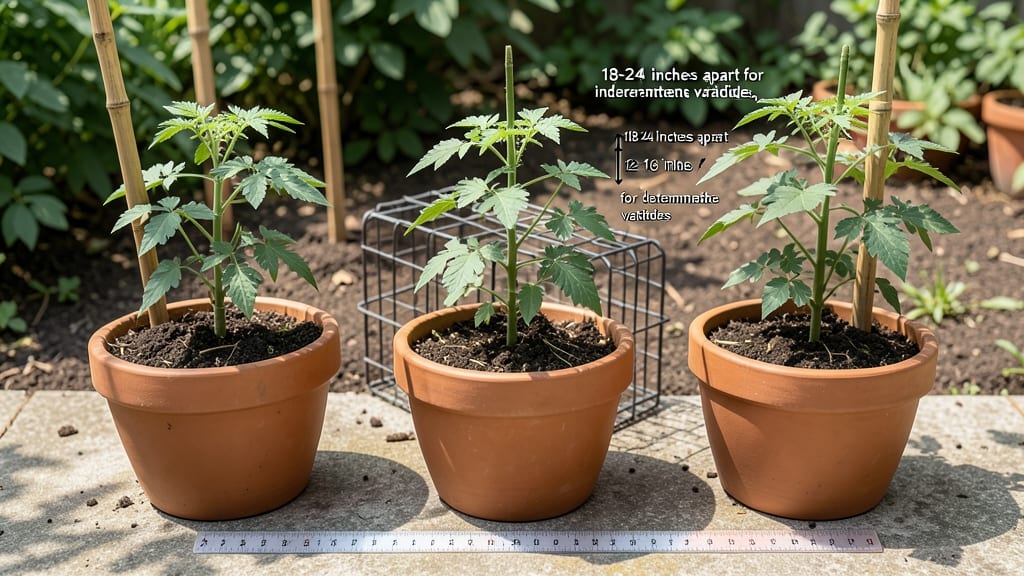
Tomato plant spacing in pots isn't just about squeezing in more plants—it's about giving each vine the room it needs to produce heavy, flavorful fruit without fighting for resources. 🌱 I learned the hard way that cramming two indeterminate tomatoes into a 5-gallon pot leads to tangled stems, fewer blossoms, and a sad harvest by midsummer.
The right spacing depends on your pot size and tomato type: determinate varieties (like Roma) can handle 2 plants in a 5-gallon container, while indeterminate types (like Sungold) need their own 10+ gallon pot to climb and produce all season.
Airflow matters just as much as space—crowded plants trap moisture, inviting disease and root rot. When done right, you'll end up with strong, productive vines that keep bearing until frost. The key is matching plant size to container volume and pruning suckers early to maintain that airflow.
Even in small spaces, this method delivers bigger yields per square foot than in-ground gardens. Works for balconies, patios, or rooftops—just adjust pot sizes based on your tomato varieties. Here's how to get it perfect the first time.
📚 In This Guide
- What you need
- Instructions
- Tips and common mistakes
- Wrapping up and next steps
What you need
- ● Containers: At least 1-2 large pots per tomato plant (minimum 5 gallons each). Opt for fabric grow bags, ceramic, or plastic pots with drainage holes.
- ● Potting Mix: 1 bag (1.5–2 cubic feet) of high-quality, well-draining potting mix (avoid garden soil—it compacts!). Mix in perlite or vermiculite (1 part per 5 parts soil) for aeration.
- ● Tomato Plants: 1-2 healthy seedlings or transplants (determinate or indeterminate varieties, depending on your space and goals).
- ● Drainage: Pebbles, broken pottery, or a layer of gravel (1–2 inches) at the bottom of each pot.
- ● Support: 1 cage, stake, or trellis per plant (5–6 feet tall for indeterminate varieties).
- ● Gloves & Trowel: For planting and soil handling.
- ● Watering Can or Hose with Nozzle: Drip irrigation or a gentle spray prevents soil erosion.
- ● Fertilizer: Balanced organic fertilizer (10-10-10) or compost tea to kickstart growth.
- ○ Mulch (Optional): Straw or shredded leaves to retain moisture and regulate temperature.
- ○ pH Test Kit (Optional): Ensure soil pH is between 6.0–6.8 (tomatoes love slightly acidic soil!).
- ○ Pruning Shears (Optional): For trimming suckers or dead leaves.
How to space tomato plants in pots for maximum yield
Here’s how I pack containers with tomatoes without sacrificing growth or airflow—key for preventing disease and boosting fruit production.
🪴 Step 1: Choose the Right Container Size for Each Plant
Tomatoes need 5+ gallons of soil per plant to support strong root systems. I use 12-15 inch diameter pots for determinate varieties (bush types) and 18-24 inch pots for indeterminate (vining) tomatoes. The extra space lets roots spread and prevents root-bound stress.
Check your pot’s volume by filling it with water and measuring—anything under 5 gallons will stunt growth. If you’re using smaller containers, plant only one small bush tomato per pot and upgrade to larger pots by midsummer if possible.
🌱 Step 2: Space Seeds or Transplants Correctly at Planting
For seeds: Sow 1-2 seeds per pot, ¼ inch deep, in the center of the container. Thinning later avoids root disturbance. For transplants, place one seedling per pot—crowding now leads to weak stems and disease later.
I position the seedling slightly off-center in the pot to allow for root expansion toward the edges. This small adjustment prevents roots from circling the pot’s perimeter, which restricts growth. Water gently after planting to settle the soil around the roots.
☀️ Step 3: Monitor Growth and Adjust Spacing as Vines Develop
Indeterminate tomatoes need 18-24 inches of vertical space per plant and 12-18 inches of horizontal spread. I install sturdy stakes or cages at planting and train vines upward immediately. This prevents sprawling, which wastes space and invites pests.
Watch for leaf overlap between plants—this is your signal to prune or separate. If two plants are competing for light, trim back the weaker one or move it to a separate container. Proper airflow reduces humidity around foliage, cutting down on fungal diseases like early blight.
✂️ Step 4: Prune Strategically to Maintain Optimal Spacing
Remove suckers (side shoots in leaf axils) regularly to focus energy on fruit production. I prune in the morning when plants are turgid and wounds heal faster. Leave 3-5 main stems per indeterminate plant to balance growth and yield.
If your pot is crowded, thin out lower leaves that touch the soil—this improves airflow and reduces soil-borne disease. Never remove more than 20% of foliage at once, or you’ll shock the plant. Strong pruning should only happen in early spring or late fall.
💧 Step 5: Adjust Watering to Prevent Overcrowding Stress
Water deeply once per week (or more in heat) to encourage roots to explore the entire pot. Shallow watering leads to root congestion near the surface. I check soil moisture by sticking my finger 2 inches deep—if it’s dry, water until it runs out the drainage holes.
Overwatering in crowded pots causes root rot. If you notice yellowing leaves or slow growth, reduce watering slightly and ensure pots have adequate drainage. Mulch with 2 inches of organic material to retain moisture and prevent soil compaction.
Tips & tricks for thriving tomato vines in pots
Crowded pots can turn your tomato dreams into a disease-ridden nightmare—here’s how to maximize growth without sacrificing airflow or yield.
Container Volume is Non-Negotiable: That 5+ gallons per plant rule isn’t just a suggestion—it’s the difference between a thriving vine and a stunted one. I’ve seen 12-inch pots (about 3-4 gallons) work for determinate varieties, but only if you’re growing one small plant per container. For indeterminate types, 18-24 inch pots are minimum—anything smaller forces roots to compete, and you’ll notice it in poor fruiting. Pro tip: If you’re repurposing containers, fill them with water first to measure actual volume—many labeled "5-gallon" buckets hold less after accounting for thickness.
Root Expansion Hack: The slight off-center placement in Step 2 isn’t just about aesthetics—it’s about breaking the "root circle" habit. When roots grow in tight loops around the pot’s perimeter, they strangle themselves. By positioning seedlings 1-2 inches from the center, you encourage outward growth toward the edges where soil nutrients are freshest. Think of it like training a puppy to explore beyond its comfort zone—roots need space to stretch too.
Vertical Space is Your Secret Weapon: Those 18-24 inches of vertical space for indeterminate vines aren’t arbitrary. A properly staked plant can support 6-8 feet of growth without crowding itself. I install 5-foot bamboo stakes at planting and tie vines with soft garden twine every 10-12 inches. This prevents the classic "tomato sprawl" that turns your patio into a jungle. Bonus: Vertical growth improves airflow at the base, where fungal spores love to lurk.
Pruning Timing Matters More Than You Think: That 20% foliage rule in Step 4 is critical—removing more than that shocks the plant, and you’ll see wilting within days. But here’s the real secret: Prune in the morning. Plants are fully turgid (firm) after a night’s rest, so wounds heal faster. I also use sterilized pruning shears dipped in rubbing alcohol between cuts to prevent bacterial infections. And if you’re dealing with crowded pots, focus on removing suckers (those little shoots in leaf axils) first—they’re energy vampires that steal nutrients from your fruit.
Pro Tips for Tomato Plant Spacing In Pots
- Crowded pots can turn your tomato dreams into a disease-ridden nightmare—here’s how to maximize growth without sacrif...
- Container Volume is Non-Negotiable: That 5+ gallons per plant rule isn’t just a suggestion—it’s the difference betwee...
- Root Expansion Hack: The slight off-center placement in Step 2 isn’t just about aesthetics—it’s about breaking the "r...
Frequently asked questions
Got questions about squeezing those juicy tomato plants into pots? You’re not alone! Here are some of the most common queries—and their easy, actionable answers—to help you grow like a pro.
How close can I plant tomato seedlings in pots?
For determinate (bush) tomatoes, space seedlings 12–18 inches apart in 5-gallon pots. Indeterminate (vining) varieties need 24–36 inches between plants in larger containers (10+ gallons). Crowding leads to poor airflow, inviting diseases like blight. Pro tip: If space is tight, prune suckers (side shoots) to redirect energy to fruit production.
When is the best time to transplant tomato seedlings into pots?
Wait until seedlings have 3–4 true leaves (not just cotyledons) and are at least 3–4 inches tall. Transplant on a cloudy day or evening to reduce transplant shock. Harden off seedlings 5–7 days beforehand by exposing them to outdoor conditions gradually. Hot tip: Add a handful of compost to the pot’s soil mix for a nutrient boost!
Can I grow tomatoes in pots smaller than 5 gallons?
Yes, but with trade-offs. 1–3 gallon pots work for bush varieties (like ‘Tiny Tim’ or ‘Patio Princess’) but limit growth and yield. For indeterminate types, 5+ gallons is ideal. Use container-specific fertilizers (like tomato feed) every 2–3 weeks to compensate for limited root space. Warning: Dwarf varieties may still need staking or cages!
Why are my potted tomatoes wilting even with enough water?
Wilting in pots often signals root-bound stress, overheating, or poor drainage. Check for:
- Root-bound roots: Gently tug the plant—if roots circle the pot, it’s time to up-pot.
- Heat stress: Move pots to partial shade during heatwaves (90°F+). Use reflective mulch.
- Drainage issues: Ensure pots have drainage holes and water deeply when the top inch of soil is dry.
How often should I fertilize potted tomatoes?
Feed potted tomatoes every 2–3 weeks with a balanced fertilizer (10-10-10) or tomato-specific feed high in phosphorus (for blooms) and potassium (for fruit). Stop fertilizing 4–6 weeks before the first frost to harden off plants. Organic option: Use compost tea or fish emulsion for a gentle boost. Over-fertilizing leads to leafy growth but fewer tomatoes!
Wrapping up and next steps
Mastering tomato plant spacing in pots is all about balancing growth and space—even in small containers! With the right pot size, drainage, and strategic spacing (like 12-18 inches between plants for determinate varieties or 24 inches for indeterminate), you’ll enjoy a bountiful harvest without overcrowding.
Remember, support structures and pruning are your best friends for vertical growth and airflow.
Ready to grow like a pro? 🌱 Start by picking your tomato varieties and pots, then dive into planting with confidence. Soon, you’ll be savoring homegrown tomatoes straight from your balcony or patio—no yard required!