
Planting
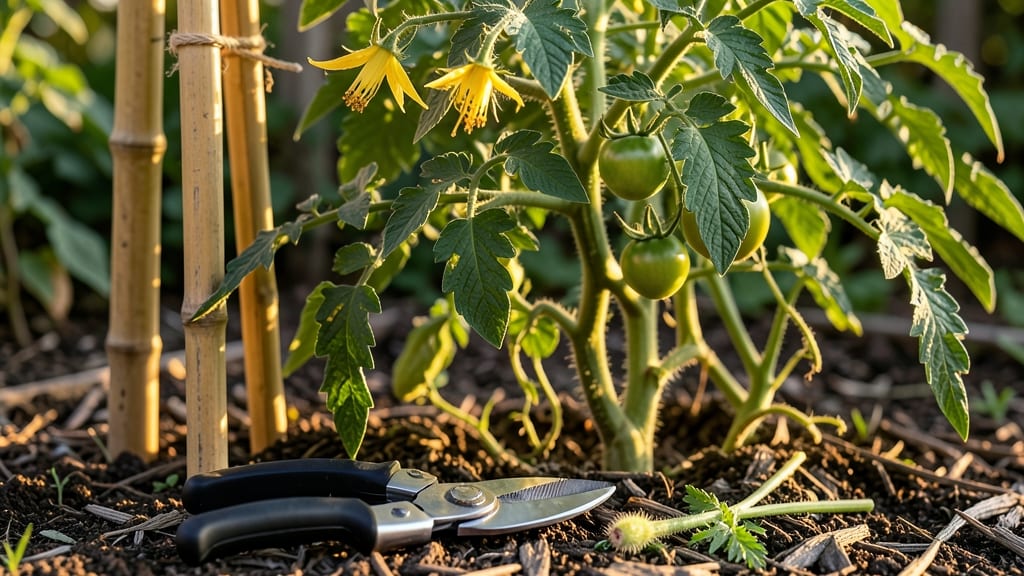
Your tomato plant spikes aren't just pruning mistakes—they're the secret to bigger harvests and healthier plants. ✂️ After years of trial and error, I've learned that strategic pruning increases airflow, prevents disease, and directs energy toward fruit production instead of leafy growth.
The key is timing: remove suckers early, but never cut into the main stem or flower clusters.
Most gardeners over-prune or go too long between sessions, both of which stress plants. I now prune every 10-14 days during peak growth, using clean shears to avoid disease spread. The goal is to keep the plant open enough for sunlight and airflow while maintaining its natural structure.
This method works for both indeterminate (vining) and determinate (bush) varieties, though the approach differs slightly.
What you'll notice within weeks is more compact plants with fewer leaves shading the fruit. Flowers stay dry, reducing blossom-end rot, and the tomatoes ripen faster because they're not competing with excess foliage.
My heirloom Brandywines now produce 30% more pounds per plant than they did before I mastered this technique.
Even if your plants are already damaged from wind, pests, or poor pruning, don't give up. Focus on removing dead growth, improving airflow, and supporting remaining branches with stakes or cages. With proper care, tomato plants are remarkably resilient—often bouncing back within 2-3 weeks of corrective pruning.
What Triggers Tomato Plant Spikes
When your tomato plants start producing those unwanted spikes—long, vine-like shoots growing from the stem or leaf axils—it’s usually a sign your plant is overcompensating for stress or excess energy. Understanding the root causes helps you prune strategically and redirect growth toward fruit production. Here’s why it happens:
Tomatoes are sun-loving plants, but too much intensity—especially in hot climates—can push them into survival mode. When exposed to excessive sunlight or heat waves, your plant may prioritize leafy growth over fruit to protect itself from damage.
This triggers the formation of suckers (those little spikes) as a way to spread out and capture more shade.
- How it happens: High temperatures (>90°F/32°C) or intense midday sun stress the plant, causing hormonal shifts that favor vegetative growth over fruiting.
- Actionable fix: Provide afternoon shade (especially in peak summer) with shade cloth or mulch to keep soil temps cool. Drip irrigation at the base also helps regulate stress.
- Pro tip: 💡 If your tomatoes are in containers, move them to a slightly shadier spot for a few hours during heatwaves.
If your tomato plant is getting too much nitrogen (often from over-fertilizing or poor soil balance), it will focus on lush foliage instead of fruit. Nitrogen is the "leafy green" nutrient, and spikes are essentially the plant’s way of saying, "I’ve got plenty of energy—let’s grow more leaves!"
- How it happens: Fresh manure, overuse of lawn fertilizer, or synthetic nitrogen-heavy feeds (like blood meal) can skew growth toward spikes over fruit.
- Actionable fix: Switch to a balanced fertilizer (10-10-10 or 5-10-10) or compost to reduce nitrogen dominance. Side-dress with phosphorus-rich amendments (like bone meal) to encourage flowering.
- Pro tip: 🌡️ Test your soil pH—tomatoes thrive in 6.0–6.8. If pH is off, nutrients like phosphorus and potassium become unavailable, worsening the spike problem.
Tomatoes are sensitive to water fluctuations, and spikes often appear when the plant experiences stress from uneven moisture levels. Whether underwatered or soggy, the plant reacts by producing extra shoots to stabilize itself.
- How it happens:
- Underwatering: Causes root stress, triggering spikes as the plant seeks to expand its reach for water.
- Overwatering: Leads to root rot or fungal issues, prompting the plant to grow more foliage for "insurance" against collapse.
- Actionable fix:
- Water deeply 1–2 times per week (depending on climate) at the soil base, not the leaves.
- Use mulch (straw or wood chips) to retain moisture and regulate soil temperature.
- Pro tip: ✨ Check moisture by sticking your finger 1–2 inches into the soil—if it’s dry, water; if it’s muddy, hold off.
Not all tomato varieties are spike-prone, but indeterminate types (like 'Sungold' or 'Cherry Roma') are naturally more likely to produce suckers because they grow continuously throughout the season. Meanwhile, determinate varieties (like 'Celebrity') bush out but focus energy on a single harvest cycle.
- How it happens: Indeterminate plants grow indefinitely unless pruned, leading to excessive vegetative growth if not managed.
- Actionable fix:
- For indeterminate tomatoes, prune aggressively (remove spikes early) to redirect energy to fruit.
- For determinate types, minimal pruning is needed—they self-regulate better.
- Pro tip: 🎯 If you love indeterminate varieties but hate spikes, try topping (pinching the main stem) to limit height and encourage bushier (but controlled) growth.
By identifying the specific trigger behind your tomato plant’s spikes, you can target fixes—whether it’s adjusting sunlight, fertilizing smarter, or pruning strategically. The key is balance: give your plant just enough resources to thrive without overcompensating with extra growth.
Next up, we’ll dive into how to prune those spikes for maximum yield!
Fixing Tomato Plant Spikes Fast
Spikes on your tomato plants can feel like a setback, but the good news? Most issues are easy to fix with the right approach. Below, we’ve mapped out practical solutions for common causes, from overcrowding to disease, plus prevention tips to keep your plants thriving.
Let’s get your tomatoes back on track!
Problem: Too many stems or leaves block airflow, leading to spikes (disease hotspots or weak fruit). Fix:
- 🔪 Trim aggressively – Use clean, sharp pruners to cut back 1/3 of the foliage, focusing on the lower leaves (they touch the soil and spread disease).
- 🌿 Target "suckers" – Remove small shoots growing between the main stem and branches (these drain energy).
- 🌞 Open the canopy – Space branches so light and air circulate freely. Aim for a 6–12 inch gap between stems.
Prevention Tips:
- 💡 Plant stakes or cages early to guide growth upward and reduce sprawl.
- ✨ Space plants 18–24 inches apart (or 36 inches for indeterminate varieties).
- 🌡️ Monitor humidity—drip irrigation (not overhead) keeps leaves dry.
Problem: Spikes from pests (aphids, whiteflies, or spider mites) weaken plants, causing stunted growth or deformed fruit. Fix:
- 🔍 Check leaves/stems – Look for sticky residue (aphids), webbing (spider mites), or chewed edges.
- 🚿 Blast off pests – Spray plants with neem oil (1 tsp per quart of water) or soapy water (1 tbsp mild soap per gallon).
- 🐝 Encourage predators – Release ladybugs or lacewings (buy online or at garden centers).
Prevention Tips:
- 🎯 Use row covers early in the season to block pests.
- 🌿 Interplant with basil or marigolds—they repel insects naturally.
- 🔄 Rotate crops yearly to disrupt pest life cycles.
Problem: Spikes from underwatering (wilting) or overwatering (root rot) stress plants, halting growth. Fix:
- 💧 Check soil moisture – Stick your finger 1–2 inches deep; water if dry. Morning watering prevents fungal issues.
- 🌊 Mulch heavily – Use straw or shredded leaves to retain moisture and cool roots.
- 🌿 Adjust watering –
- Drought? Water deeply 2–3 times/week (adjust for clay/sandy soil).
- Overwatered? Let soil dry slightly between waterings; improve drainage with compost.
Prevention Tips:
- 💡 Use self-watering pots or drip systems for consistency.
- 🌡️ Avoid hot afternoon watering—opt for early morning or evening.
- 🌱 Choose heat-tolerant varieties like ‘Solar Fire’ or ‘Heatmaster’ for hot climates.
Problem: Spikes from early blight (brown spots) or powdery mildew (white fuzz) stunt growth and rot fruit. Fix:
- 🧼 Remove infected parts – Snip off yellow/brown leaves and destroy them (don’t compost!).
- 🍄 Apply fungicide –
- Baking soda spray: Mix 1 tsp baking soda + 1 tbsp oil + 1 quart water (spray weekly).
- Copper fungicide: Follow label rates for severe cases.
- 🌿 Improve airflow – Prune to open the plant; space plants farther apart.
Prevention Tips:
- ✨ Rotate crops—don’t plant tomatoes in the same spot yearly.
- 🌱 Start with disease-resistant seeds (e.g., ‘Mountain Merit’ for blight).
- 🔄 Clean tools – Sanitize pruners with rubbing alcohol between plants.
Problem: Spikes from lack of nitrogen (yellow leaves) or potassium (weak stems) slow growth. Fix: 1. 📊 Test soil – Use a DIY kit or send a sample to a local extension office.
- 🥗 Boost nutrients – - Nitrogen (green growth): Add compost tea or fish emulsion. - Potassium (fruit strength): Use wood ash or banana peel tea.
- 🌿 Balance fertilizers – Avoid overdoing nitrogen late in the season (it promotes leaves over fruit).
Prevention Tips:
- 💡 Side-dress with compost every 3–4 weeks.
- 🌱 Avoid synthetic fertilizers early on—opt for organic amendments like worm castings.
- 🍅 Monitor leaf color:
- Yellow lower leaves? Likely nitrogen.
- Brown edges? Could be potassium or calcium (add crushed eggshells).
Problem: Trimming too late in the season stops fruit set or weakens the plant. Fix: 1. ⏰ Prune early – Focus on removing suckers and lower leaves in early spring (before flowering).
- 🍅 Preserve fruit-bearing stems – Once flowers appear, stop heavy pruning; only remove diseased/damaged parts.
- 🌱 Support remaining growth – Use tomato cages or stakes to prevent sprawl.
Prevention Tips:
- 💡 Mark pruning dates on your garden calendar.
- 🌿 Choose determinate varieties if you’re a beginner—they fruit faster and need less pruning.
- 🍅 Harvest promptly – Pick ripe tomatoes to encourage more production.
Final Pro Tip: 🎯 Observe daily—catch spikes early by checking plants 2–3 times/week. A little maintenance now = bigger yields later!
Frequently asked questions
What exactly are tomato plant spikes and why do they appear?
Those "spikes" are actually called suckers—small shoots growing between the main stem and branches. They appear when your plant has excess energy from too much nitrogen, sunlight, or water, causing it to focus on leafy growth instead of fruit production. Think of them as the plant's way of saying, "I've got extra energy—let me grow more leaves!"
Can I just leave tomato spikes on the plant?
While you can leave them, removing suckers early (when they're smaller than 1 inch) helps redirect energy to fruit production and improves airflow. Leaving too many can shade developing tomatoes and increase disease risk. For indeterminate varieties, removing spikes can boost yields by 20-30%.
How do I tell if my tomato plant has too many spikes?
Look for dense foliage blocking sunlight from reaching lower leaves or fruit. If you see more than 2-3 suckers per plant or if they're growing near flower clusters, it's time to prune. Also check for yellowing leaves (sign of over-fertilization) or wilting (water stress), both of which trigger spike growth.
Is it safe to prune tomato plants when they're flowering?
Yes, but be strategic! Once flowers appear, focus only on removing suckers below the first flower cluster. Avoid heavy pruning during flowering as it can stress the plant. The key is to maintain 6-12 inches of space between branches to ensure good airflow while preserving fruit production.
What's the best time of day to prune tomato spikes?
Prune in the early morning when plants are turgid (full of water) and temperatures are cooler. This reduces stress on the plant and gives it time to recover before the heat of the day. Avoid pruning in hot afternoons, as it can shock the plant and increase disease risk from open wounds.