
Plants
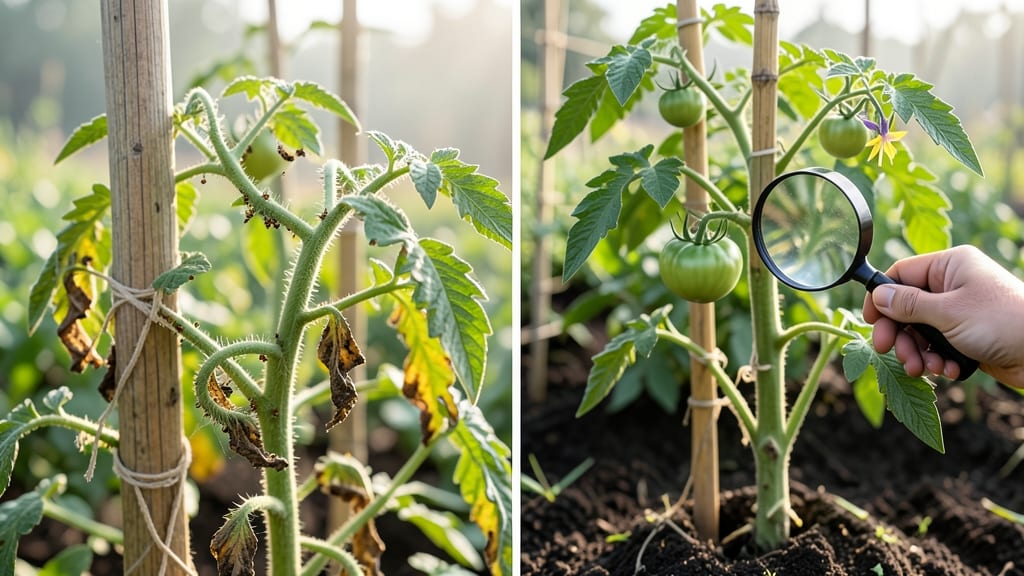
Your tomato plants' stems curling down like a sad taco? 🌱 That classic downward droop isn't just a quirky growth habit—it's your plants screaming for help against spider mites, heat stress, or hidden diseases.
I've saved dozens of plants from this exact problem, and the fixes are simpler than you'd think, starting with a quick inspection that takes less than five minutes.
The real culprits are tiny but devastating: spider mites love to suck sap while leaving silky webs, heat stress causes wilting even with moist soil, and diseases like fusarium wilt attack roots first.
What sets this apart from regular wilting is how the leaves cup downward and the stems develop a rubbery, almost limp texture—like someone deflated them overnight. The good news? You can turn this around before it's too late.
Within 48 hours of treating spider mites with neem oil or a strong spray of water, you'll see stems perk up noticeably. For heat stress, afternoon shade cloth makes an immediate difference, and for diseases, removing infected plants stops the spread.
The key is acting fast—once the stems start curling permanently, recovery gets much harder.
This works for both container and in-ground tomatoes, whether you're dealing with cherry varieties or beefsteak giants. The same principles apply to peppers and eggplants too—once you spot the early signs, you've got the power to save your harvest before it's lost.
Root Causes Behind Curling Stems
When your tomato plant’s stems start drooping or curling downward, it’s rarely a coincidence—it’s a distress signal from the plant. Understanding the why behind this behavior is the first step to saving your harvest.
Below, we break down the most common culprits, from environmental stressors to hidden pests, with clear explanations of how they trigger this symptom.
Tomatoes are tropical plants at heart, but when temperatures soar above 90°F (32°C) or soil moisture drops too low, their stems react by curling downward. This isn’t just wilting—it’s a survival mechanism to reduce water loss through transpiration.
- How it happens: High heat causes stomatal closure (tiny leaf pores) to conserve water, but the plant’s vascular system struggles to deliver enough H₂O to support upright growth. The stems flaccid (become soft and limp) as turgor pressure drops.
- Key signs:
- Curling and yellowing leaves (especially midday).
- Soil feels dry 1–2 inches deep (stick your finger in—if it’s bone-dry, that’s your answer).
- Leaves may crisp at the edges (heat scorch).
- Actionable fix:
- 💡 Mulch heavily (3–4 inches of straw or wood chips) to retain soil moisture and cool roots.
- 🌱 Water deeply in the early morning (1–1.5 inches per week, more in extreme heat). Avoid wetting leaves to prevent fungal diseases.
- 🌿 Provide shade cloth (30–50% coverage) if temps hit 95°F (35°C)+ for prolonged periods.
Tiny but mighty, spider mites are one of the most common reasons tomato stems curl downward. These arachnids (yes, they’re not insects!) thrive in dry, hot conditions and feed on plant sap, weakening stems and leaves.
- How it happens: Mites inject toxins as they feed, causing cell damage that disrupts the plant’s ability to maintain structural integrity. The curling is often paired with webbing on the undersides of leaves—a dead giveaway.
- Key signs:
- Stems curl downward and inward (like a "C" shape).
- Fine silver or bronze speckling on leaves (early sign).
- Thin, white webbing in leaf axils or between stems.
- Leaves may bronze or scorch despite adequate water.
- Actionable fix:
- 🔥 Blast mites off with a strong stream of water (early morning spray). Repeat every 3–4 days.
- 🌿 Introduce predators: Ladybugs, lacewings, or neem oil spray (1 tsp neem oil + 1 tsp mild soap per quart of water).
- 🌡️ Boost humidity (mites hate it!). Use a fine mist near plants or place a tray of water nearby.
- 🎯 Isolate infested plants to prevent spread to other garden crops.
While underwatering is obvious, overwatering can also cause stems to curl downward—just through a different (and often deadlier) process.
- How it happens:
- Underwatering: Roots shrink and can’t absorb enough water, leading to osmotic stress and stem collapse.
- Overwatering: Roots suffocate from lack of oxygen (anaerobic conditions), leading to root rot (often caused by Pythium or Phytophthora fungi). The plant can’t support its own weight.
- Key signs:
- Underwatering: Dry, crispy soil; stems curl sharply downward.
- Overwatering: Soggy soil; stems may blacken at the base; leaves yellow (chlorosis) and wilt even when watered.
- Actionable fix:
- 💡 Test soil moisture: Stick your finger 2–3 inches deep. If dry, water deeply; if soggy, stop watering and let the top 2 inches dry out before rewatering.
- 🌱 Improve drainage: Amend heavy clay soil with compost or perlite. Ensure pots have drainage holes.
- 🔪 For root rot: Prune blackened roots and repot in fresh, sterile soil. Add mycorrhizal fungi to boost root health.
Aphids, whiteflies, and thrips may not cause curling as dramatically as spider mites, but their feeding can still weaken stems enough to trigger downward drooping—especially in young or stressed plants.
- How it happens: These pests inject enzymes that distort plant growth hormones, causing epinasty (abnormal downward curvature). Heavy infestations also deplete sap, starving the plant.
- Key signs:
- Sticky honeydew residue on leaves (aphids).
- Yellowing or puckered leaves.
- Tiny black sooty mold (a fungus growing on honeydew).
- Curling often starts at leaf tips and progresses downward.
- Actionable fix:
- 👨🍳 Blast off pests with a soapy water spray (1 tsp mild soap per quart of water).
- 🌿 Use insecticidal soap or neem oil (repeat every 5–7 days).
- 🎯 Attract beneficial insects: Ladybugs, lacewings, and parasitic wasps love aphids.
Each of these causes triggers a different physiological response in your tomato plant, but the end result—a drooping stem—is the plant’s way of saying, “Something’s wrong, and I need help!”. The good news? Most of these
Quick Fixes for Drooping Tomato Stems
If your tomato plants are sporting curled, drooping stems, don’t panic—there’s a solution for every cause! Below, we’ve broken down the most common culprits (like spider mites, heat stress, or fungal infections) and matched them with practical, step-by-step fixes.
Plus, we’ll share prevention tips to keep your plants thriving long-term. Let’s get those stems standing tall again!
Spider mites are tiny but mighty pests that suck the life out of your tomato plants, causing stems to curl downward. Here’s how to kick them to the curb:
#### 💦 Step 1: Blast Them Off with Water - How: Use a strong jet of water from your hose to knock mites off leaves and stems. Focus on the undersides of leaves where they hide. - Pro Tip: Do this early in the morning so the plant has time to dry out—wet leaves at night invite fungal problems! 🌡️ #### 🧼 Step 2: Soap Up a Natural Spray - Mix: 2 tablespoons of mild liquid soap (like Castile soap) or neem oil in 1 quart of water. Add a drop of dish soap as an emulsifier. - Spray: Apply thoroughly to all leaf surfaces, especially where you see webbing. Reapply every 5–7 days until mites vanish. - Bonus: Neem oil also acts as a preventative fungicide! ✨ #### 🕷️ Step 3: Introduce Predatory Allies - Ladybugs, lacewings, or predatory mites (like Phytoseiulus persimilis) are spider mite’s natural enemies. Buy them online or attract them with dill, fennel, or marigolds in your garden. #### 🚫 Prevention Tips: - 💡 Keep your garden dust-free—mites love dry, dusty leaves. - 🌿 Mulch around plants to retain moisture (mites hate humidity!). - 🕵️ Inspect new plants before bringing them home—quarantine them for a week to catch hitchhiking pests.If your tomato stems are curling without webbing or spots, heat stress is likely the villain. Tomatoes wilt when temps soar above 90°F (32°C), but recovery is simple:
#### 💧 Step 1: Hydrate Deeply (But Smartly) - How: Water deeply at the base in the early morning or late evening to avoid evaporation. Use drip irrigation or soaker hoses to keep foliage dry. - Avoid: Overhead watering during heat—it can scorch leaves! 🔥 #### 🌿 Step 2: Provide Shade Relief - Quick Fix: Set up shade cloth (30–50%) over your plants for a few hours during peak sun (11 AM–3 PM). - DIY Hack: Use old bedsheets or straw bales to block direct sunlight temporarily. #### 🌱 Step 3: Mulch Like a Pro - Why: Mulch (straw, grass clippings, or wood chips) keeps soil cool and moist, reducing stress. - How: Apply a 2–3 inch layer around the base (but not touching the stem). #### 🌱 Prevention Tips: - 🌿 Choose heat-tolerant varieties like ‘Solar Fire,’ ‘Heatmaster,’ or ‘Celebrity’ for hot climates. - 🌅 Plant tomatoes where they get morning sun and afternoon shade (e.g., near a north-facing wall). - 💦 Use self-watering containers or clay pots (they cool roots faster than plastic).If stems curl with yellow spots, brown lesions, or white powder, fungi like early blight or powdery mildew are likely guilty. Act fast!
#### 🧴 Step 1: Prune and Toss Infected Parts - How: Cut off any leaves with spots (including curled ones) and dispose of them in the trash (not compost!). Use sterilized pruners to avoid spreading spores. - ⏰ Do this in the morning so the plant has time to dry before nightfall. #### 🍄 Step 2: Spray with Copper or Baking Soda - Copper Fungicide Mix: 1 tablespoon copper sulfate or copper fungicide per gallon of water. Spray every 7–10 days. - Baking Soda Spray: Mix 1 teaspoon baking soda + 1 tablespoon oil + 1 quart water. Spray undersides of leaves. (Test on a small area first!) - 💡 Pro Tip: Add a few drops of hydrogen peroxide (3%) to your spray for extra antifungal power. #### 🌿 Step 3: Improve Airflow - Why: Fungi thrive in humid, stagnant air. Space plants 18–24 inches apart and stake them for support. - 🌬️ Use a fan on low setting near plants for 10–15 minutes daily to reduce humidity. #### 🚫 Prevention Tips: - 🌧️ Water at the base only and avoid overhead sprinkling. - 🌿 Rotate crops—don’t plant tomatoes in the same spot yearly (fungi linger in soil!). - 🌱 Start with disease-resistant varieties like ‘Mountain Merit’ or ‘Defiant PhR.’No matter the cause, these universal steps will help your tomato plants bounce back:
#### 🍅 Step 1: Support Weak Stems - How: Install cages, stakes, or trellises to keep stems upright while they recover. Use soft ties (like old T-shirts) to avoid damaging the stem. #### 💧 Step 2: Fertilize Gently - What to Use: A balanced fertilizer (10-10-10) or compost tea to replenish nutrients without burning roots. - Avoid: High-nitrogen fertilizers—they promote leafy growth at the expense of fruit. #### ☀️ Step 3: Monitor and Adjust - Check Daily: Look for improvement in 3–5 days. If not, reassess the cause (e.g., is it mites or heat?). - Adjust Care: If heat is the issue, move plants to partial shade. If pests persist, rotate treatments.Remember: The key to happy tomatoes is consistency. Stick with your fixes, and your plants will be back to producing juicy, vine-ripened fruit in no time! 🍅🌟
Frequently asked questions
Why do tomato stems curl downward suddenly?
Sudden curling usually signals heat stress or pest infestation. When temps hit 90°F+ (32°C+), tomato plants conserve water by drooping—check soil moisture 1-2 inches deep. Spider mites also cause rapid curling with telltale webbing on leaf undersides.
Can overwatering make tomato stems curl?
Yes! Overwatering suffocates roots by cutting off oxygen, leading to root rot and stem collapse. Check for soggy soil and blackened stems at the base. The fix: let the top 2 inches dry out between waterings and improve drainage with compost or perlite.
How do I tell if curling is from mites vs. disease?
Look for webbing (mites) or spots/lesions (disease). Mites cause silver speckling and bronze leaves, while fungal issues show yellow/brown patches. Use a magnifying glass to spot mites or inspect leaf undersides for fungal growth.
Will pruning help tomato stems stop curling?
Pruning alone won't fix the root cause, but it helps! Remove severely curled/diseased leaves to redirect energy to healthy growth. For pests, prune infested foliage first to break the cycle. Always use sterilized tools to prevent spreading issues.
How long until tomato stems recover after treatment?
With proper care, you'll see improvement in 3-5 days for pests/heat stress. Fungal issues may take 1-2 weeks to fully recover. Monitor daily and adjust treatments if curling persists—this signals the original problem isn't fully resolved.