
Planting
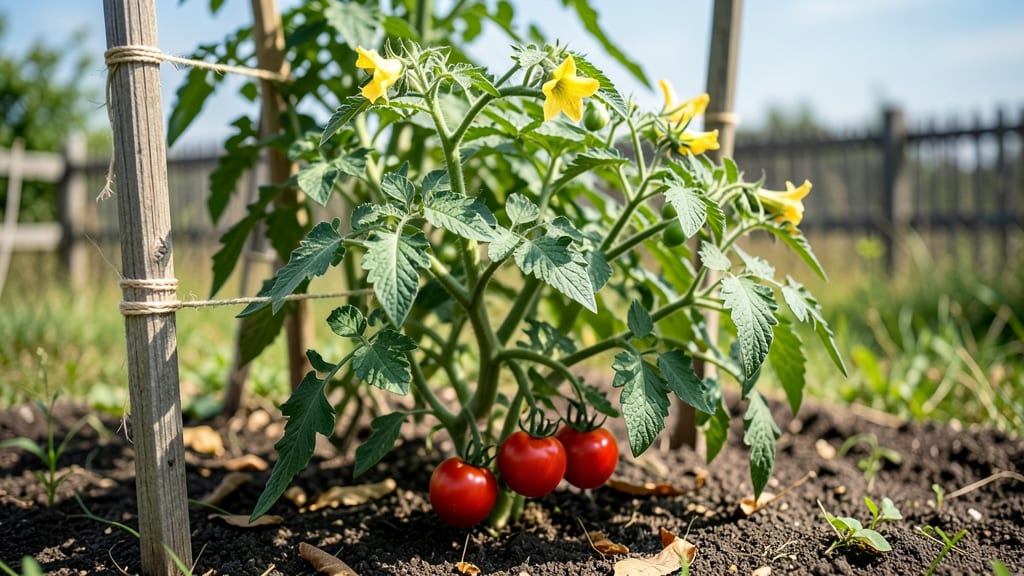
Transforming your tomato plants into a lush, vine-covered tree isn't just possible—it's a game-changer for small spaces. 🌿 Indeterminate varieties like 'Sungold' or 'Cherokee Purple' climb like jungle vines, turning your balcony or windowsill into a year-round harvest factory.
The key? Trellising, pruning, and a little patience to coax those sprawling vines upward instead of outward.
You'll need a sturdy trellis or cage (think bamboo stakes or a DIY wooden frame), rich potting mix with added compost, and a sunny spot getting at least 6-8 hours of light daily.
Pruning is where the magic happens—pinch off suckers (those little shoots between the stem and branches) to direct energy upward, and tie main stems to the trellis as they grow. Within weeks, you'll watch your "tomato tree" take shape, with vines stretching toward the sky.
The payoff? A single plant can produce 20+ pounds of tomatoes in a season, all within arm's reach. Imagine plucking ripe fruit from your kitchen window—no bending, no sprawling plants, just a vertical feast.
The foliage stays lush, the fruit ripens evenly, and you'll harvest longer than ever before. Plus, it's a conversation piece that makes neighbors green with envy.
This works indoors or out, in pots or containers, and even on a patio. Whether you're a city dweller with limited space or a gardener looking to maximize yields, this method turns tomatoes from sprawling weeds into elegant, productive "trees." Let's get those vines climbing!
📚 In This Guide
- What you need
- Instructions
- Tips and common mistakes
- Wrapping up and next steps
What you need
- ● Tomato Seeds or Seedlings: Indeterminate varieties (e.g., Cherry Tomatoes, Roma, or Beefsteak) – 3-5 plants for a lush tree shape.
- ● Vertical Growing Structure: Wall-mounted geodesic dome trellis (DIY or pre-made) or a 5-gallon bucket system with stacked pots.
- ● Coconut coir or burlap strips (for tying vines, ~10 feet).
- ● Growing Medium: High-quality potting mix (sterile, well-draining; 5-10 gallons total).
- ● Perlite or vermiculite (10% mix for aeration).
- ● Containers: Fabric grow bags (5-7 gallons each) or self-watering pots with drainage holes.
- ● Lighting: Full-spectrum LED grow lights (12-16 hours/day; 40W+ for 3-5 plants).
- ● Adjustable light stands (to mimic sun angles).
- ○ Watering & Nutrients: Drip irrigation kit or self-watering system (optional but handy!).
- ● Balanced fertilizer (5-5-5 or 10-10-10; 1 tbsp per gallon of water every 2 weeks).
- ● Calcium supplement (e.g., crushed eggshells or calcium nitrate) to prevent blossom-end rot.
- ● Humidity tray (to maintain 40-60% humidity for seedlings).
- ● Pruning shears (for shaping and harvesting).
- ● Growth regulators (e.g., seaweed extract to boost root development).
- ● Smart plug timers (for automated light/water cycles).
- ● Decorative elements (e.g., fairy lights or macramé hangers for a cozy vibe!).
Step-by-Step instructions for building an indoor tomato plant tree
Here’s how to create a thriving vertical tomato garden that fits your space and keeps producing all year.
🪴 Step 1: Select and Assemble Your Vertical Structure
Choose a sturdy, freestanding frame—like a repurposed ladder, wall-mounted trellis, or a dedicated vertical planter with pockets. For 4 tomato plants, aim for a structure at least 6 feet tall with multiple levels spaced 12-18 inches apart. I like using a wooden ladder with wide steps because it’s stable and gives each plant its own growing zone.
If you’re using a DIY setup, reinforce joints with screws or brackets to prevent wobbling as plants grow heavier. Place the structure near a south-facing window or under a grow light—tomatoes need 6-8 hours of direct light daily. Test stability by gently tugging the frame; it should stay firmly in place without tipping.
🌱 Step 2: Prepare Containers and Planting Medium
Use 5-gallon fabric grow bags or deep containers with drainage holes for each tomato plant. Fill them with a lightweight soilless potting mix blended with 20% perlite or vermiculite to improve drainage. Avoid garden soil—it compacts in containers and suffocates roots.
Moisten the mix until it’s damp like a wrung-out sponge, then let it sit for 10-15 minutes to settle. Plant 1 tomato seedling per container, burying the stem up to the first set of leaves (this encourages stronger root growth). Gently press the soil around the base to remove air pockets, but don’t compact it—roots need room to breathe.
☀️ Step 3: Position Plants and Install Support
Arrange containers on your vertical structure, spacing them evenly to allow airflow between plants. For indeterminate varieties (like ‘Sungold’ or ‘Cherokee Purple’), attach a soft twine or spiral trellis to the top of the frame and loosely tie the main stem to it as it grows. This prevents stem damage as the plant climbs.
Water each container until water runs freely from the drainage holes, then let excess drain away. Place a saucer under each pot to catch drips, but empty it after 15 minutes to avoid root rot. Keep the structure in a warm spot (70-80°F) for the first 2 weeks—this helps roots establish before the vines get heavy.
💧 Step 4: Train Vines and Maintain Growth
As vines reach the top of the frame, pinch off the growing tip to encourage branching (this creates more fruit-bearing stems). Every 7-10 days, gently weave new growth through the trellis or tie it with soft plant ties. Avoid wrapping twine too tightly—it can gouge the stem as it thickens.
Water when the top 1-2 inches of soil feel dry, focusing on the base of the plant to avoid wetting leaves (which spreads disease). Fertilize with a balanced liquid fertilizer (10-10-10) every 4-6 weeks, reducing to half-strength once flowers appear. Prune suckers (side shoots in the leaf axils) regularly to direct energy to fruit production.
✂️ Step 5: Harvest and Prune for Continuous Growth
Pick tomatoes when they’re fully colored and slightly soft to the touch—this encourages more production. Use pruning shears to snip stems cleanly, leaving a ¼-inch stub to prevent disease entry. For indeterminate varieties, keep pruning suckers and deadheading spent flowers until the first frost (or indoor winter conditions).
In colder months, supplement with a grow light to maintain 14-16 hours of light daily. Reduce watering slightly in winter (let the top 2 inches dry out between waterings), and fertilize every 8-10 weeks to support slower growth. With this setup, you’ll get continuous harvests year-round—just keep training and pruning!
Tips & tricks for perfect indoor vertical tomato trees
These simple strategies will help your vertical tomato garden thrive year-round without the common pitfalls.
Support System Secret: In Step 1, when assembling your vertical structure, I recommend adding a secondary support layer halfway up for indeterminate varieties. This mid-level support prevents the main stem from bearing too much weight as it climbs, reducing the risk of snapping. Think of it like adding a chair to a ladder—extra stability where it's needed most.
Soil Settlement Strategy: After moistening your soilless mix in Step 2, let it settle for those 10-15 minutes—this isn't just about removing air pockets, it's about creating the perfect balance of moisture and aeration. I've found that adding a handful of worm castings at this stage boosts microbial activity without altering the drainage properties. Trust me, your roots will thank you.
Lighting Logic: For the 6-8 hours of direct light tomatoes need daily, I suggest positioning your grow lights about 6-12 inches above the topmost plants. This ensures even coverage while preventing leaf burn. If you notice leaves stretching toward the light (a sign of insufficient intensity), move the lights closer or extend the 14-16 hours of supplemental light in winter by 1-2 hours.
Pruning Precision: When you're pruning suckers in Step 4, use clean pruning shears and make cuts at a 45-degree angle just above a leaf node. This technique promotes faster healing and reduces disease entry points. I also recommend keeping a small spray bottle of diluted hydrogen peroxide (1 part peroxide to 3 parts water) handy to disinfect your tools between cuts—it prevents cross-contamination between plants.
Pro Tips for Tomato Plant Tree
- These simple strategies will help your vertical tomato garden thrive year-round without the common pitfalls.
- Support System Secret: In Step 1, when assembling your vertical structure, I recommend adding a secondary support lay...
- Soil Settlement Strategy: After moistening your soilless mix in Step 2, let it settle for those 10-15 minutes—this is...
Frequently asked questions
Got questions about growing a tomato plant tree indoors? You’re not alone! Here are some of the most common concerns—and their answers—to help you cultivate a thriving vertical garden year-round.
Can I grow a tomato "tree" indoors without sunlight?
Yes, but you’ll need grow lights! Tomatoes thrive on 6–8 hours of bright light daily. Use full-spectrum LED grow lights 6–12 inches above the plants, and adjust height as they grow. A timer helps maintain consistency. South-facing windows offer natural light but may not be enough alone—supplement when needed!
How long does it take for a tomato plant tree to produce fruit?
Indoor tomato trees typically take 8–12 weeks from seed to first fruit, depending on the variety. Dwarf or determinate types (like ‘Tiny Tim’ or ‘Patio’) mature faster (60–70 days), while heirlooms may take longer. Prune regularly to encourage bushier growth and more fruit clusters. Patience pays off—harvests start small but grow bountiful!
What’s the best tomato variety for an indoor "tree" setup?
Opt for determinate (bush) or dwarf varieties designed for containers:
- ‘Tiny Tim’ – Compact, cherry tomatoes, 2–3 ft tall.
- ‘Patio Princess’ – Disease-resistant, 3–4 ft, great for hanging.
- ‘Balcony Red’ – Small, prolific, ideal for vertical pockets.
- ‘Micro Tom’ – Miniature but high-yielding (1–2 ft).
Why are my tomato leaves yellowing or curling?
Yellowing leaves often signal overwatering or nutrient deficiency. Check soil moisture—it should dry slightly between waterings. Curling leaves may mean underwatering, pests (like spider mites), or heat stress. Spray leaves with neem oil for pests, and ensure humidity stays moderate (40–60%). Adjust light distance if leaves scorch.
Do indoor tomato trees need pollination?
Yes! Without bees, you’ll need to hand-pollinate. Gently shake the plant or use a small brush to transfer pollen between flowers. Do this in the morning when flowers are open. For extra help, place a small fan nearby to mimic wind pollination. Humidity (50–70%) also improves fruit set.
Can I reuse the same soil for multiple tomato harvests?
Not recommended! Tomatoes deplete nutrients and attract pests/diseases over time. After harvest, refresh the soil or repot with a new mix of:
- 60% potting soil
- 30% compost
- 10% perlite/vermiculite
Wrapping up and next steps
Growing a tomato plant tree indoors isn’t just a creative gardening project—it’s a rewarding way to enjoy fresh, homegrown tomatoes year-round! With the right setup, pruning techniques, and a little patience, you’ll turn your vertical garden into a thriving, space-saving harvest hub.
Whether you’re a beginner or a seasoned gardener, this method proves that big flavors don’t need big spaces.
Ready to take the next step? Start small—try one tomato plant tree this season and watch your confidence (and harvest) grow! 🌱✨ Now’s the time to grab your pruners, pick your variety, and get planting!